
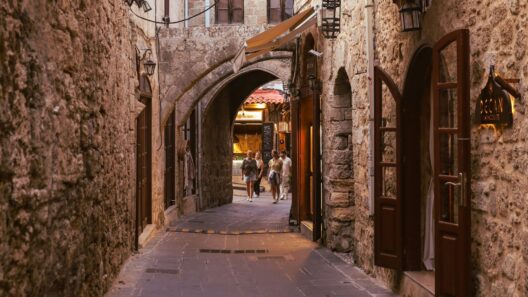
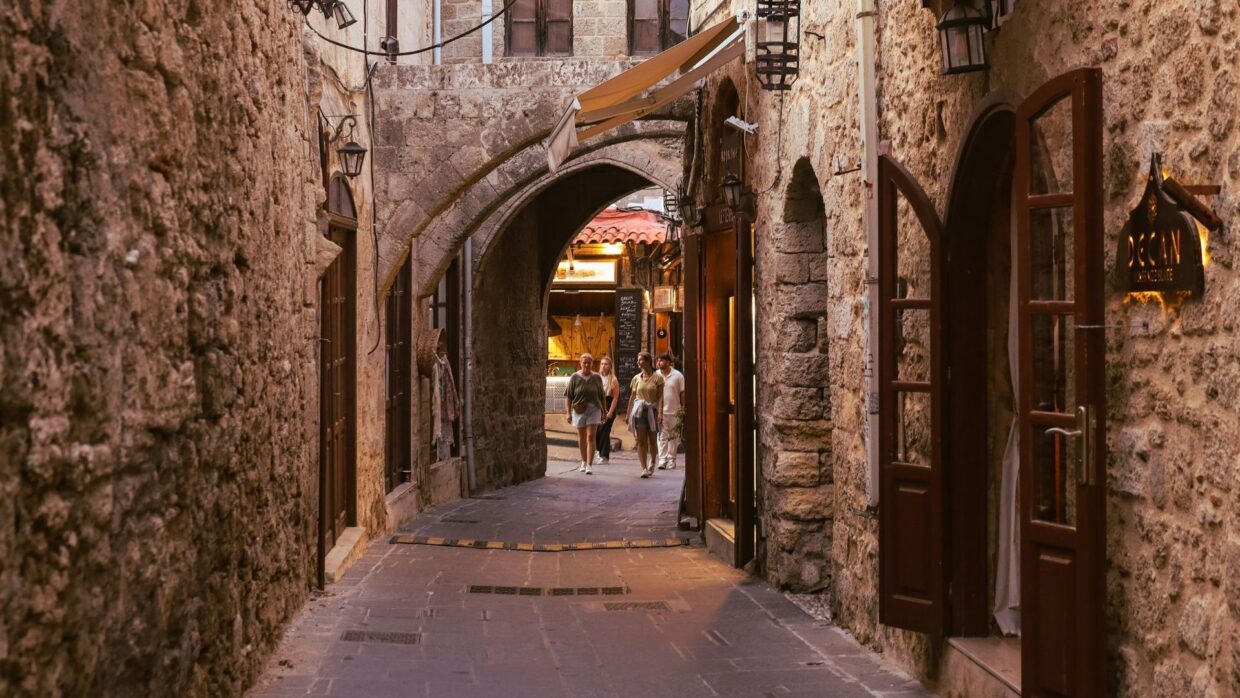
The Street of the Knights has been here since the 14th century. The stone is worn smooth by seven hundred years of footsteps, Crusader knights, Ottoman soldiers, Greek merchants, and now the tourists who arrive each summer and stand in the same narrow lane, feeling the same disorientation that comes from architecture that is genuinely, unhurriedly old. Rhodes is one of the few places in Greece where the history is as compelling as the beaches. For most Greek islands, that is not a competition anyone enters. For Rhodes, it is the entire point.
The island is the largest of the Dodecanese, sitting closer to the Turkish coast than to Athens, and it wears its layered past with a confidence that comes from having absorbed more civilisations than most countries manage in the same timeframe. Ancient Greeks, Romans, Byzantines, Crusader knights, Ottomans, Italians, each left something behind in the architecture, the food, the place names, and the general attitude of a population that has been welcoming and outlasting foreign arrivals for three millennia. The result is the most historically dense island in Greece and, in good conditions, one of the finest destinations in the Aegean.
Rhodes Town: the medieval city
The Old Town of Rhodes is a UNESCO World Heritage Site and the largest continuously inhabited medieval city in Europe. The Knights of St John ruled here for 213 years from 1309 to 1522, and what they built, the walls, the towers, the Street of the Knights, the Palace of the Grand Master, has survived in a state of preservation that is rare anywhere in the Mediterranean.
The walls alone are worth serious attention. Four kilometres in circumference, up to twelve metres thick in places, built to withstand the cannon fire that was the siege technology of the era, the walls are walkable on the upper rampart on certain days and visible from the moat-side path that encircles the old city. The sheer physical scale of the fortification communicates something about the seriousness of what the Knights were defending, and about the resources a military religious order could mobilise in the 14th century.
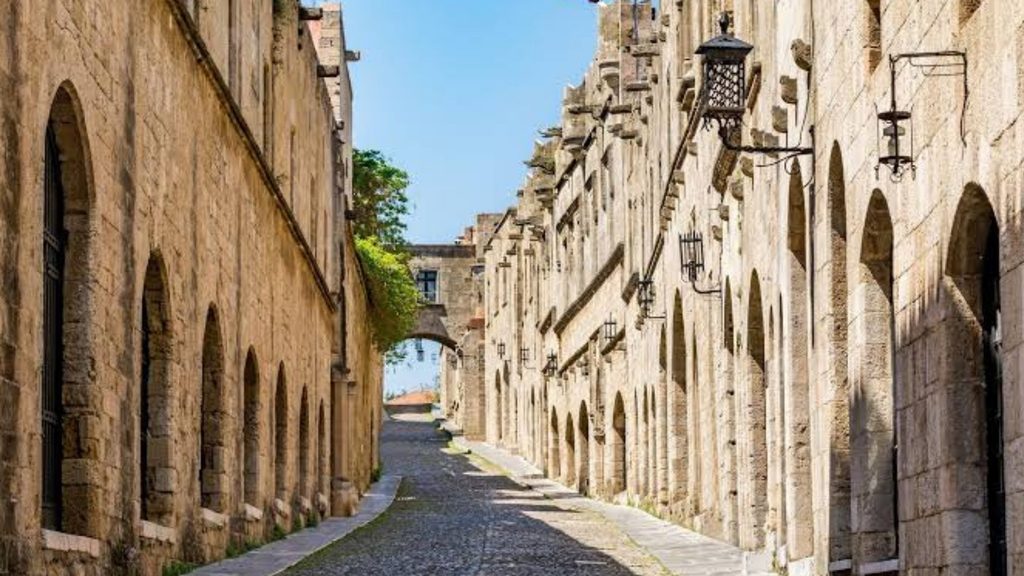
The Street of the Knights runs from the harbour up to the Palace, paved with the same stone it has always been paved with, lined by the inns (auberges) of the different national contingents of the Knights, the Inn of France, the Inn of Italy, the Inn of Spain. The facades are medieval, the architecture is Gothic, and the silence in the early morning, before the day-trippers arrive from the cruise ships in the harbour, is remarkable.
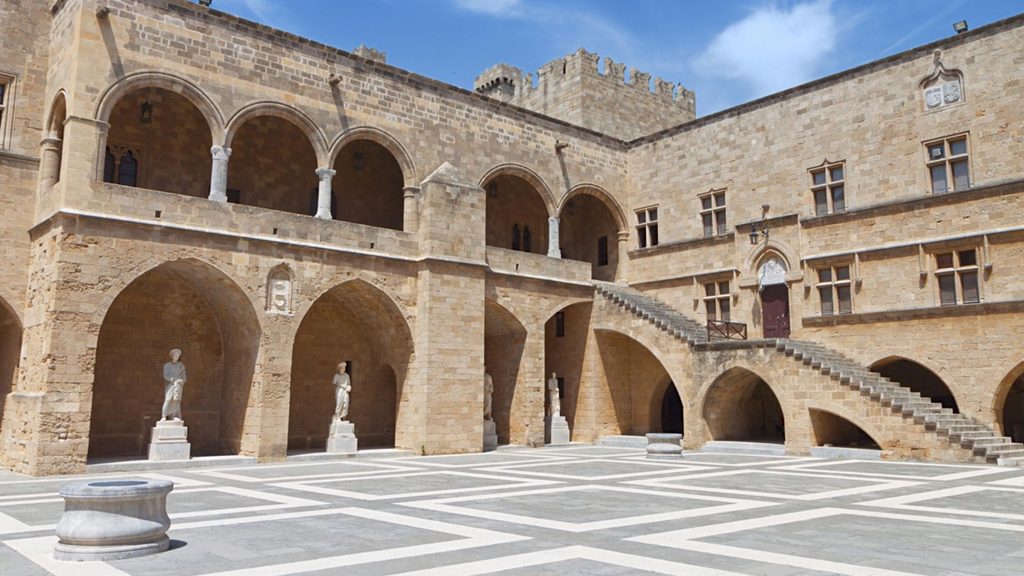
The Palace of the Grand Master sits at the top of the Street of the Knights, an enormous fortress-palace that was partially destroyed by a gunpowder explosion in 1856 and substantially rebuilt during the Italian occupation of the early 20th century. The interior contains a mosaic collection of extraordinary quality, including floor mosaics removed from the island of Kos. Entry 8 euros. Go in the morning.
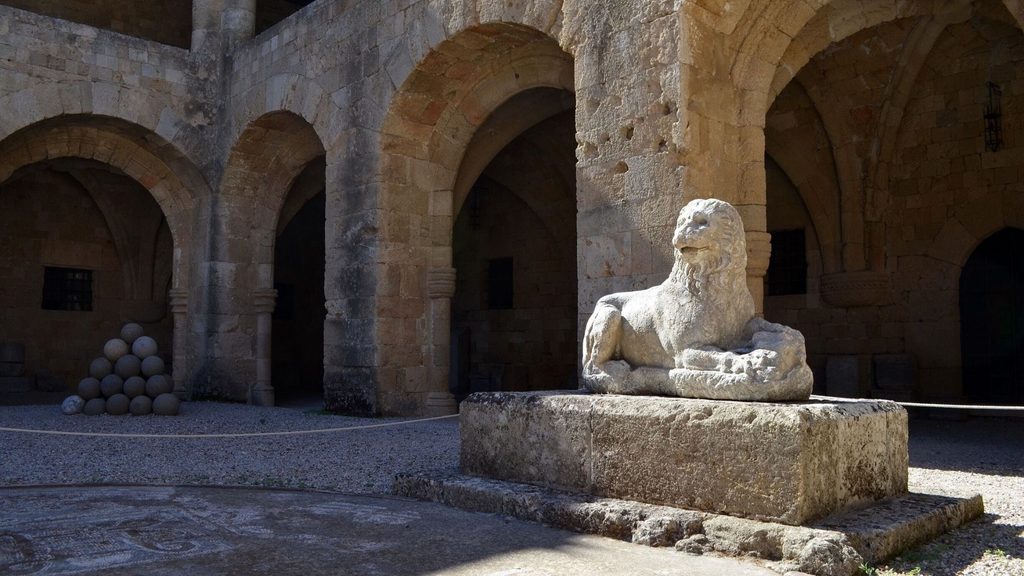
The Archaeological Museum – housed in the 15th-century Hospital of the Knights, contains one of the finest collections of ancient Greek sculpture outside Athens, including the Aphrodite of Rhodes, a marble statue of the goddess half-emerging from the sea, and the Helios head that provides the clearest image of what the famous Colossus of Rhodes may have looked like. Entry 12 euros.

The Turkish Quarter and the Mosque of Suleiman – in the southern section of the old city, the Ottoman presence is visible in the mosque, the Turkish baths (still operating), and the covered market. This is the quieter, less visited section of the old town and the one that most rewards wandering without a specific destination.
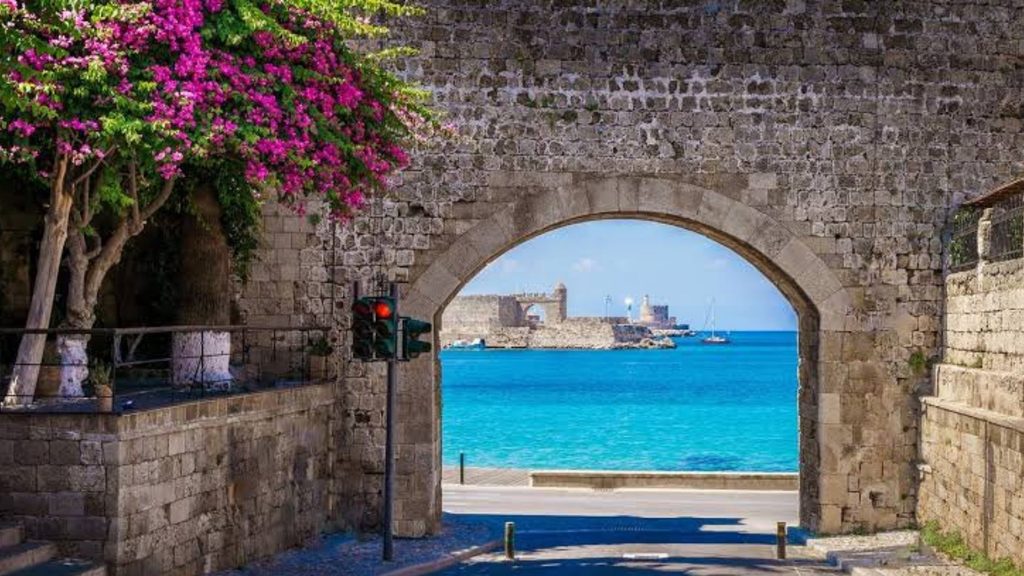
Practical note on the old town: the best time to walk the main streets is before 09:00 or after 18:00 when the cruise ship passengers have returned to their vessels. The old town empties in the evening into an atmospheric, lit-by-lantern version of itself that daytime visitors rarely experience.
Lindos
Lindos is the island’s second must-see and the experience most likely to exceed expectations. The village, a cluster of white-washed captains’ houses built in the 17th and 18th centuries by wealthy sea captains, with elaborately patterned black-and-white pebble courtyards, sits below a 116-metre acropolis cliff that is visible from twenty kilometres away.

The Acropolis of Lindos dates to the 10th century BC. The Temple of Athena Lindia at the summit is a 4th-century BC Doric structure whose columns have been partially re-erected and frame a view across the deep blue Aegean and the Turkish coast that is one of the finest in Greece. The climb takes approximately 20 minutes on a stepped path. Entry 12 euros.
Arrive before 09:00 to beat the heat and the tour groups, by 11:00 the path and the summit are congested. The descent rewards a swim at St Paul’s Bay directly below the acropolis, a small sheltered cove of extraordinary beauty where according to tradition Saint Paul landed in 51 AD. The water is turquoise, the bay is sheltered, and the view up to the acropolis from the water is one of the finest compositions in the Aegean.
Getting to Lindos from Rhodes Town: the KTEL bus runs regularly and costs approximately 5 euros. Journey time is approximately one hour. A taxi costs 40 to 50 euros. Lindos village itself is car-free, donkeys are the traditional transport for luggage and mobility-impaired visitors.
The beaches
Rhodes splits neatly into two coastal personalities. The east coast is sheltered, warm, and calm, good for swimming, good for families, lined with the resort infrastructure that most package holiday visitors come for. The west coast faces the open Mediterranean and receives more wind, consequently less popular for beach days but excellent for windsurfing and kite surfing, particularly around Prasonisi at the island’s southern tip.

Tsambika Beach – the finest beach on the east coast and one of the best in Greece. A kilometre of soft golden sand backed by the distinctive red rock of Tsambika hill, with calm, warm, clear water and a beach bar operation that is large enough to be useful without being intrusive. Gets busy in peak season but the size of the beach absorbs volume well. Accessible by KTEL bus or car.

Anthony Quinn Bay – a small rocky cove north of Lindos, named for the actor who filmed The Guns of Navarone on Rhodes and fell sufficiently in love with the location to attempt purchasing this bay. The water is extraordinarily clear and the snorkelling over the rocky bottom is among the best accessible from the shore on the east coast. No sand, but the swimming is exceptional.
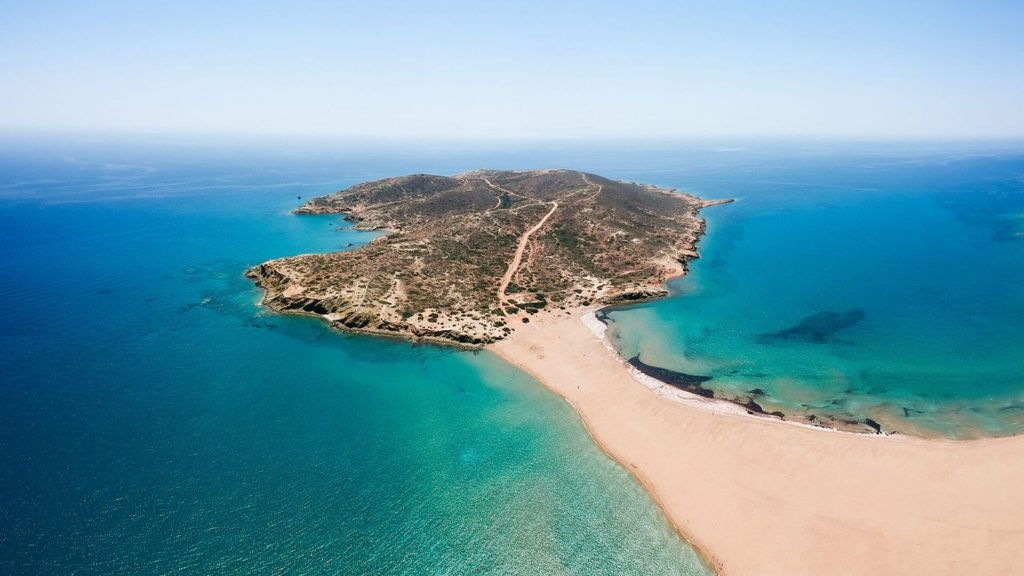
Prasonisi – the southernmost point of the island, where the Aegean and Mediterranean meet at a sandy isthmus that submerges in winter and creates a dual-beach environment in summer, calm water on one side for swimmers, choppy open sea on the other for windsurfers. The drive south through the quiet villages of the island’s interior is as rewarding as the destination.
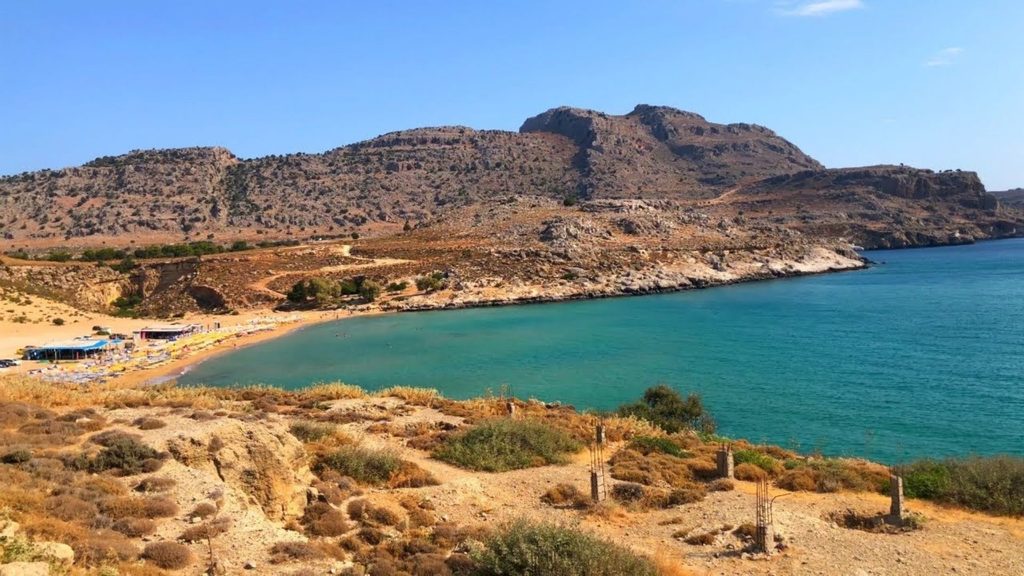
Agathi Beach – a small, relatively uncrowded bay of fine golden sand and clear water near the village of Haraki, consistently rated by visitors as one of the most beautiful beaches on the east coast. Less accessible than Tsambika and consequently quieter.
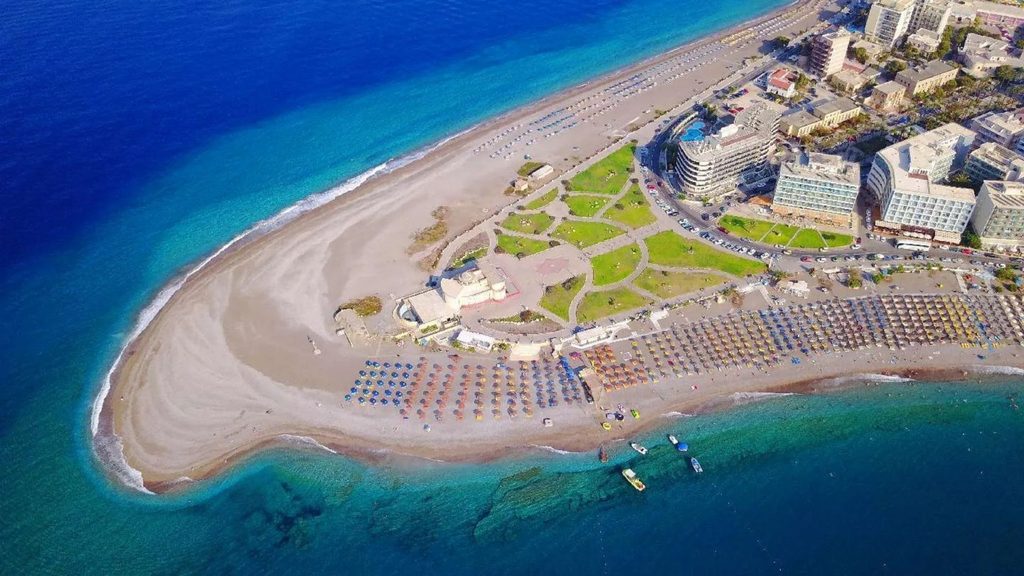
Elli Beach – the town beach of Rhodes Town itself, immediately north of the old city. Not the island’s finest sand but a completely practical option for the first and last evening of a stay, within walking distance of the old town.
Where to stay
Need a place to stay in Rhodes? Explore the map below.
Beyond the main circuit
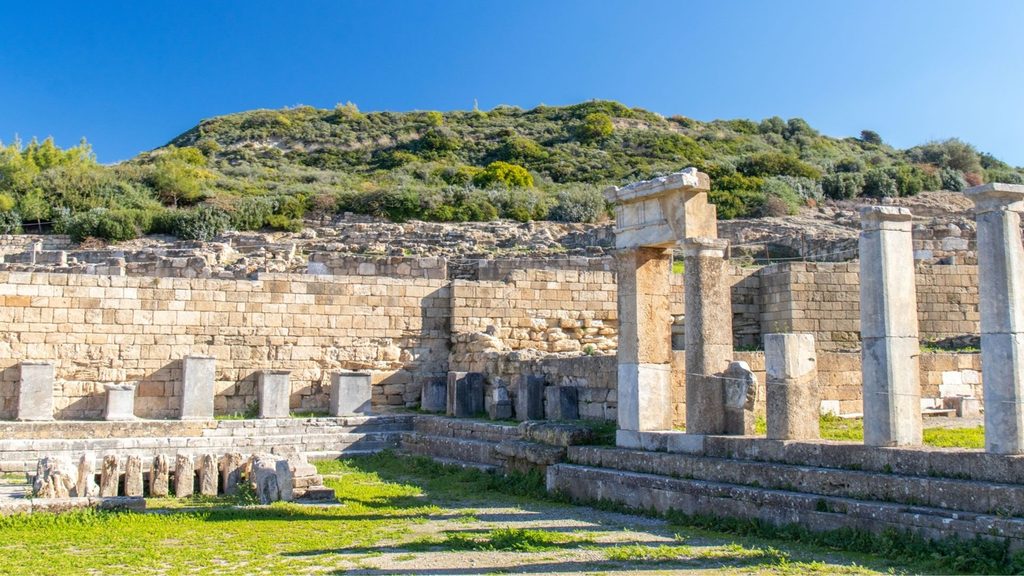
Ancient Kamiros – one of the three ancient city-states of Rhodes, on the west coast, now largely unexcavated ruins on a hillside above the sea. Less impressive in individual monuments than Lindos but more evocative in its setting, a complete ancient city plan visible from the hillside above, with the sea beyond. Entry 8 euros. Almost entirely free of other visitors on a weekday morning.
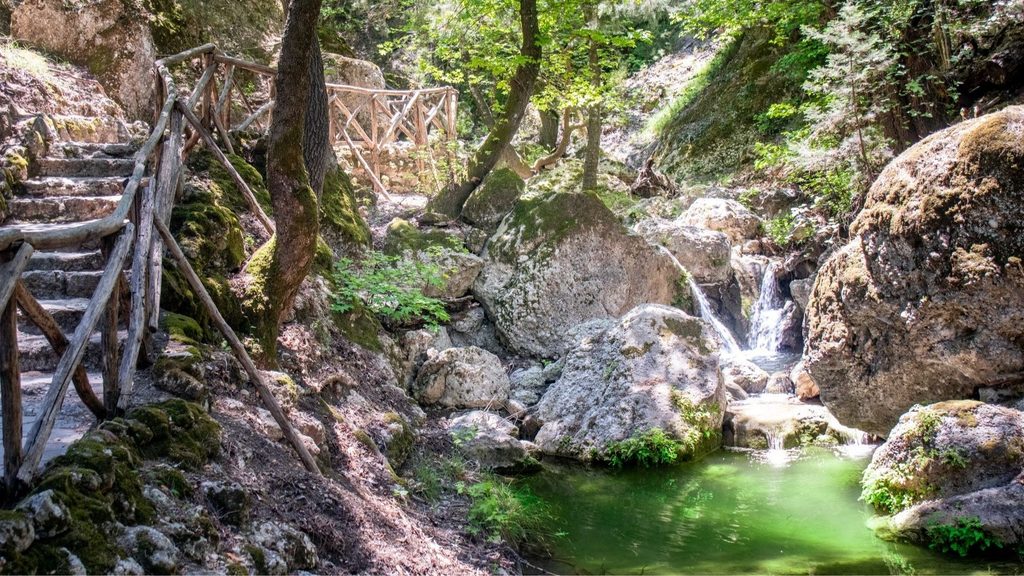
Valley of Butterflies (Petaloudes) – a narrow wooded valley in the island’s interior where thousands of Jersey Tiger moths (not butterflies, despite the name) congregate on the tree bark during July and August, drawn by the resin of the liquidambar trees. The sight of the grey bark suddenly erupting into orange and black wings when disturbed is genuinely extraordinary. Visit early in the morning before the tour buses arrive.
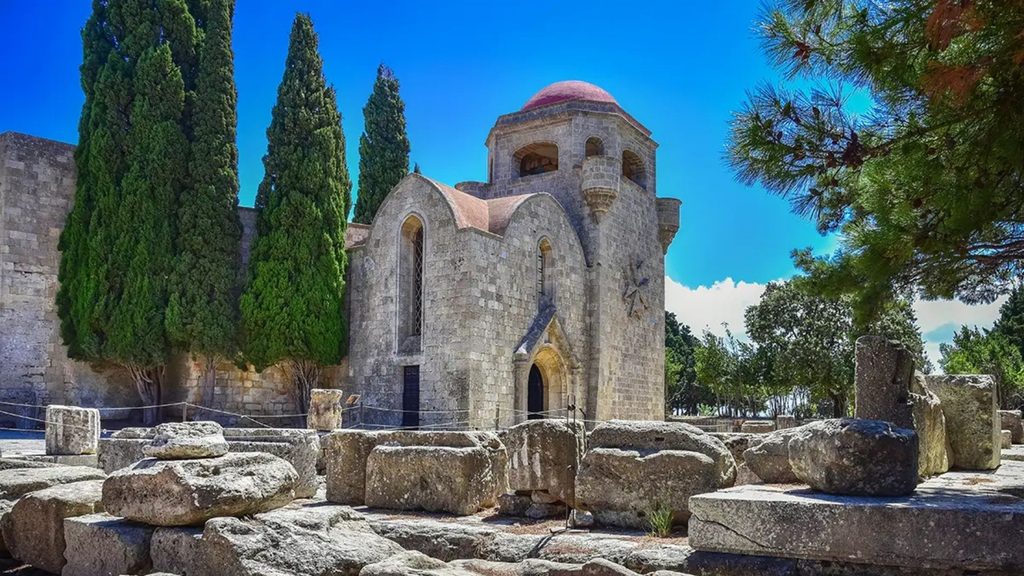
Filerimos Monastery and Acropolis of Ialyssos – a Byzantine-era monastery on a forested hilltop above the west coast, with the ruins of the ancient city of Ialyssos below it. The view from the hill across the west coast and toward Turkey is one of the finest on the island. A peacock lives in the monastery grounds and appears indifferent to visitors.

Emponas village – in the mountains of the interior, this traditional village is the centre of Rhodian wine production. The local grape variety, Athiri, produces wines that are rarely seen outside Greece. The village is authentically lived-in rather than tourist-oriented and the tavernas serve traditional Rhodian dishes at prices that reflect local rather than visitor economics.
Getting around Rhodes
The KTEL bus network connects Rhodes Town with most major destinations, Lindos, Tsambika, Faliraki, Kamiros, the airport. Tickets cost 2 to 8 euros depending on distance. For Lindos and the main east coast, the bus is reliable and practical. For the west coast, southern villages, and off-circuit beaches, a rental car or scooter provides much greater flexibility.
Rhodes Town is walkable for the old city and the immediate harbour area. The new town north of the old city walls has good restaurants, shops, and the main bus station. Taxis are metered and reliable from the Mandraki harbour stand.
The ferry from Piraeus to Rhodes takes approximately 14 to 18 hours on overnight services, a practical option for those who want to avoid flying and experience arrival by sea. Faster catamarans run seasonally. Day trips from Rhodes to Symi Island, a dramatically beautiful small island with a coloured neoclassical harbour, 45 minutes by fast boat, are among the most popular excursions from the island and entirely justified.
When to visit Rhodes
Rhodes receives more than 300 days of sunshine per year, the most of any Greek island, which gives it a longer practical season than most Aegean destinations.
May and June are the finest months. The sea is swimmable, the old town is manageable, and the hillsides above the coast are still green from the spring rains. Accommodation rates are significantly below July and August.
July and August – peak season, hot (33 to 38 degrees Celsius regularly), busy particularly in the old town when multiple cruise ships are in port simultaneously. The beaches and the evening old town are still excellent. Book accommodation well ahead.
September and October – strongly recommended. The sea reaches its warmest temperatures in September (27 to 28 degrees), the cruise ship volume decreases, and the light in October is extraordinary. Many consider September the finest month on the island.
November to April – Rhodes is partially operational year-round, unlike the smaller Cycladic islands. The old town, the museums, and many restaurants remain open. The beaches are off-season but the historical sites and the mountain interior are excellent and essentially uncrowded.
The Greece series
This post is part of the flight.now Greece series:
- Greece: the complete guide – islands, mainland, when to go, how to get around, and what makes each destination distinct
- Santorini: the honest guide – the caldera villages beyond Oia, the volcanic beaches, and the old-vine Assyrtiko wine
- Crete: the complete island – Minoan ruins, the Samaria Gorge, the south coast villages only reachable by boat, and the food
- Halkidiki: northern Greece’s best kept secret – Sithonia’s hidden coves, the Mount Athos monastery boat tour, and Aristotle’s birthplace
- Meteora: between earth and sky – six monasteries on 400-metre sandstone pillars, hiking trails, and 130,000 years of human history
Some links in this post are affiliate links. If you book through them, flight.now earns a small commission at no extra cost to you. Learn more here


[…] Rhodes Travel Guide 2026: Medieval City, Lindos and the Best Beaches […]