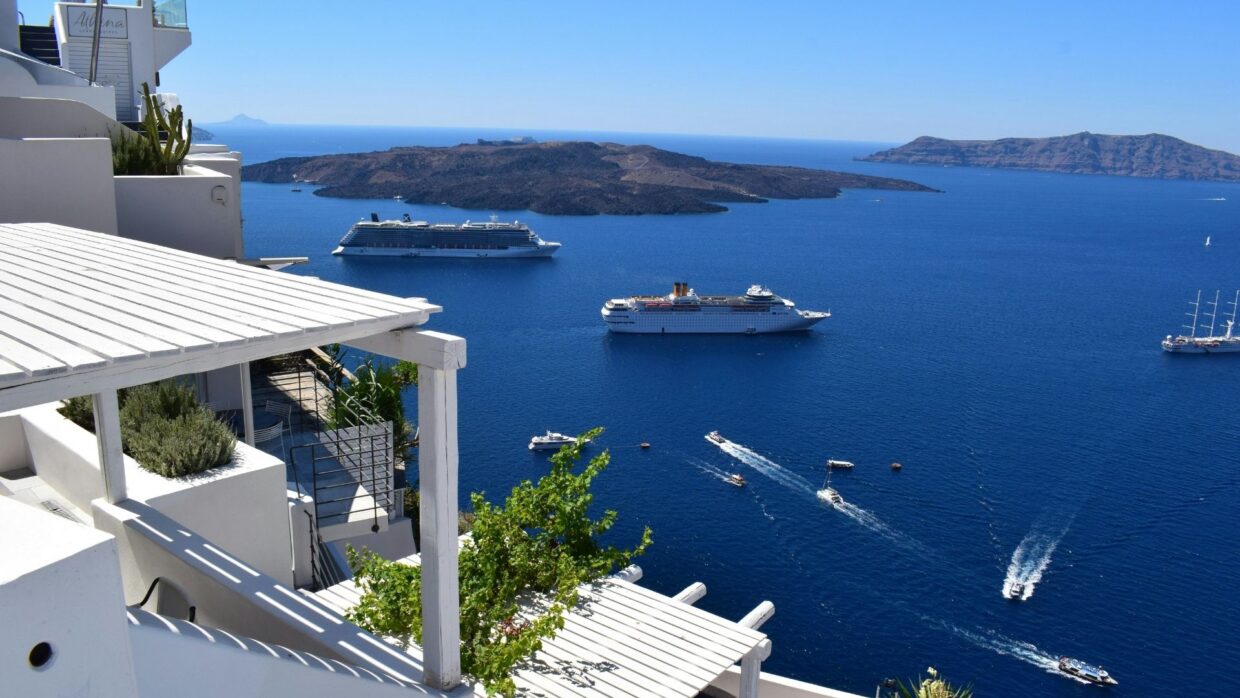
Let’s start with the truth. Santorini in July and August is one of the most congested tourist experiences in Europe. The path to the Oia sunset viewpoint fills with hundreds of people an hour before the sun drops. The port at Athinios is chaos when three ferries arrive simultaneously. The caldera-view restaurants with the finest settings charge prices that reflect the setting more than the food. The famous cable car from Fira down to the old port operates a queue that, in peak season, tests the patience of most visitors.
All of that is true. And Santorini is still one of the most extraordinary places you will ever go.
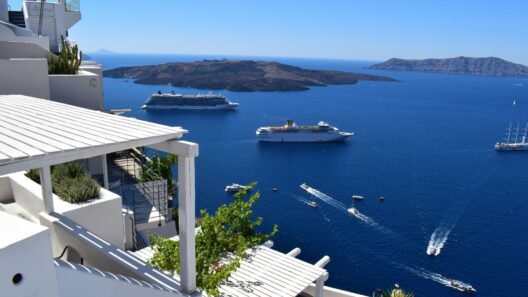
The volcanic caldera, a crescent of reddish-black cliff rising 300 metres above a drowned crater that was once the largest volcanic eruption in recorded human history, is a landscape that no description and no photograph fully conveys until you are standing on a terrace above it at dusk, watching the light change across the water below. The blue-domed churches of Oia, the white-washed cave hotels carved into the cliff face, the Assyrtiko wine grown in ash-based volcanic soil that produces some of the most distinctive white wine in Greece, these things work on you regardless of how many people are standing nearby having the same experience.
The question is not whether Santorini is worth it. It is how to experience it in a way that gives you the island rather than the theme park version of it.
The geology: why Santorini looks the way it does
Everything about Santorini’s appearance follows from a single event. Around 1600 BC, the volcanic island of Thera erupted in what is now considered one of the largest volcanic events in human history, an explosion so catastrophic that it destroyed the Minoan settlement on the island, generated tsunamis across the eastern Mediterranean, and left the caldera that defines the island’s geography today.

The crescent shape of modern Santorini is the remaining rim of that erupted volcano. The small islands of Nea Kameni and Palea Kameni visible in the centre of the caldera are the volcano’s newer cone, still active, still building. The black and red sand beaches on the island’s south and east coasts are the product of the volcanic rock. The ash-based soil that makes Santorini’s wine so distinctive is the direct geological inheritance of the eruption.
The caldera is not a lake. It is open sea, the collapsed interior of an ancient volcano, 400 metres deep in places, connected to the Aegean through gaps in the southern rim. When you look at the view from the caldera edge, you are looking at the interior of a volcano that is still, geologically speaking, active.
The villages: which one is right for you
Oia
The most famous, the most photographed, and the most crowded. The sunset from the castle ruins at Oia’s western tip is the image that defines Santorini globally, orange sky, white buildings, blue domes, the caldera below. It is as beautiful as advertised. The queue to secure a position at the castle ruins begins over an hour before sunset in peak season.
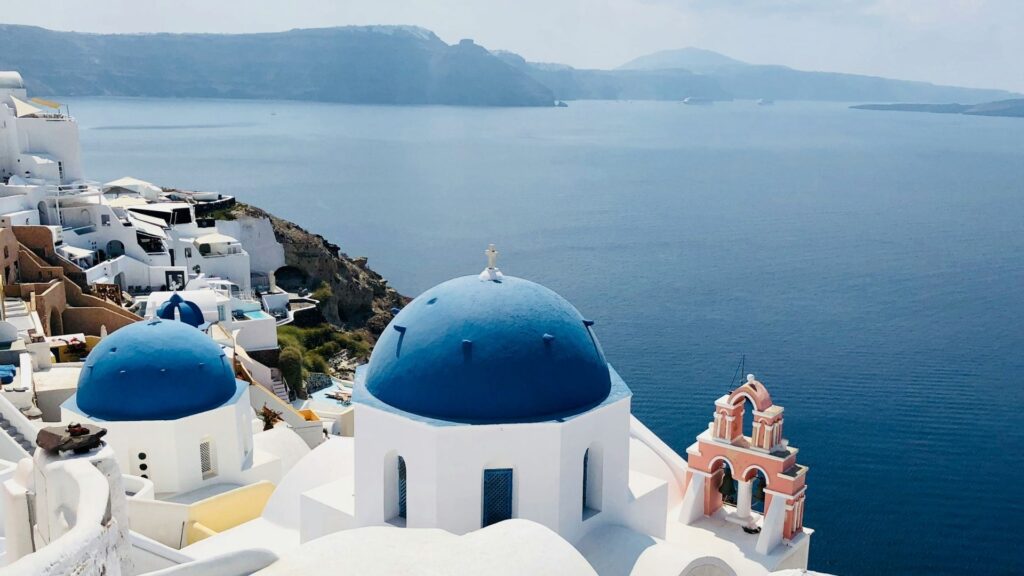
Oia is also, in the early morning before the day-trippers arrive, genuinely beautiful in a way the afternoon crowds make difficult to access. The marble-paved streets, the restored captain’s houses, the boutiques and galleries, the caldera-view restaurants that serve breakfast overlooking water that has had no equal time to be anything but perfect, Oia at 07:00 is a different place from Oia at 17:00.
Staying in Oia means staying in one of the cave hotels carved into the caldera cliff, a genuinely extraordinary accommodation experience but one that comes at prices reflecting the scarcity of the setting. The highest-rated properties (Canaves Oia Suites, Andronis Luxury Suites) are among the most expensive hotels in Greece and require booking many months ahead for summer dates.
The sunset alternative: position yourself at Imerovigli or Firostefani for the sunset. The views are comparable. The crowds are a fraction of Oia.
Fira
The capital of the island and the most convenient base for exploring. Fira sits on the caldera edge with restaurants, shops, the Archaeological Museum, and the cable car down to the old port. It is more commercial and less architecturally coherent than Oia, but its central location makes it the most practical hub for day trips to other villages, beaches, and the archaeological site at Akrotiri.
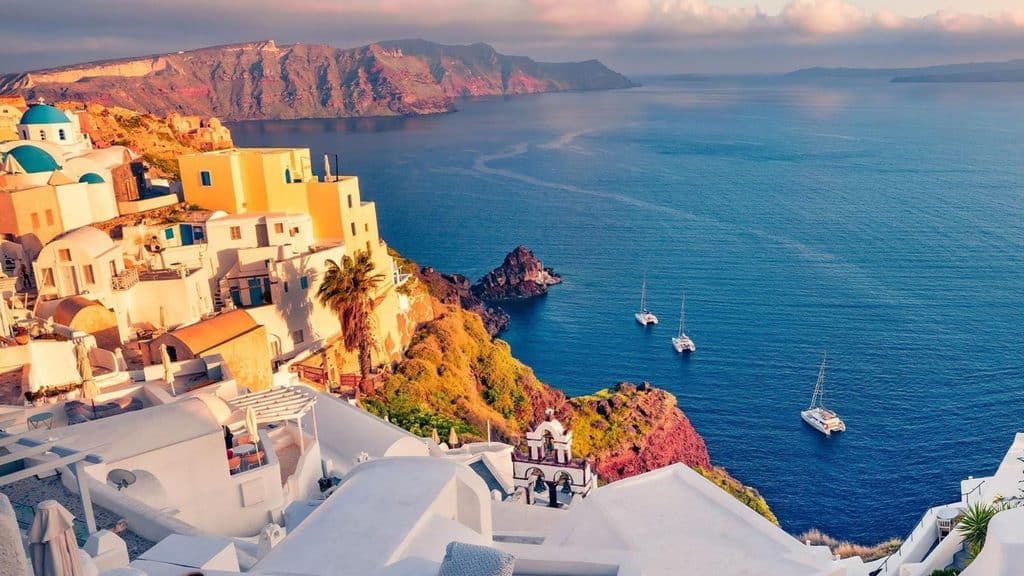
The maze of streets behind the caldera edge in Fira contains the island’s best range of mid-price restaurants and the greatest concentration of authentic local life, the bakeries, the hardware shops, the kafeneions, that the tourist-facing main street does not reveal.
Imerovigli
The village between Fira and Oia on the caldera rim, consistently underrated and consistently recommended by experienced Santorini visitors. Imerovigli has caldera views equal to anything in Oia, a fraction of the foot traffic, and the finest single natural feature on the caldera rim: Skaros Rock, a volcanic promontory that juts into the caldera from the village and is reachable by a 20-minute trail from the main path.
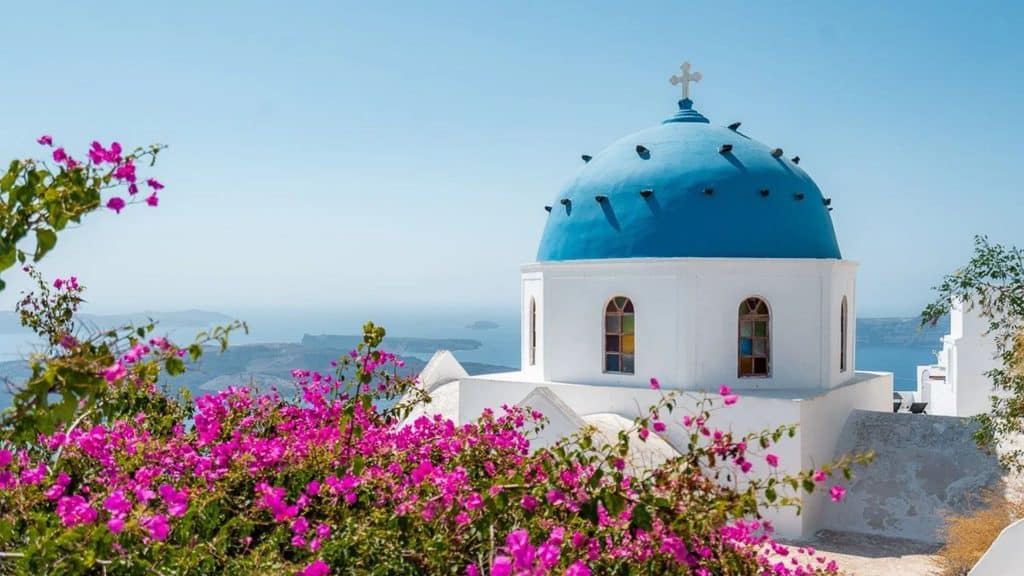
The views from Skaros at golden hour, the caldera stretching away in both directions, Oia visible to the north, no other visitors in most directions, are among the finest available anywhere on the island without paying a restaurant or hotel cover charge for the privilege.
Imerovigli for sunset: the views are excellent, the crowds are manageable, and the walk back to a caldera-view restaurant for dinner afterward takes three minutes.
Firostefani
Immediately south of Fira, Firostefani is often treated as an extension of the capital rather than a separate village. This is a mistake. The caldera-edge path through Firostefani is quieter than Fira’s main street, the restaurants have comparable views at lower prices, and the walk between Firostefani and Fira takes ten minutes.
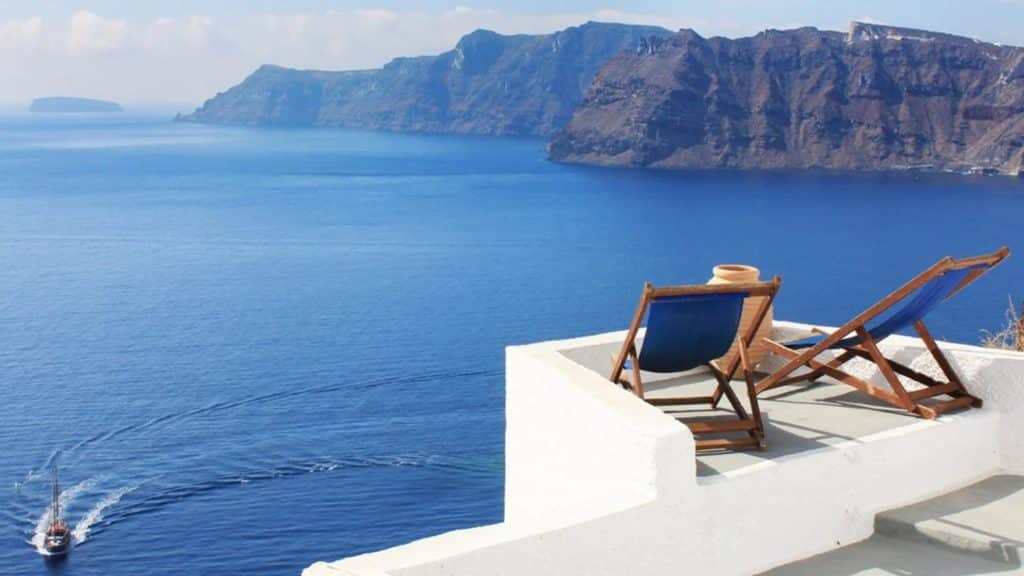
For budget-conscious visitors who want the caldera atmosphere without the Oia price tag, Firostefani is the answer the algorithm has not yet fully surfaced.
Pyrgos
The inland hilltop village at the island’s highest point and the one most recommended by people who want to see Santorini as a place people actually live. Pyrgos has a medieval kasteli (fortress), traditional architecture, a 360-degree view across the island that includes the caldera on one side and the Aegean on the other, and enough working local life, the kafeneion with the old men playing backgammon, the butcher, the bakery, to feel like Greece rather than a theme park.
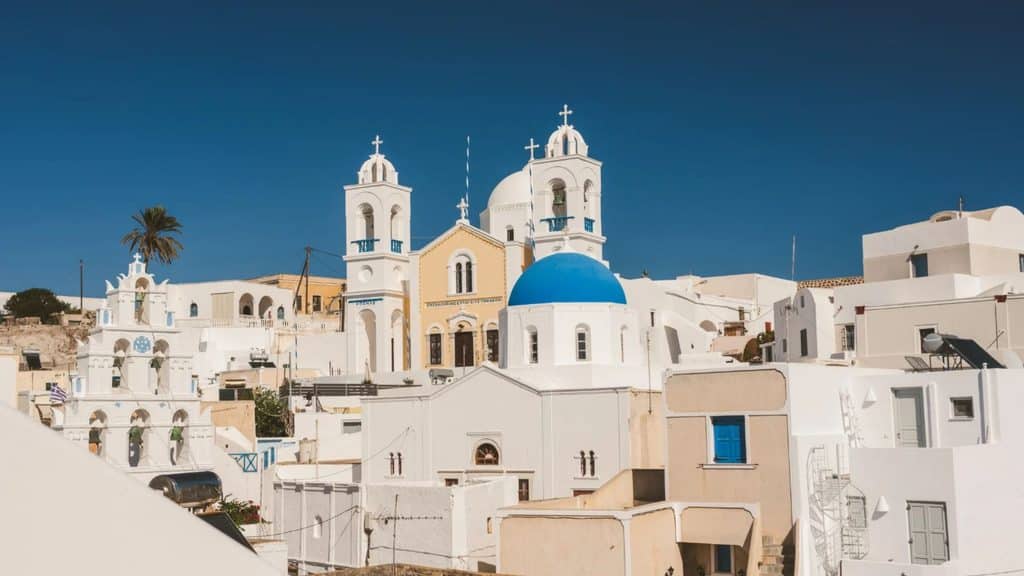
Several of the island’s best wineries are within walking or cycling distance of Pyrgos, making it the natural centre for wine-focused exploration. The restaurant Selene, one of the most celebrated in Santorini for its commitment to local ingredients and Aegean culinary tradition, is in Pyrgos.
Akrotiri
The southern tip of the island, developing as an accommodation base as the central caldera villages reach saturation. Akrotiri has the finest archaeological site on the island, the preserved Minoan settlement buried by the 1600 BC eruption, now excavated under a protective roof and among the most significant Bronze Age sites in Europe.
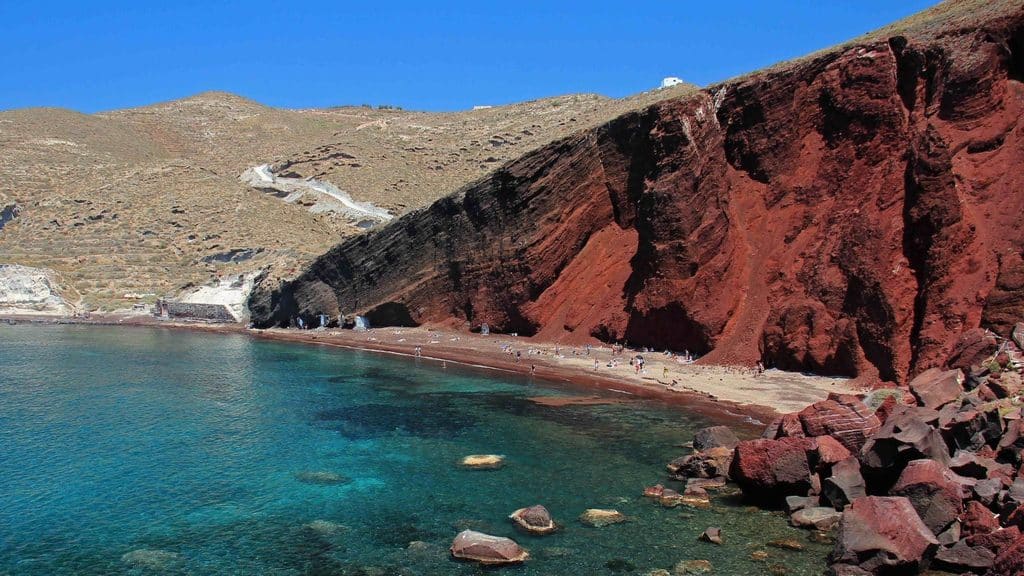
The Red Beach below the village, with its extraordinary crimson volcanic cliffs, is one of the most visually distinctive beaches in the Mediterranean.
The beaches
Santorini’s beaches are volcanic and dramatic rather than soft and sandy. This is not a disappointment, it is a different experience from the white sand of Mykonos or the Ionian islands, and a genuinely extraordinary one.
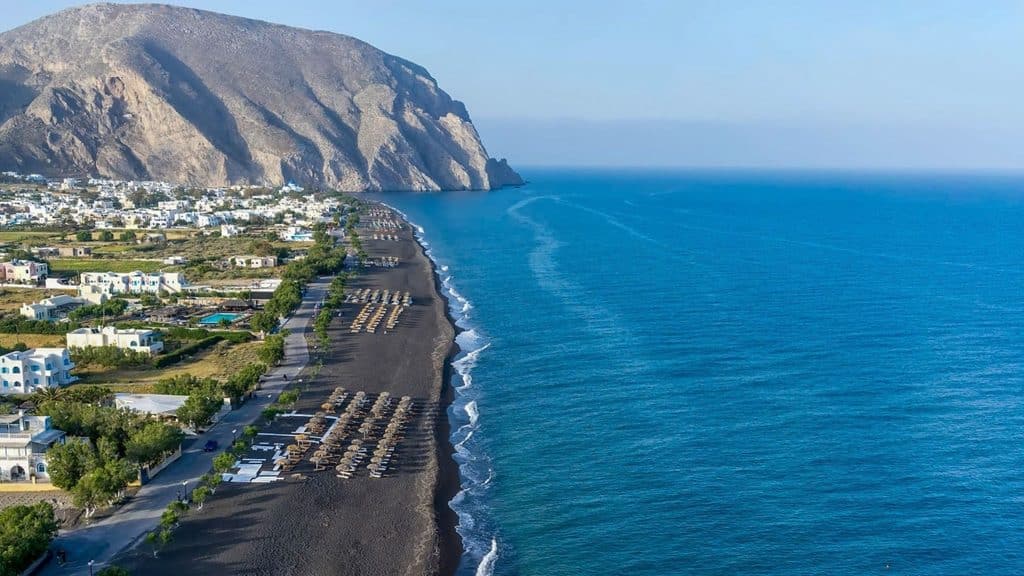
Perissa and Perivolos – the twin beach villages on the island’s eastern coast, with long stretches of black volcanic sand, organised beach clubs with sunbeds and parasols, clear warm water, and a range of tavernas and bars. The most practical beach experience on the island and the best value. Connected by a walking path along the beach.
Kamari – on the east coast, the island’s most developed beach resort, with a promenade of restaurants and bars behind a long black sand beach. Family-friendly and well-serviced.
Red Beach – below the village of Akrotiri on the south coast, accessible by a ten-minute walk from the car park over volcanic rock. The red and black cliffs that overhang the beach are extraordinary, one of the most visually distinctive natural settings in Greece. The beach itself is small and gets busy, but the setting justifies the effort.
Cape Columbo – the island’s most secluded beach at the northeastern tip, requiring effort to reach and offering very few facilities in return. The reward is a genuinely uncrowded beach experience in a setting of raw volcanic beauty that none of the organised east coast beaches provide.
Armeni – a tiny beach below Oia, reached by 300 steep steps from the village. No facilities, no sunbeds, the caldera cliffs rising above you on all sides. Worth the descent and the subsequent climb back up for the setting alone.
The wine
Santorini’s wine is one of the best and least understood in Greece. The volcanic ash soil produces Assyrtiko, a white grape variety that thrives in the mineral-rich ground and extreme conditions of the island. The Santorini Assyrtiko is dry, high in acidity, and carries a distinctive salinity and minerality that makes it unlike any other white wine in Greece.
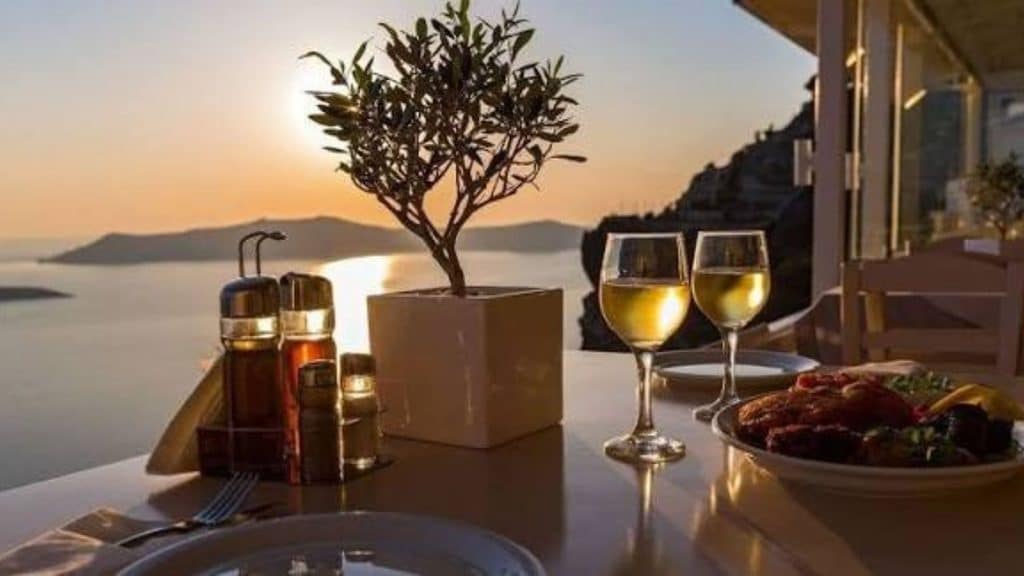
The vines are trained in a unique basket shape close to the ground, the kouloura method, to protect them from the wind and to collect the morning dew that provides their primary moisture in an island with almost no surface water. Some vines are hundreds of years old. The old-vine Assyrtiko produced from these ancient plants is among the most complex and age-worthy white wines in the Mediterranean.
Wineries worth visiting:
Santo Wines – the island’s cooperative winery, with a large terrace overlooking the caldera and one of the finest views available anywhere on the island. The Assyrtiko here is excellent and the caldera setting makes the tasting the most complete single experience available for combining wine and scenery. Book a tasting in advance.
Venetsanos Winery – a beautifully restored historic winery on the caldera edge south of Fira, with terraced seating and views that rival anything in Oia at a fraction of the foot traffic. Produces some of the island’s finest Vinsanto, the sweet dessert wine made from sun-dried Assyrtiko grapes, aged in oak barrels.
Domaine Sigalas – in the north of the island near Oia, the winery most respected by serious wine travellers for the quality of its vineyard-specific Assyrtiko and its commitment to preserving the old-vine heritage. Less theatrical than Santo Wines but considerably more interesting for the wine itself. Book a tasting directly.
The volcano and hot springs
The boat tour to Nea Kameni, the active volcanic island in the centre of the caldera, is the most popular excursion on the island and genuinely worth doing. The tour departs from Fira’s old port, sails to the volcano, hikes to the active crater with a guide, and then stops at the geothermal hot springs in the shallow water off Palea Kameni, sulphurous, faintly yellow, warm in a way that is less comfortable than romantic but genuinely unusual.
The basic tour costs approximately 42 to 59 euros and runs three to six hours. The full-day version including Therasia Island costs 59 to 111 euros. Book in advance through your accommodation or at the port. Wear a dark swimsuit for the hot springs, the sulphur stains.
Where to Stay
Wondering where to base yourself in Santorini? Use the map below to compare hotels
Getting around
The public bus (KTEL) connects Fira to Oia, Perissa, Kamari, Akrotiri, and most main villages, cheap (approximately 2 euros per journey), reliable on the main routes, and crowded in peak season. For Pyrgos and the inland villages, a rental car, scooter, or ATV provides the most practical access.
The Fira to Oia caldera hike is the finest way to travel between the two villages, approximately 10 kilometres along the caldera rim, taking three to four hours, with continuous views and multiple points to stop for coffee or a swim below. Best done early morning in one direction with a bus or taxi return.
The cable car from Fira down to the old port costs approximately 6 euros and has a queue in peak season. The donkey path is the traditional alternative, the same 588 steps the donkeys use, alongside the donkeys, which is either charming or alarming depending on your disposition.
When to visit
June and September are the honest consensus for the best Santorini experience. Weather is warm (22 to 27 degrees Celsius), the sea is swimmable, businesses are fully open, and the crowds are manageable. September coincides with the grape harvest, some wineries offer harvest experiences in the vineyard.
July and August – the full summer experience with full summer crowds. The caldera is extraordinary regardless. Book caldera-view accommodation six to nine months ahead. The island is operating at maximum capacity and most visitors find it worth it.
October – excellent and underrated. Temperatures of 20 to 23 degrees, the sea still swimmable into mid-October, prices noticeably lower, and the island dramatically quieter than September.
November to March – most of the island closes. Some caldera-view hotels remain open for specific packages. Not recommended for a first visit.
The Greece series
This post is part of the flight.now Greece series:
- Greece: the complete guide – islands, mainland, when to go, how to get around, and what makes each destination distinct
- Rhodes: the island the Knights built — the medieval walled city, the Acropolis of Lindos, and the beaches most visitors never find
- Crete: the complete island – Minoan ruins, the Samaria Gorge, the south coast villages only reachable by boat, and the food
- Halkidiki: northern Greece’s best kept secret – Sithonia’s hidden coves, the Mount Athos monastery boat tour, and Aristotle’s birthplace
- Meteora: between earth and sky – six monasteries on 400-metre sandstone pillars, hiking trails, and 130,000 years of human history
Some links in this post are affiliate links. If you book through them, flight.now earns a small commission at no extra cost to you. Learn more here