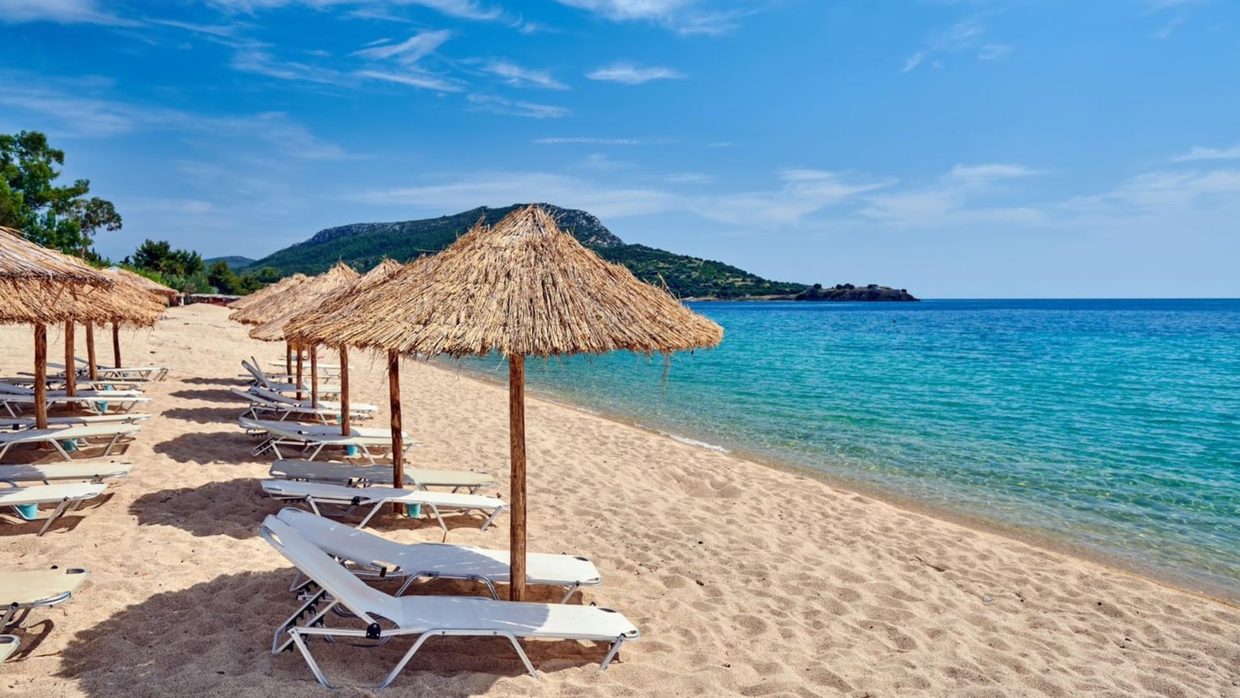
Most Western European travellers have never heard of Halkidiki. The Germans have. They have been coming here since the 1960s, filling the resort complexes of Kassandra with the particular commitment of a nation that discovered something good and quietly kept it to itself for sixty years. The domestic Greek market knows it as the country’s finest coastal region outside the islands. The Balkan visitors who fill Thessaloniki’s roads every August know it as the beach destination an hour from the city. The rest of Europe is only now beginning to catch up.
Halkidiki is a three-fingered peninsula of northern Greece extending into the northern Aegean, 70 kilometres southeast of Thessaloniki. The three fingers – Kassandra in the west, Sithonia in the centre, and Athos in the east – are as different from each other as three adjacent landscapes in the same country can be. Kassandra has the resort infrastructure, the beach clubs, the nightlife, and the Sani Resort complex that occupies a thousand acres of pine-forested coastline on its own. Sithonia has 52 Blue Flag beaches, Aleppo pine forests descending to the water, hidden coves with no buildings and perhaps a dozen people at maximum, and the finest coastal driving road in northern Greece. Athos has twenty Orthodox monasteries that have operated continuously since the 10th century, access restricted by one of the oldest operating theocracies in Europe, and a coast that is accessible by boat and is unlike anything else in the European travel experience.
Add Thessaloniki – one of the finest cities in Greece for Byzantine heritage and contemporary food culture – and you have a region that rewards a full week without ever requiring a flight.
Kassandra: the resort peninsula
Kassandra is the western and most accessible of the three peninsulas, connected to the Halkidiki mainland by a narrow isthmus at Nea Potidaea and lined along both its eastern and western coasts with resort infrastructure ranging from large all-inclusive complexes to family-run guesthouses.
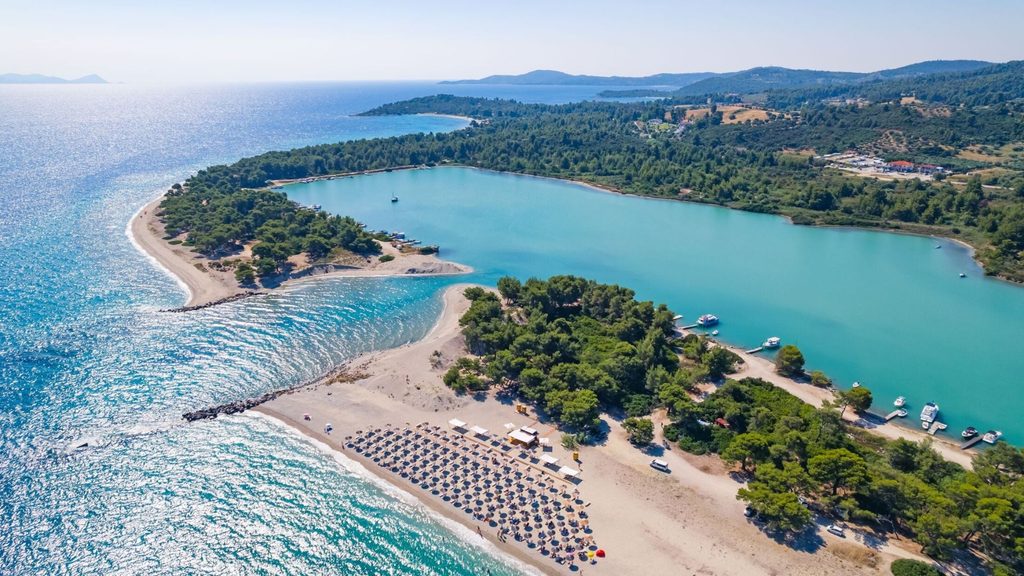
The flagship is the Sani Resort – a private resort complex of more than 1,000 acres of pine forest and private coastline on Kassandra’s northern tip, encompassing five hotels ranging from the ultra-luxury Sani Asterias to the family-focused Sani Club, a marina, its own beach club, multiple restaurants, and the annual Sani Festival which brings international jazz, world music, and classical performers to an open-air stage on the beach every summer. Sani is to Halkidiki what a well-managed small principality would be to Monaco – self-contained, exceptionally run, and priced accordingly. It is also genuinely extraordinary as a resort experience.
Beyond Sani, Kassandra’s best beaches are on the western coast facing the gulf of Thessaloniki – Pefkochori, Possidi (a narrow cape of sand extending into the sea at Kassandra’s southern tip, one of the most distinctive beach formations in northern Greece), and the organised beach at Polychrono. The eastern coast faces the Sithonian gulf and is slightly more sheltered.
Kassandra is the correct choice for visitors who want full resort infrastructure, easy access, organised beach services, and evening entertainment. It is the least appropriate choice for visitors who want to find an empty cove with no other people in it – for that, go to Sithonia.
Ouranoupolis
At the base of the Athos peninsula rather than technically on Kassandra, Ouranoupolis deserves mention as the departure point for the Mount Athos coastal boat tour – the most distinctive experience available from the Halkidiki base.
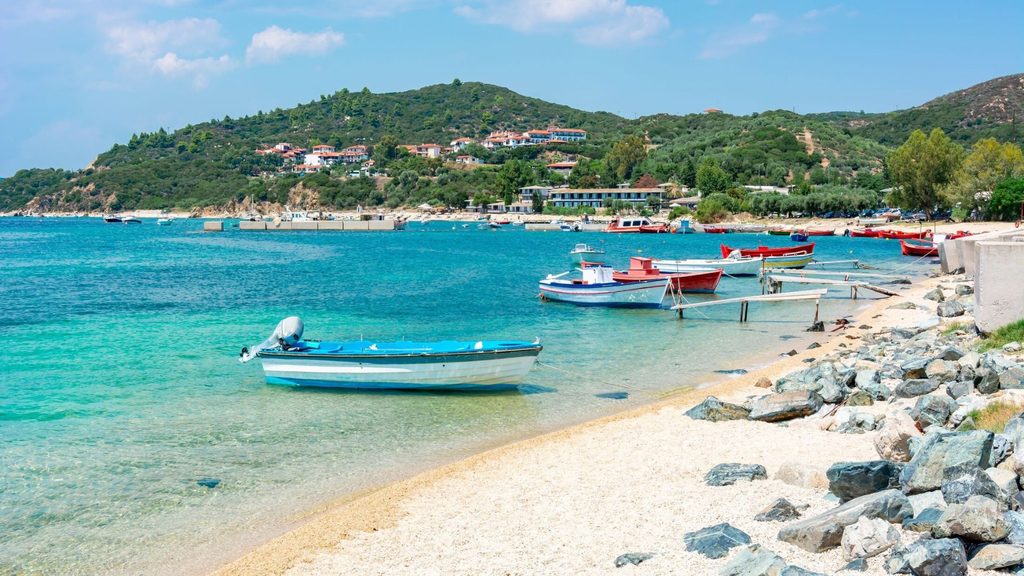
The small town has a Byzantine tower, a reasonable selection of accommodation, and a harbour from which the tour boats depart each morning. Staying a night in Ouranoupolis before or after the boat tour is the most practical arrangement.
Sithonia: the real find
Sithonia is the middle finger of Halkidiki and the one that most rewards the traveller willing to drive slightly further from Thessaloniki and give up the all-inclusive resort infrastructure that Kassandra provides.
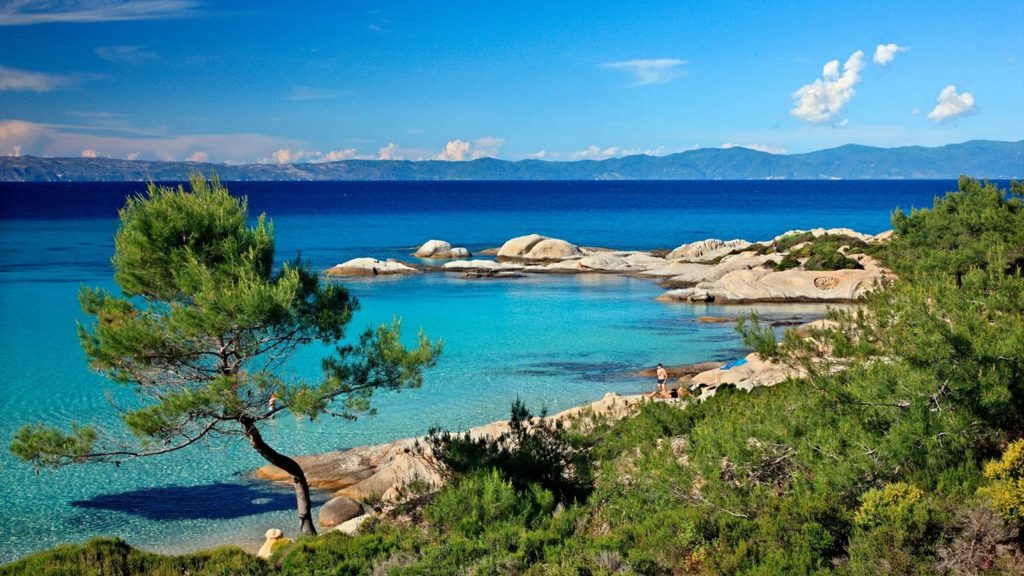
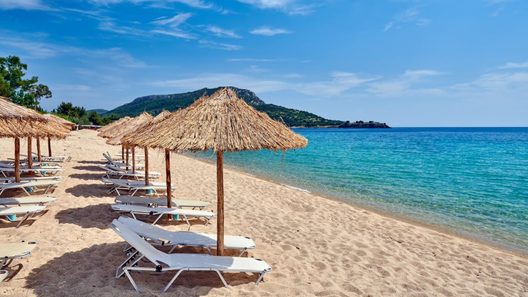
The landscape here is fundamentally different from the western peninsula – the Aleppo pine forest descends directly to the water at most points, the coastline is indented with coves and bays that require exploration rather than following signposted roads, and the absence of large resort complexes means the beaches maintain a character that Kassandra lost to development decades ago.
The coastal road around the full circuit of Sithonia – approximately 90 kilometres of driving through pine forest, around the headlands, past fishing villages and hidden coves – is one of the most enjoyable drives in northern Greece. Allow a full day with stops.
The beaches of Sithonia
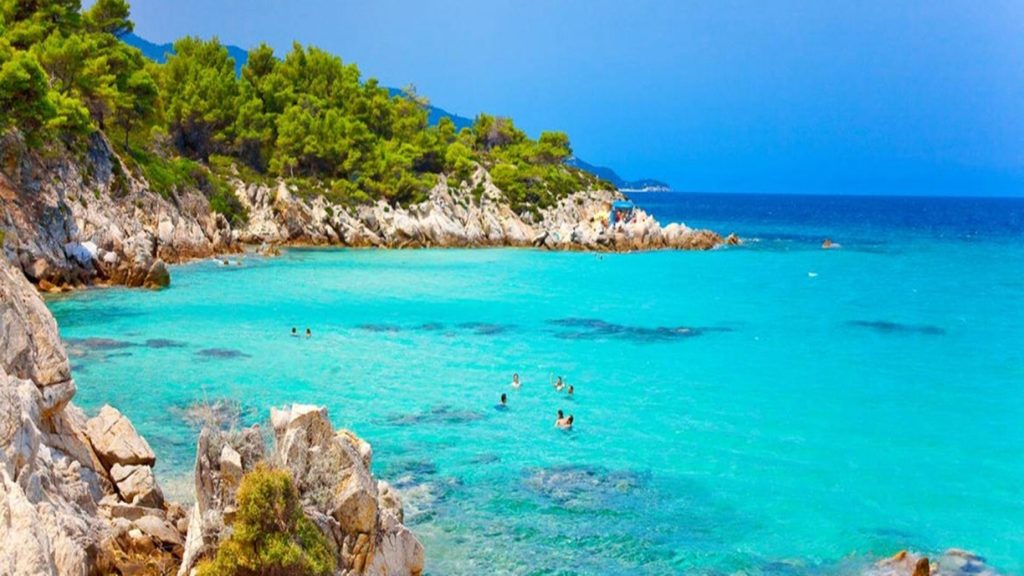
Kavourotripes – a series of small coves on the northeastern coast of Sithonia where the pine trees descend to the waterline and the water between the rocky outcroppings is the clearest available on the peninsula. No facilities. Access requires a short walk from a roadside parking area. The combination of the forest, the rock, and the turquoise water makes this the most photographed natural beach environment in Halkidiki.
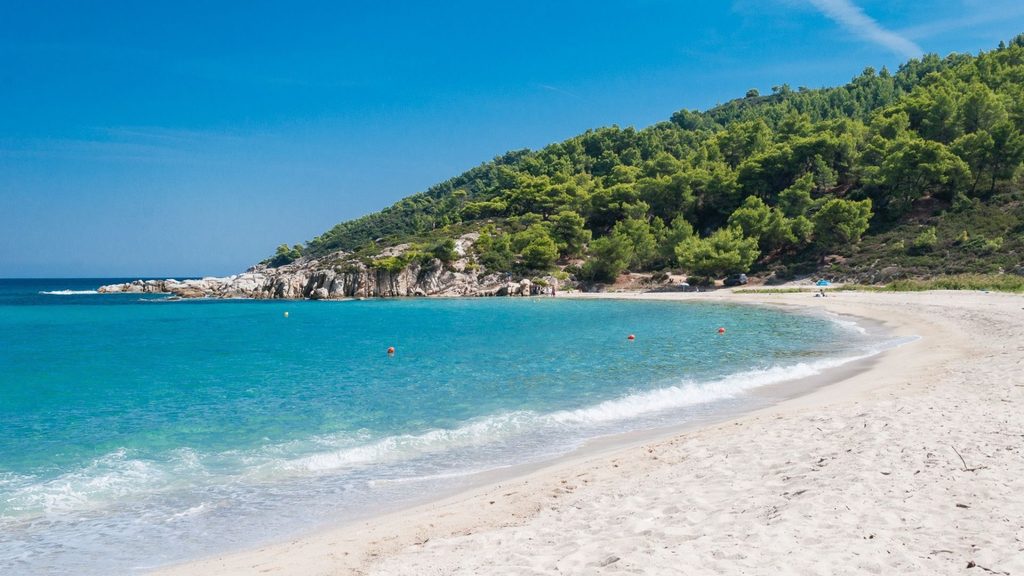
Platanitsi – a long sandy beach with shallow warm water on the eastern coast of Sithonia, backed by pine forest and with the Athos peninsula visible across the water in the morning light. One of the finest swimming beaches on the peninsula with enough length to absorb visitors without feeling crowded.
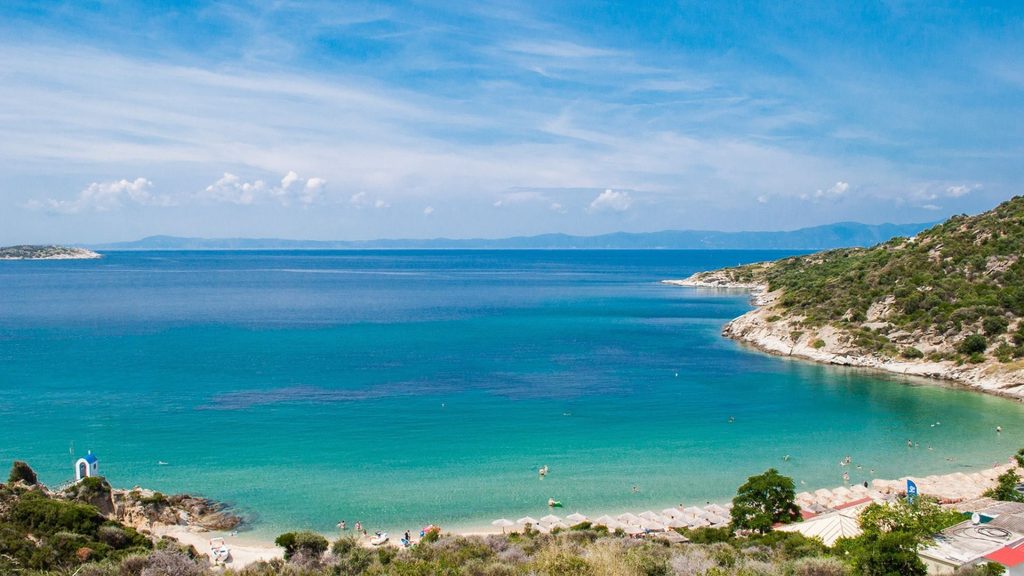
Sikia – a small village on the southern tip of Sithonia with a genuinely excellent fish taverna on the harbour and a quiet beach popular with Greek families rather than international tourists. The kind of place that represents what all of Sithonia was thirty years ago.
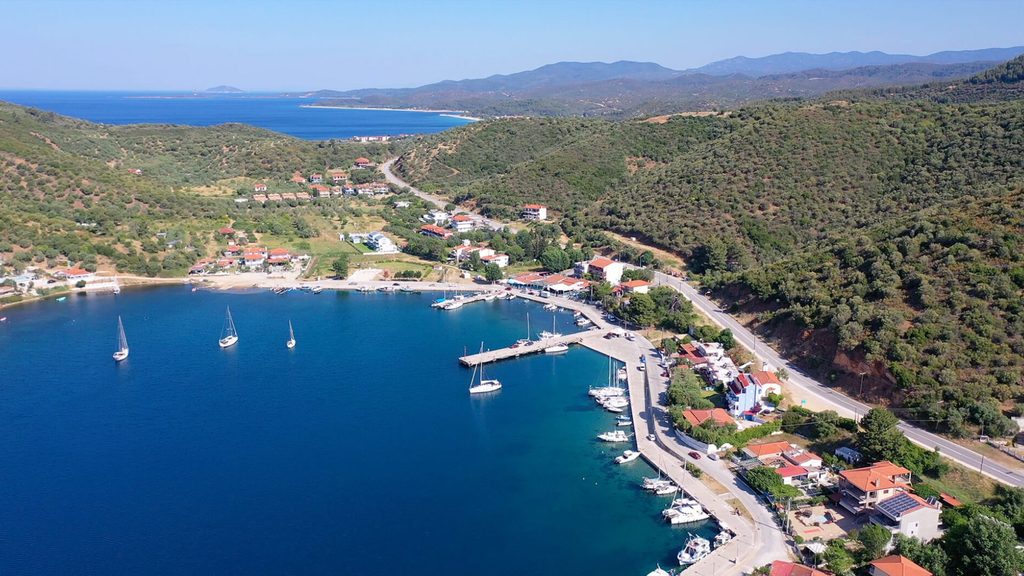
Porto Koufo – Greece’s deepest natural harbour, almost entirely enclosed by the surrounding headlands, with a surface so sheltered that the boats inside barely move regardless of conditions in the open sea outside. The village of Porto Koufo is small, the tavernas serving fresh fish from the boats are excellent, and the calm of the enclosed harbour is unusual enough to justify the drive south.
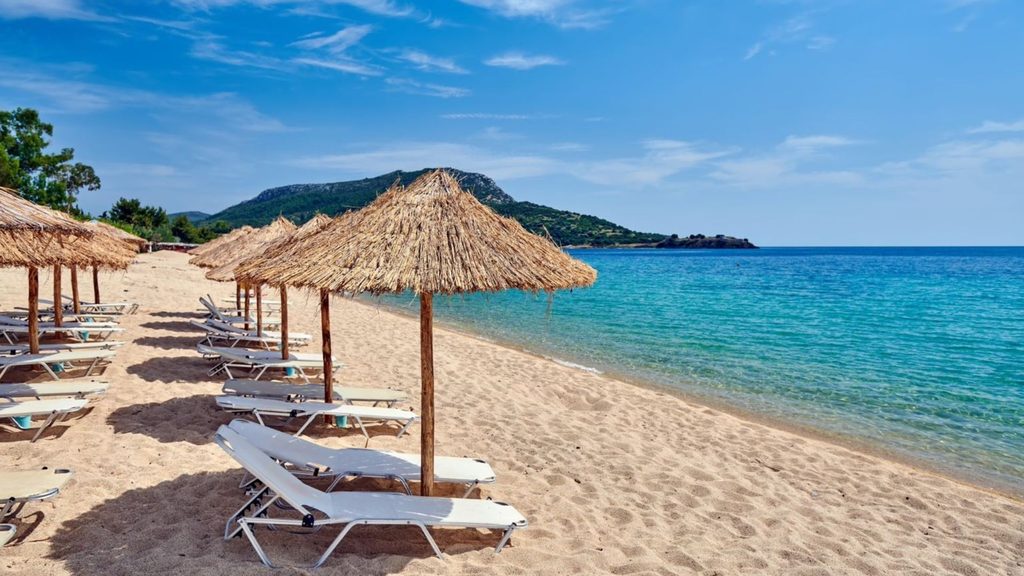
Toroni – a long, wide sandy beach on the western coast of Sithonia with warm, shallow water and a modest village of tavernas and guesthouses behind it. Less crowded than the northern Sithonia beaches and consistently warmer due to its south-facing aspect. The ruins of an ancient Byzantine castle on the headland above the beach provide the historical layer that most of Sithonia’s beach experiences do not.
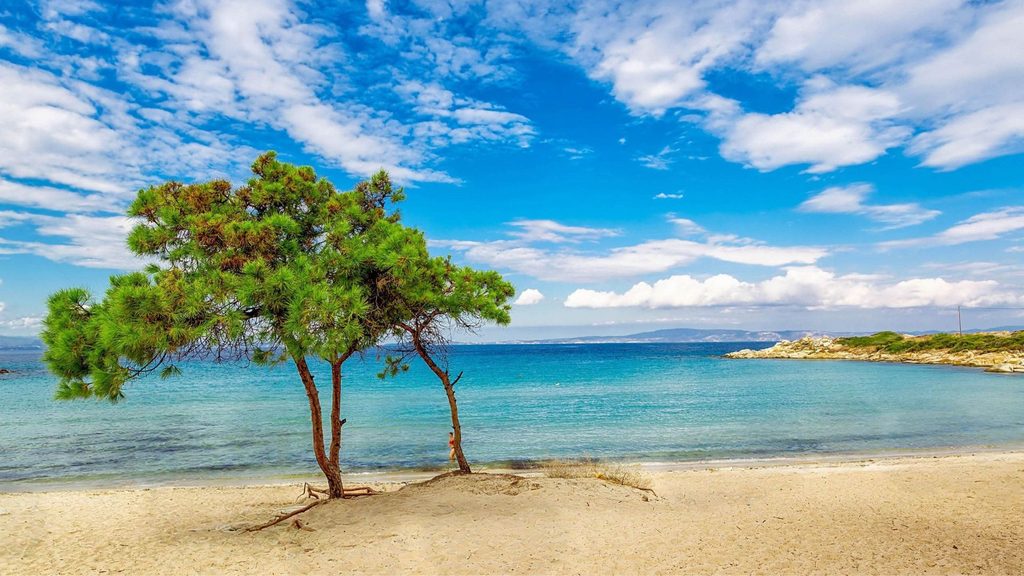
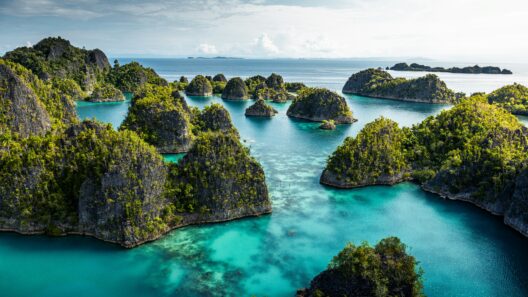
Vourvourou – on the northeastern coast facing the Athos peninsula, a small resort village at the base of a bay sheltered by a cluster of small islands. The islands are reachable by kayak or small motorboat hired in the village and provide some of the finest swimming and snorkelling available in Sithonia. The turquoise channel between the islands and the mainland, with the Athos peninsula as a backdrop, is one of the finest views in Halkidiki.
Mount Athos: the third peninsula
The Athos peninsula is the most extraordinary and the most inaccessible of the three. At the tip of the eastern finger, rising from the sea to 2,033 metres, the Holy Mountain – Agion Oros – has been the site of continuous monastic habitation since the 10th century.
Twenty Orthodox monasteries, eleven sketes (smaller monastic communities), and numerous hermitages cling to the forests, cliffs, and coastlines of a peninsula that has operated as an autonomous monastic republic since 972 AD under the protection first of the Byzantine Empire, then of the Ottoman Sultan, then of the Greek state, and now of the European Union under a special protocol.
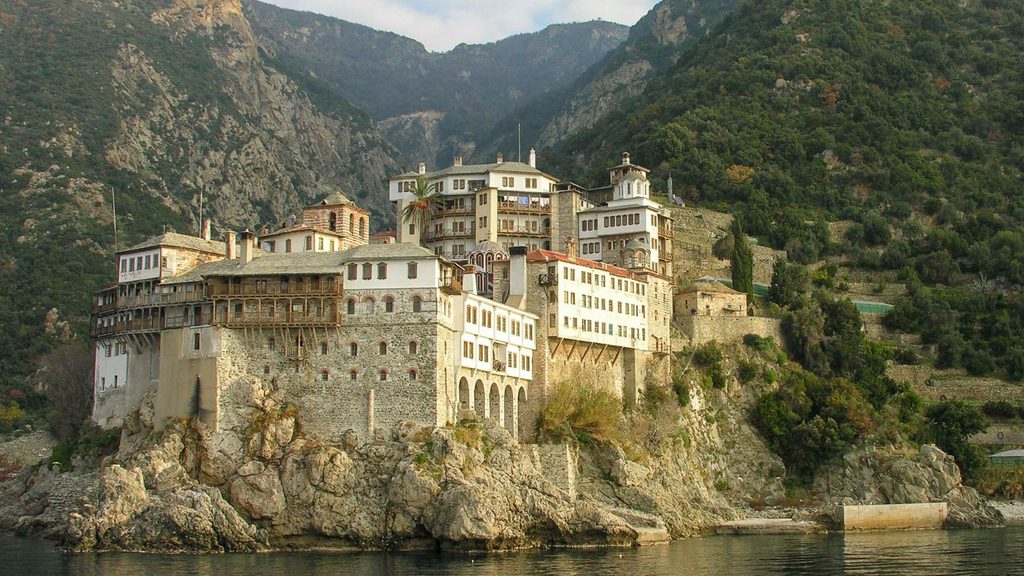
Women have not been permitted on the Athos peninsula since a Byzantine imperial decree of 1046 that codified an existing tradition. The rule remains in force. The peninsula’s 2,000 monks, the monasteries they inhabit, and the forests that cover most of the land exist in a self-governing community that controls its own immigration, its own legal system, and its own calendar – Athos still operates on the Julian calendar, which runs thirteen days behind the Gregorian calendar used by the rest of the world.
The diamonitirion – visiting Mount Athos
Male visitors can apply for the diamonitirion – a special permit that allows entry to the Athos peninsula for up to four days. Only ten Orthodox Christian male pilgrims and five non-Orthodox male visitors are admitted per day. The application is made through the Mount Athos Pilgrims’ Office in Thessaloniki and requires significant advance planning – the limited permit numbers mean waiting lists of weeks to months are common for peak season dates.
For those who receive a permit, the experience of staying in one of the monasteries – sleeping in cells, attending the Byzantine liturgy at 03:00 by candlelight, eating the monastic meal in the refectory in silence while a monk reads scripture from the pulpit – is one of the most unusual and genuinely affecting travel experiences available anywhere in Europe.
The coastal boat tour – available to everyone
For visitors who cannot or do not wish to obtain a diamonitirion – including all women – the coastal boat tour from Ouranoupolis provides the next best access to the Athos experience. The daily tour boats run along the western coast of the Athos peninsula, maintaining the legally required distance of 500 metres from the shore, while passengers view the monasteries from the sea.
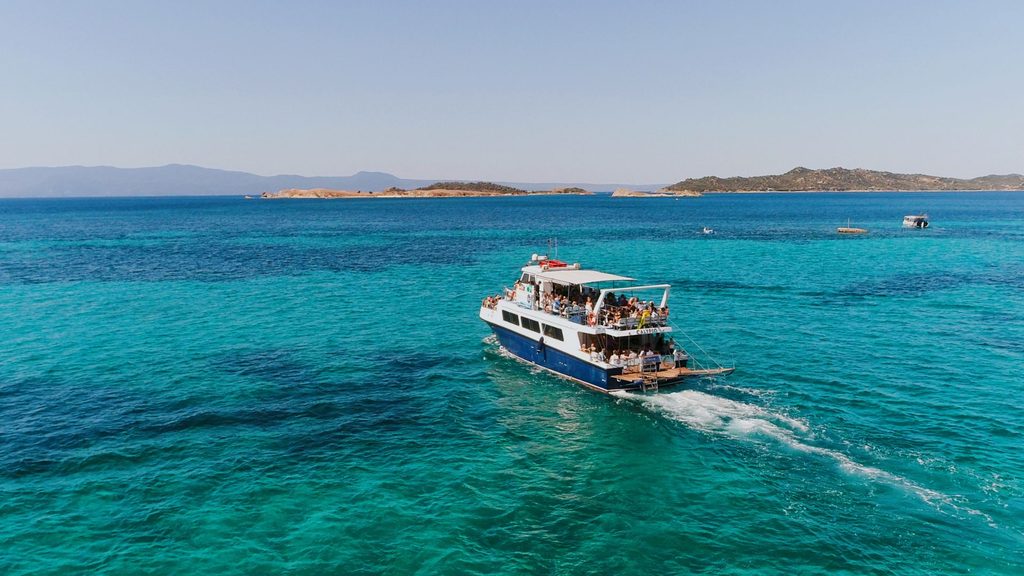
The monasteries of Docheiariou, Xenophontos, Osiou Grigoriou, and Simonopetra – this last a Byzantine fortress of extraordinary drama, built into a vertical cliff face above the sea in the 14th century – are all visible from the boat. The sheer scale of the monastic buildings, their isolation, the forest rising to the peak of the Holy Mountain behind them, and the knowledge that this community has been continuously inhabited for over a thousand years creates an atmosphere on the boat that silences most passengers regardless of their religious disposition.
The tour departs from Ouranoupolis harbour at 09:30 most mornings, runs for approximately three hours along the coast, and returns by early afternoon. Cost approximately 20 to 30 euros. Book at the harbour or through your accommodation.
Ammouliani Island
A small island off the coast of Ouranoupolis, reachable by ferry in ten minutes, that is entirely missed by visitors focused on the peninsulas.
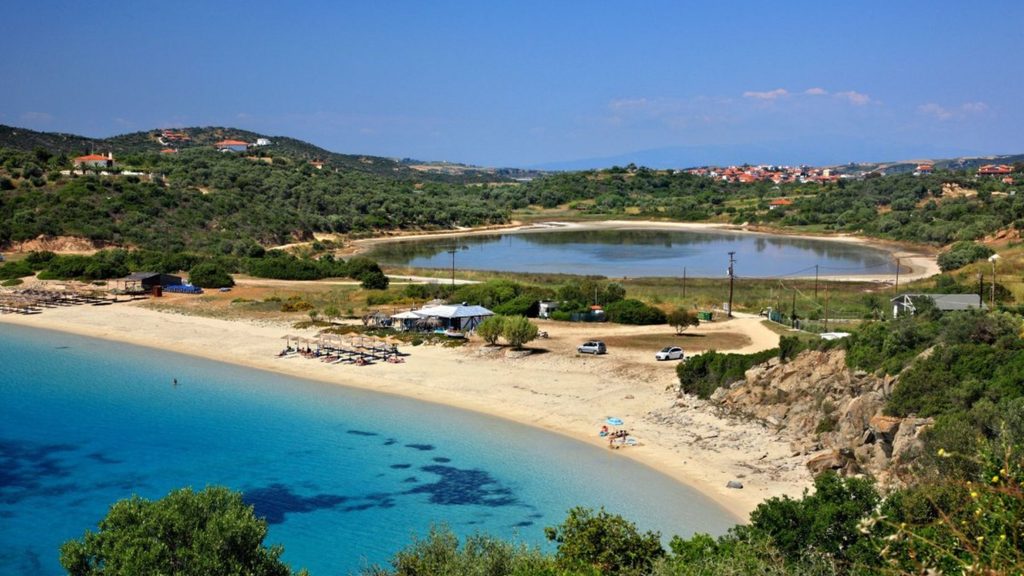
Ammouliani has no cars other than the island’s own residents, several excellent beaches including the sandy Alikes Beach, and a village of traditional houses and fish tavernas that represents the quietest and most authentic accommodation option available in the Halkidiki region. An overnight on Ammouliani, with the Athos peninsula visible across the water and the boat traffic of Ouranoupolis audible in the distance, is one of the finer ways to end a Halkidiki trip.
Ferry runs approximately every 30 minutes from Tripiti, near Ouranoupolis.
Thessaloniki: the necessary addition
Halkidiki is 70 kilometres from Thessaloniki and the combination of the two in a single trip is the most complete northern Greece experience available. Thessaloniki is the second largest city in Greece, the capital of Macedonia, and by the consensus of food-focused travellers the finest city in Greece for eating – a stronger statement than it sounds given the competition.
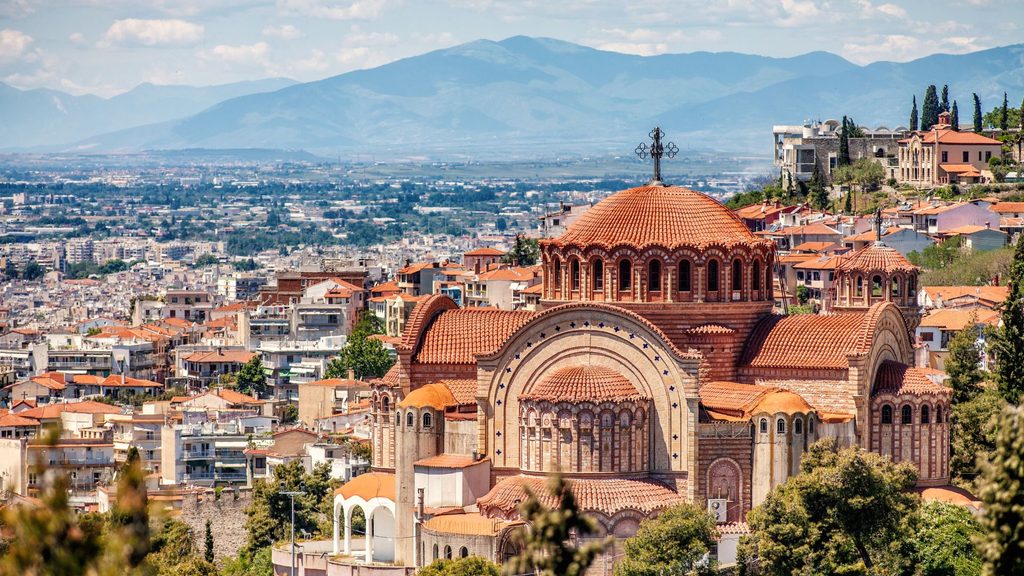
The Byzantine heritage is extraordinary and largely unknown to international visitors who allocate their Greece time to Athens and the islands. The Rotunda – a 4th-century Roman building that served as a mausoleum, a church, and a mosque in successive eras – stands in the centre of the city. The White Tower on the waterfront is the city’s symbol and houses a museum covering Byzantine Thessaloniki. The Archaeological Museum holds the gold death masks, weapons, and royal regalia from the tombs at Vergina – the burial site of Philip II of Macedon, Alexander the Great’s father, discovered in 1977.
The food: the covered market of Modiano, the bougatsa pastry shops open from 06:00, the meyhane-style restaurants of the Ladadika district, the seafood mezedes at the waterfront, and the extraordinary street food culture that reflects the city’s cosmopolitan history as a centre of Ottoman, Jewish, Greek, and Balkan cultures. Thessaloniki is worth two full days before or after the Halkidiki coast.
Aristotle’s birthplace: Stageira
A detail worth knowing: Halkidiki is the birthplace of Aristotle. The ancient city of Stageira, where Aristotle was born in 384 BC, is located on the eastern coast of the Halkidiki mainland near the modern village of Stagira.
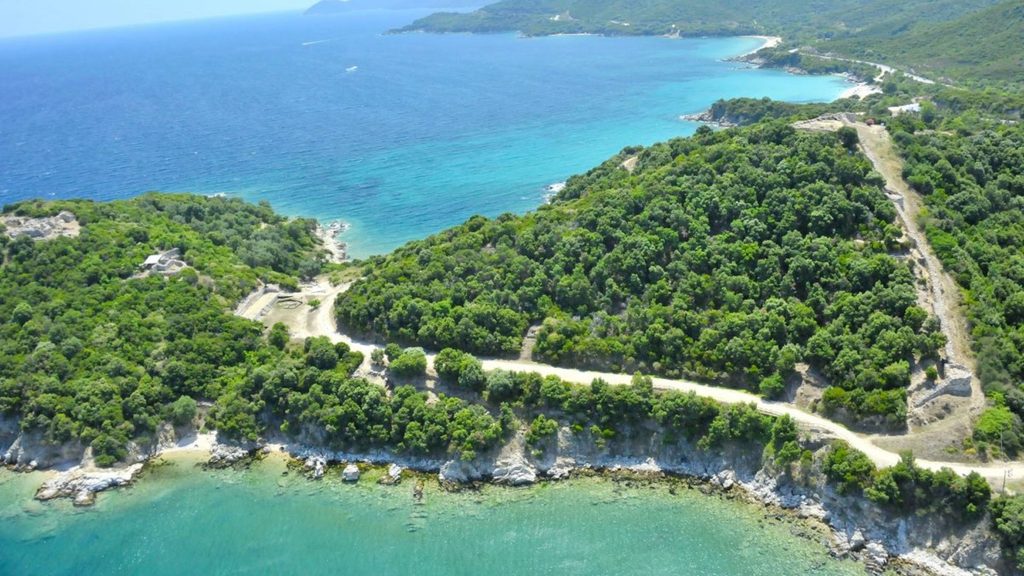
The archaeological site is modest but the context – standing in the place where one of the foundational thinkers of Western civilisation was born, looking across the same Aegean that Aristotle would have seen from this hillside – has a particular quality for those who find that kind of continuity moving.
A bronze statue of Aristotle sits in a small park in Stagira village with astronomical and mathematical instruments based on his discoveries arranged around it. It is the most unexpectedly charming monument in the Halkidiki region.
Where to Stay
Wondering where to base yourself in Halkidiki? Use the map below to compare hotels
When to visit
June and September are the finest months. The sea is warm (23 to 26 degrees Celsius), the beaches are accessible without the August crowds, and the prices are noticeably below peak. September is particularly strong – the Aegean reaches its warmest temperatures and the domestic Greek holiday makers have returned to work.
July and August – peak season. The beaches of Kassandra specifically become very busy, particularly on weekends when Thessaloniki empties toward the coast. Sithonia remains more manageable due to its size and the dispersed nature of its beaches. Book accommodation two to three months ahead.
May and October – shoulder season with good weather and quiet beaches. May has wildflowers covering the Halkidiki hillsides. October has extraordinary light and water still warm enough for swimming into mid-month.
Getting there
Fly to Thessaloniki Makedonia Airport (SKG), served by direct flights from most major European cities including Dublin, London, Manchester, and Amsterdam. Transfer time to Kassandra is approximately 70 minutes, to Sithonia approximately 90 minutes. A rental car collected from the airport is the most practical way to explore all three peninsulas – public transport within Halkidiki is limited and the finest beaches of Sithonia are not reachable without your own vehicle.
The Greece series
This post is part of the flight.now Greece series:
- Greece: the complete guide – islands, mainland, when to go, how to get around, and what makes each destination distinct
- Rhodes: the island the Knights built — the medieval walled city, the Acropolis of Lindos, and the beaches most visitors never find
- Santorini: the honest guide – the caldera villages beyond Oia, the volcanic beaches, and the old-vine Assyrtiko wine
- Crete: the complete island – Minoan ruins, the Samaria Gorge, the south coast villages only reachable by boat, and the food
Some links in this post are affiliate links. If you book through them, flight.now earns a small commission at no extra cost to you. Learn more here