
The limpets arrive on a hot iron plate, still in their shells, sitting in a small pool of garlic butter and lemon juice. They are perhaps the size of a fifty cent coin. You eat them with a toothpick, prying the flesh from the shell in one piece, and they taste of the Atlantic, clean, briny, with a depth that has nothing to do with the butter and everything to do with the volcanic rock they were pulled from that morning. A basket of bolo do caco bread, warm from the griddle, arrives alongside them without being asked for. You eat the lapas. You eat the bread. You order more of both.
This is how most meals in Madeira begin, and it sets the tone for everything that follows. Madeiran food is not Portuguese food with minor variations. It is its own cuisine entirely, shaped by the island’s volcanic geography, its 600 years as an Atlantic trading post between Europe, Africa and the Americas, its deep-sea fishing tradition, and the extraordinary subtropical growing conditions that produce fruit, vegetables and herbs unavailable anywhere on the European mainland. It is also, relative to what it delivers, one of the most underwritten food destinations in Europe.
That changes now.
The essential Madeiran dishes
Before the restaurants, the food itself. Madeira has a short list of dishes so distinctively its own that not eating them while you are here is an oversight you will spend the flight home thinking about.
Lapas (grilled limpets)
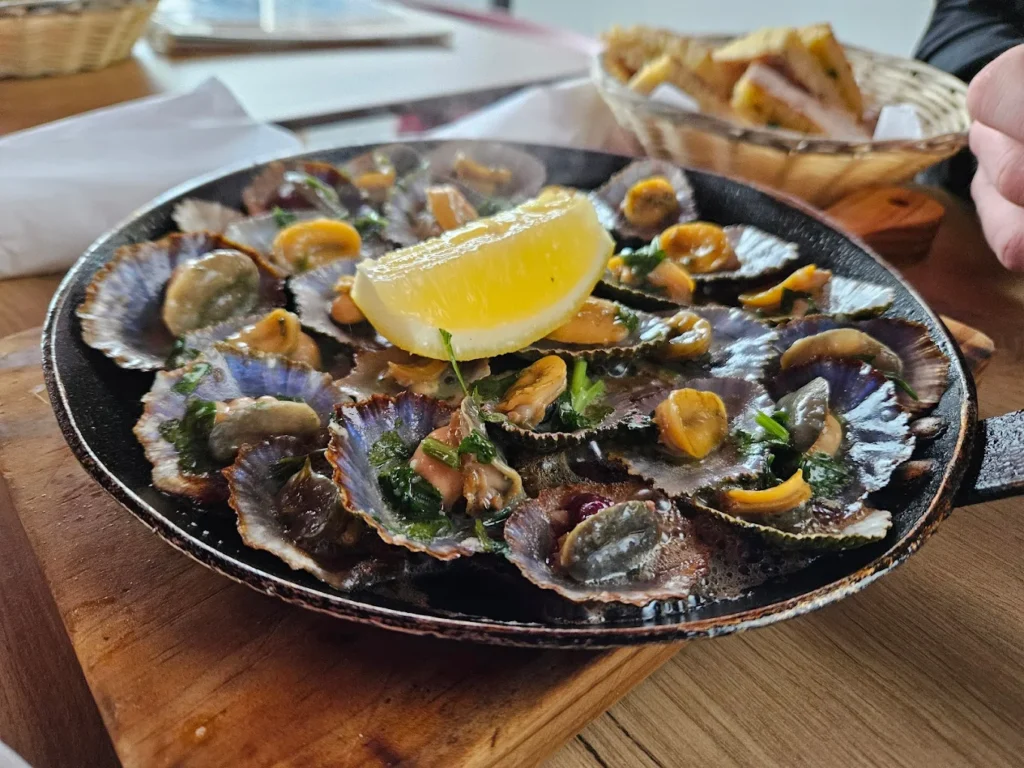
The dish most immediately associated with Madeira and the one most visitors order nervously and then repeatedly for the rest of the trip. Limpets are molluscs that cling to the volcanic rocks of the island’s coastline at sea level, abundant, sustainable, and harvested daily. They are grilled on a cast iron plate, seasoned with garlic, butter, lemon and a small amount of paprika, and served in the shell at a temperature hot enough to be careful about. The flesh is somewhere between a mussel and a scallop in texture, with a clean, mineral flavour that is distinctly Atlantic. They are extraordinary, cost almost nothing, and appear on the menu of virtually every traditional restaurant on the island.
Order them first, with bolo do caco bread, as an aperitivo. Order them again as a starter at the next restaurant. They do not get less good.
Espada com banana (black scabbardfish with banana)
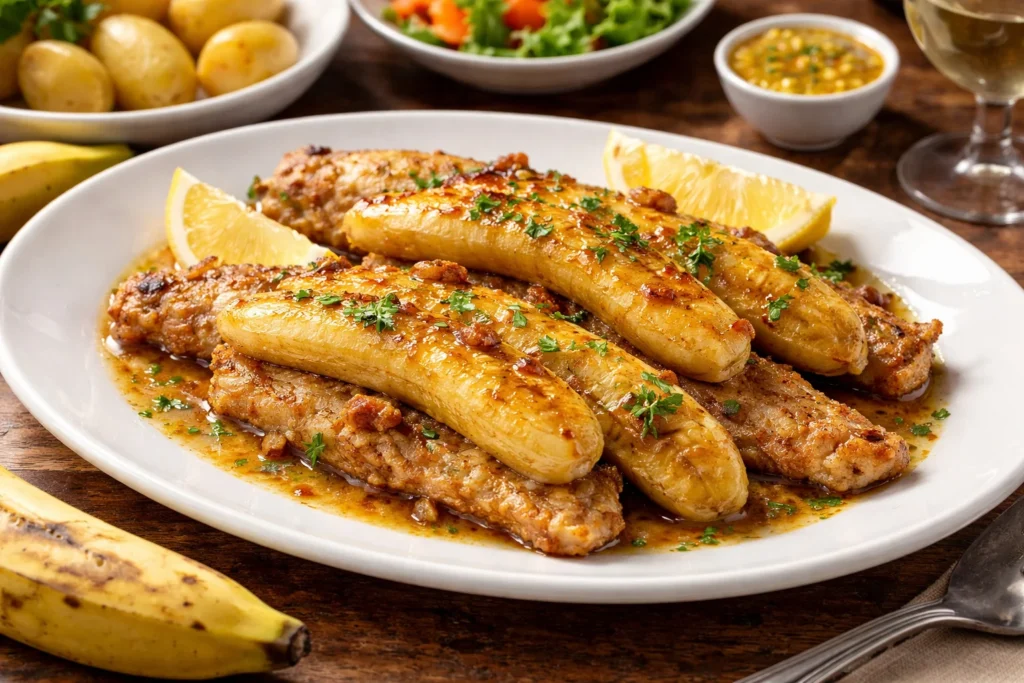
Madeira’s most iconic dish and the one most likely to confuse a first-time visitor to the island, both the fish and the preparation. The espada, or black scabbardfish, is a deep-sea predator caught by line fishermen at depths of 800 to 1,600 metres off the island’s steep underwater cliffs, in total darkness, at water temperatures close to freezing. Its eyes are enormous, adapted to hunt in near-zero light conditions, and its body is long, black, and deeply strange-looking laid out on the market slab. It cannot survive being brought to the surface alive. It is caught, processed, and eaten within hours.
The flesh is delicate, white, mild, and melts in a way that has nothing in common with any other fish you have eaten. It is almost universally served with a slice of fried banana and a passionfruit sauce, a combination that sounds improbable and, once tasted, makes immediate and permanent sense. The sweetness of the banana and the acidity of the passionfruit cut the richness of the fish in a way that any other accompaniment would fail to do. It is the dish to order on your first night. It will not disappoint.
Espetada
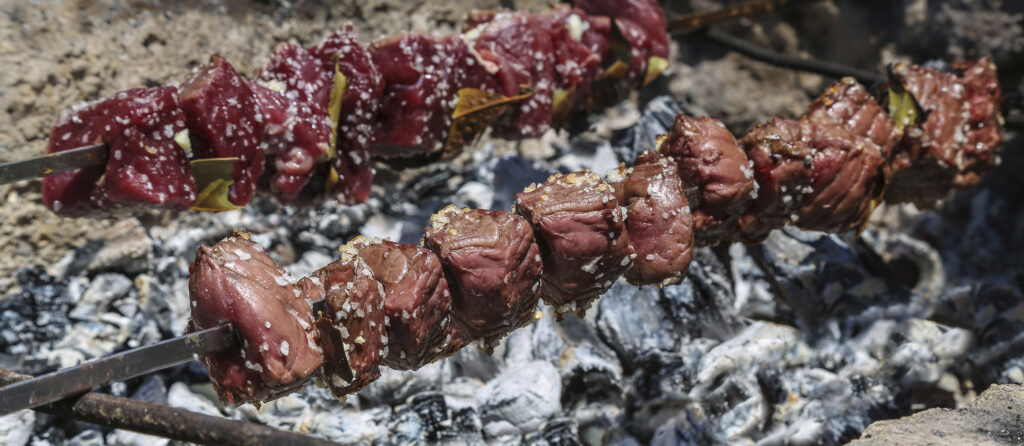
The alternative to espada for those less inclined toward fish. Espetada is large cubes of beef, marinated in garlic and bay leaf and sea salt, threaded onto a laurel wood skewer and grilled over open wood fire. Traditionally served hanging from a hook above the table, a theatrical presentation that has been maintained in the mountain restaurants where the dish originated, the meat arrives still smoking, the bay leaf charred, the exterior caramelised and the interior pink. It is accompanied by milho frito, fried polenta cubes that are the correct Madeiran side dish and better than they sound, and bolo do caco bread.
The finest espetada is found not in Funchal but in the mountain restaurants of the interior, particularly around Ribeira Brava, Sao Vicente, and the village restaurants of the Santana area, where the dish has been prepared over wood fire in the same way for generations.
Bolo do caco
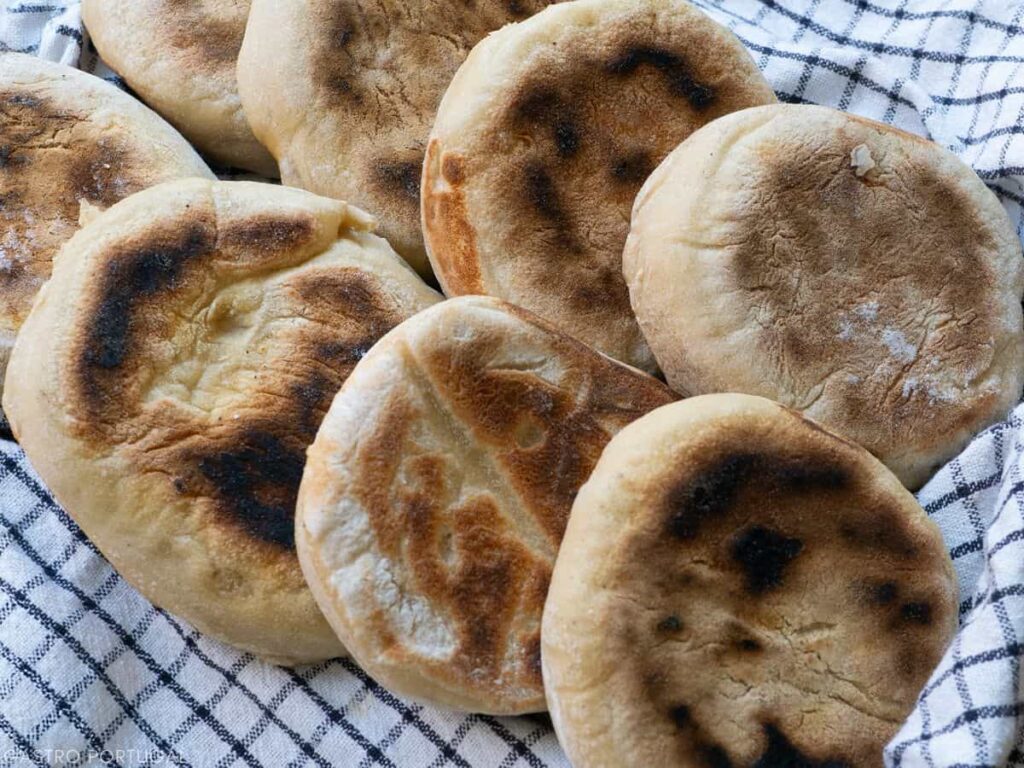
The bread that appears at every table, with every meal, at every price point on the island. A flat, circular loaf made from sweet potato and wheat flour, cooked on a basalt stone griddle called a caco, served warm and spread with garlic butter. The correct response to bolo do caco arriving at the table is to eat it immediately, before anything else arrives. The correct response to running out is to order more.
Carne de vinha d’alhos
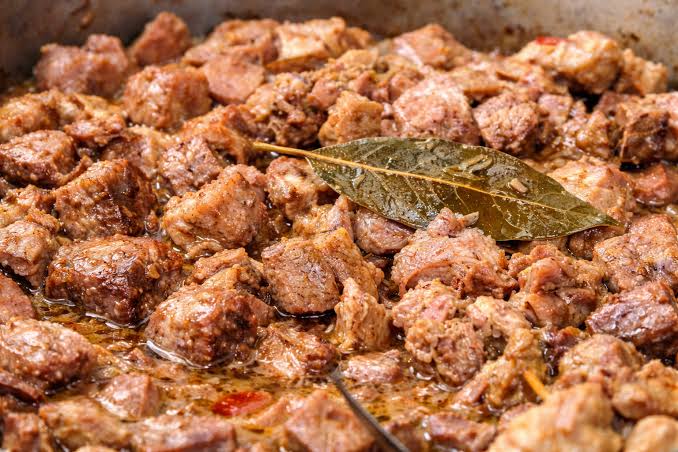
Pork marinated for days in wine vinegar, garlic, bay leaf and spices before being slow-cooked until tender. Traditionally a Christmas dish but found on menus year-round in traditional restaurants. The preparation method arrived in Madeira from mainland Portugal but evolved on the island into something distinct, the vinegar marinade more pronounced, the spice profile different from anything on the mainland. It is the dish that most directly connects Madeiran food to its Portuguese roots while being unmistakably its own.
Madeira cake (bolo de mel)
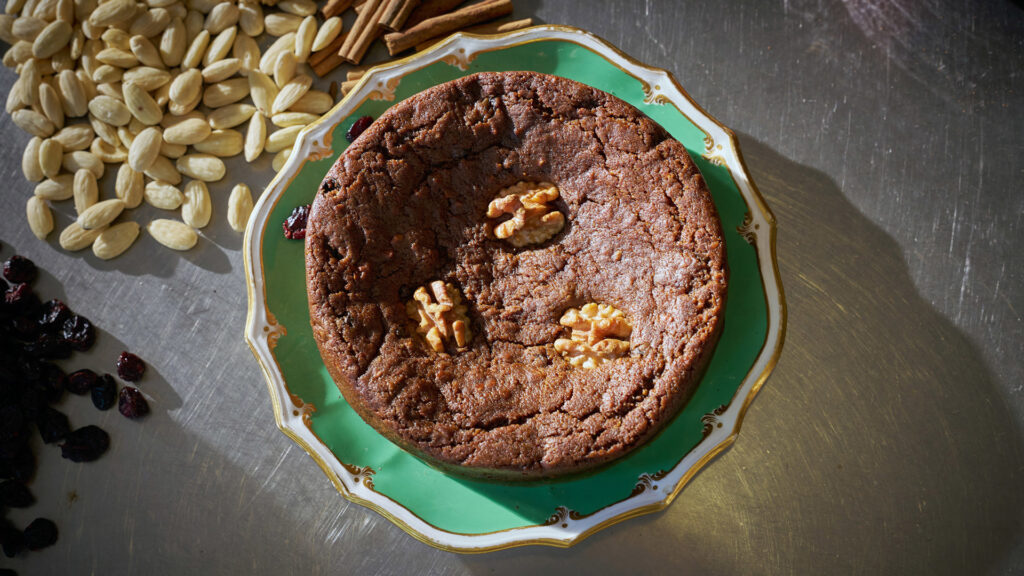
Not the sponge cake sold in British supermarkets under the Madeira name, which has no connection to the island whatsoever. The real bolo de mel is a dense, dark, extraordinarily fragrant cake made with sugarcane molasses, spices, dried fruit and nuts, produced only at Christmas and Easter by traditional bakers and sold in bakeries throughout the island. It improves with age, some versions are stored for years before eating, and tastes of molasses, anise, cinnamon and something unidentifiable that is probably the island itself. Buy one to take home.
The drinks
Madeira wine
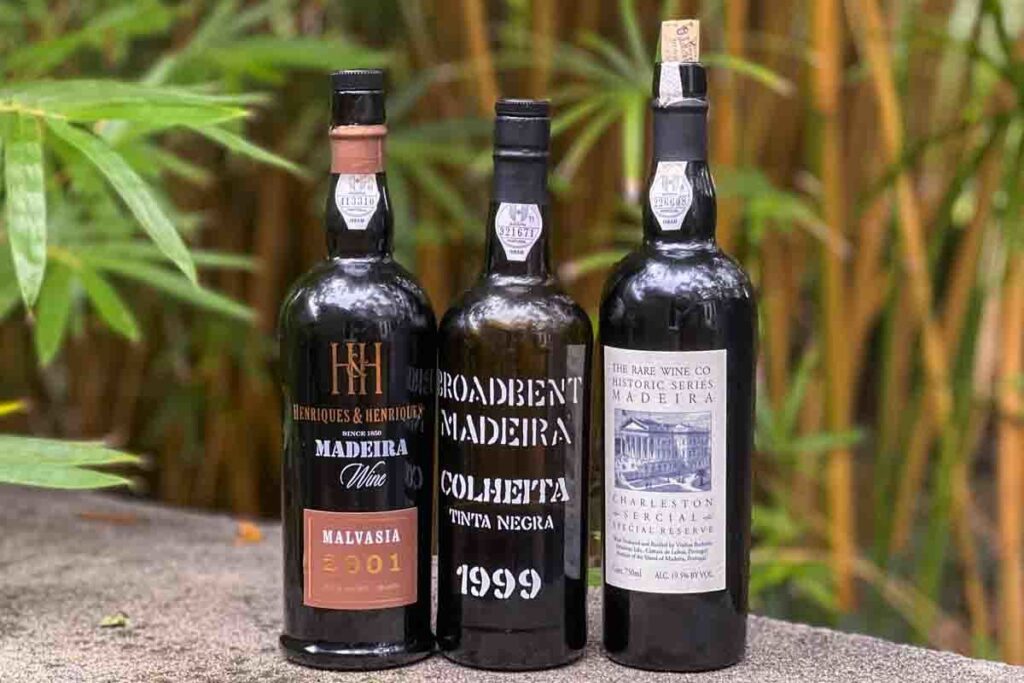
One of the world’s great fortified wines and one of the most misunderstood. Madeira wine is produced from grapes grown on the island’s terraced hillsides, fortified with grape spirit, and subjected to a unique ageing process, the Estufagem, where the wine is deliberately heated to temperatures that would ruin any other wine, producing the characteristic caramel, dried fruit, and bracing acidity that defines the style. The result is extraordinary longevity: bottles from the 18th century are still not only drinkable but actively good.
The major styles range from the dry Sercial (the correct aperitif, chilled, before a meal of lapas) through the medium-dry Verdelho and medium-sweet Bual to the rich, sweet Malmsey. The major producers, Blandy’s, Henriques and Henriques, Barbeito, and Justino’s, all operate visitor experiences in Funchal where tastings and cellar tours are available.
Blandy’s Wine Lodge, in a 17th-century building in central Funchal, is the most accessible. The tasting experience runs through the full range of styles with context from knowledgeable guides. The oldest bottles on display date to the 1800s. Allow 90 minutes minimum. Book in advance.
Poncha
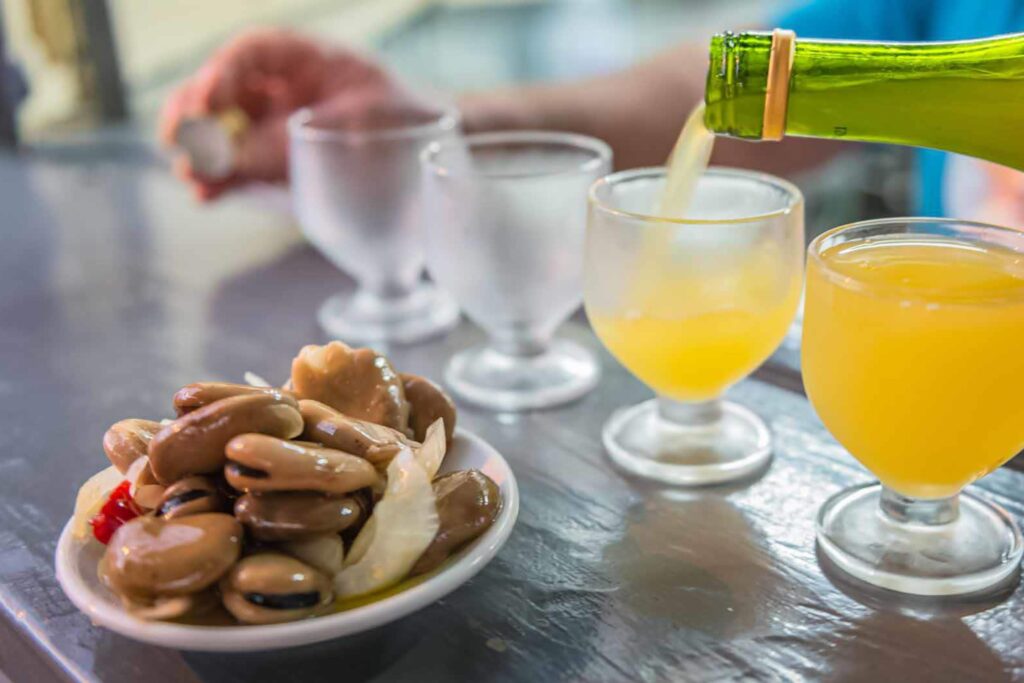
The island’s signature spirit and the drink most embedded in Madeiran social culture. Made from aguardente de cana (sugarcane rum produced only in Madeira), mixed with honey and lemon juice and beaten vigorously with a wooden tool called a mexelote until frothy, poncha is stronger than it tastes, better than it sounds, and available in variations, orange, passionfruit, tangerine, the lethal absinthe version, that range from refreshing to inadvisable.
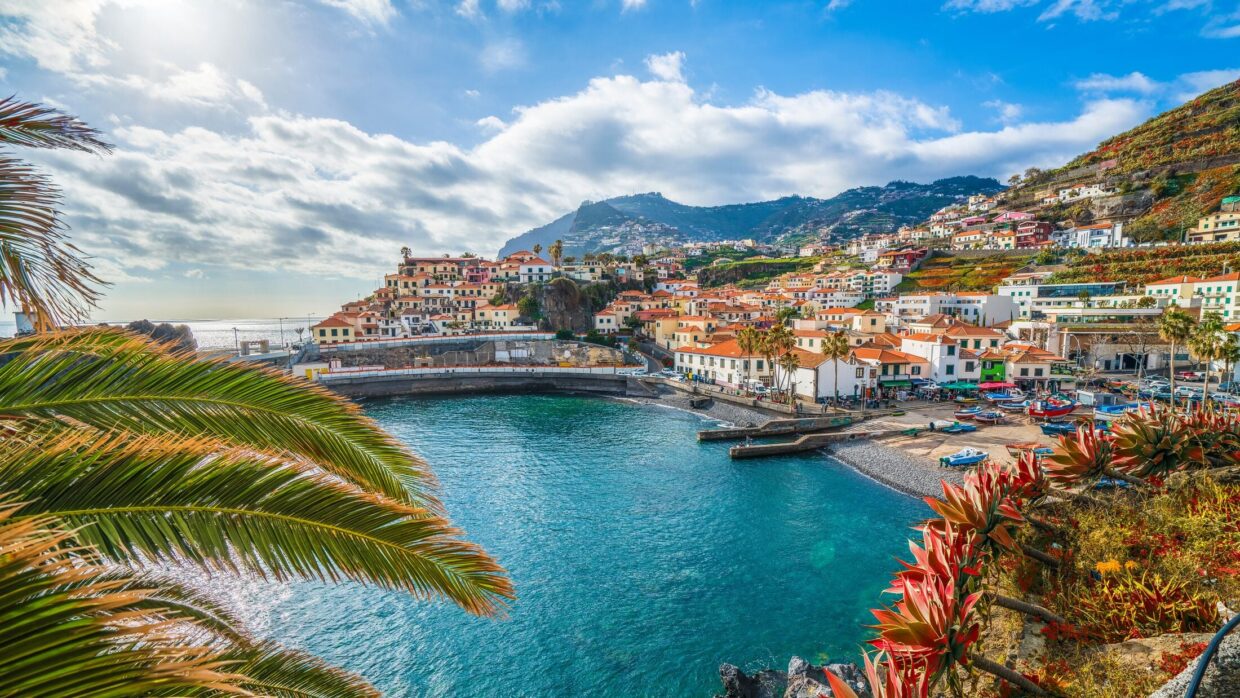
The poncha bars of Camara de Lobos, the fishing village west of Funchal where Winston Churchill famously set up his easel to paint the harbour, are where to drink it properly. Rei da Poncha and Adega da Quinta are the two most recommended. Both are small, local, and completely unpretentious. Stand at the bar. Order the traditional lemon and honey. Start there.
Coral beer
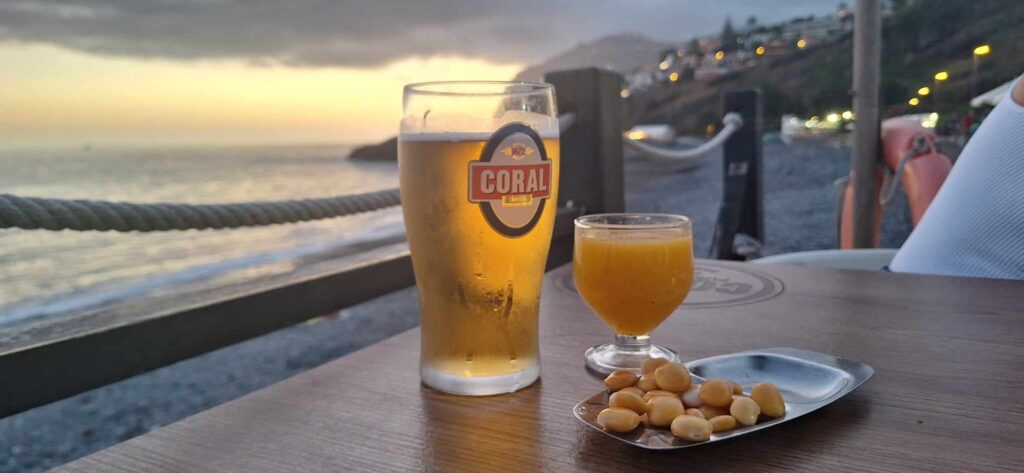
The island’s own lager, brewed in Funchal since 1872. Light, clean, refreshing in the heat, and the correct accompaniment to lapas when wine feels like too much of a commitment. Available everywhere, costs almost nothing, and tastes better than it has any right to in the context of a plate of grilled limpets and a view of the Atlantic.
ADVERTISEMENT
The restaurants
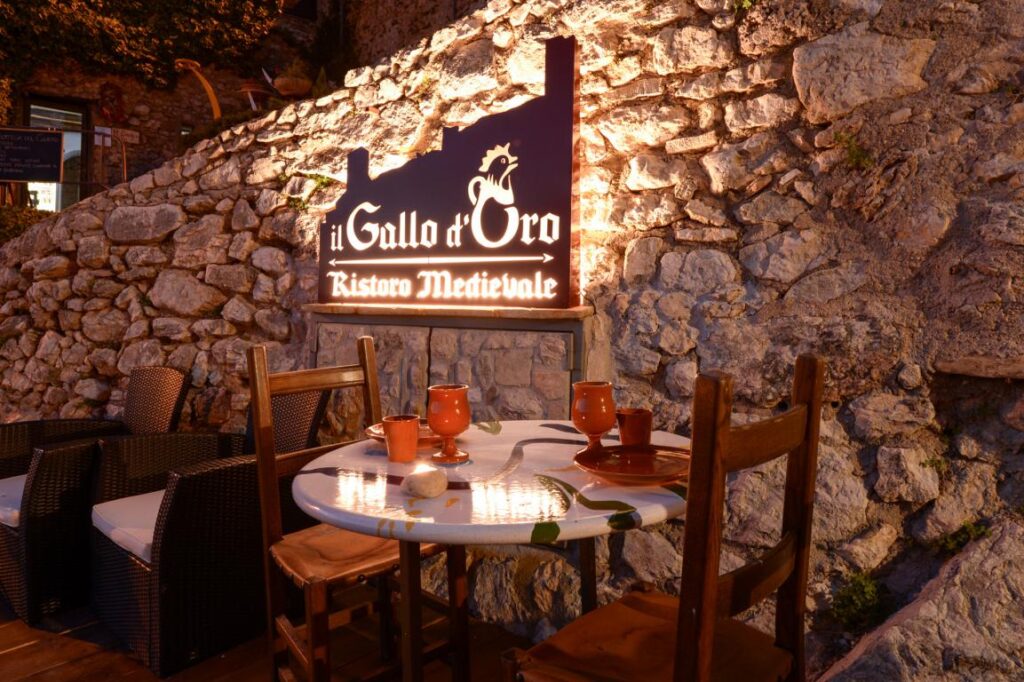
Il Gallo d’Oro
Hotel The Cliff Bay, Rua Leichlingen 2, Funchal · Two Michelin stars, Green star · Tasting menus from 245 euros
Madeira’s most celebrated restaurant and the first on the island to receive a Michelin star, awarded in 2009. Chef Benoit Sinthon, who has run the kitchen since 2004, now holds two Michelin stars and a Green star for sustainability, an unusual combination that reflects both the technical quality of the cooking and the kitchen’s commitment to sourcing from the island’s producers. The tasting menu draws directly on Madeiran ingredients, the espada, the island’s vegetables and herbs, the Atlantic shellfish, but in preparations that bear little resemblance to traditional Madeiran cooking. This is high-level contemporary cuisine that happens to be anchored in a very specific place.
The dining room overlooks the Atlantic from the Cliff Bay hotel. Book well in advance, months ahead during peak season. The smaller tasting menu runs to 245 euros per person; the larger to 295 euros. Neither includes wine.
William Restaurant
Reid’s Palace, A Belmond Hotel, Estrada Monumental 139, Funchal · One Michelin star · Tasting menus from 160 euros
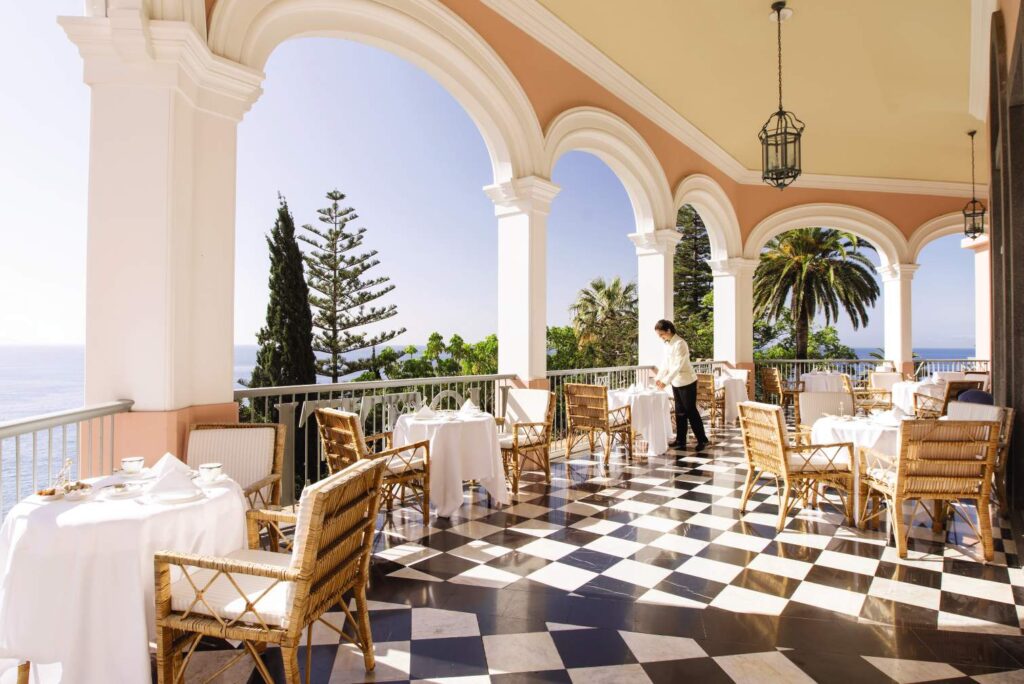
Reid’s Palace is the most famous hotel in Madeira, a Victorian-era grand dame that has hosted Churchill, Gregory Peck, and George Bernard Shaw among its guests since opening in 1891. The William restaurant, named after the hotel’s founder William Reid, earned its Michelin star in 2021 and offers tasting menus of 6 or 8 courses built around Portuguese specialities with Madeiran produce at their centre.
The setting, a dining room that looks directly over the bay and the city, with Reid’s Palace’s famous terraced gardens descending to the sea below, is the finest in Funchal. Afternoon tea on the terrace, a Reid’s tradition since the Victorian era, is worth experiencing separately from dinner and considerably less expensive.
Desarma
Rua do Carmo 46A, 11th floor, Funchal · One Michelin star · Tasting menus from 195 euros
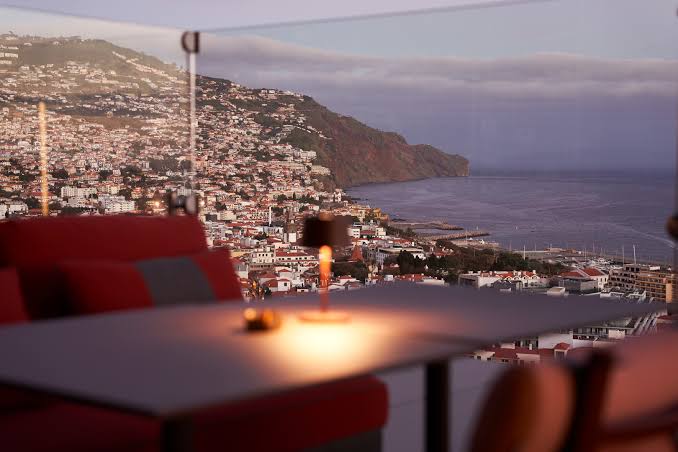
The most dramatically positioned restaurant in Funchal, on the 11th floor of a building in the city centre with a panoramic terrace looking across the entire bay. Desarma was awarded its first Michelin star in 2023 and has quickly established itself as one of the most exciting restaurants on the island, contemporary in approach, rooted in Madeiran and Portuguese ingredients, with a kitchen that takes risks in a way that the more established starred restaurants do not always.
The terrace at sunset, before dinner, is one of the great pre-dinner drinks locations in Madeira. Reserve the terrace table specifically when booking, not all tables have the full bay panorama.
Gazebo
Private home setting, Funchal area · Michelin listed · Tasting menus from 80 euros
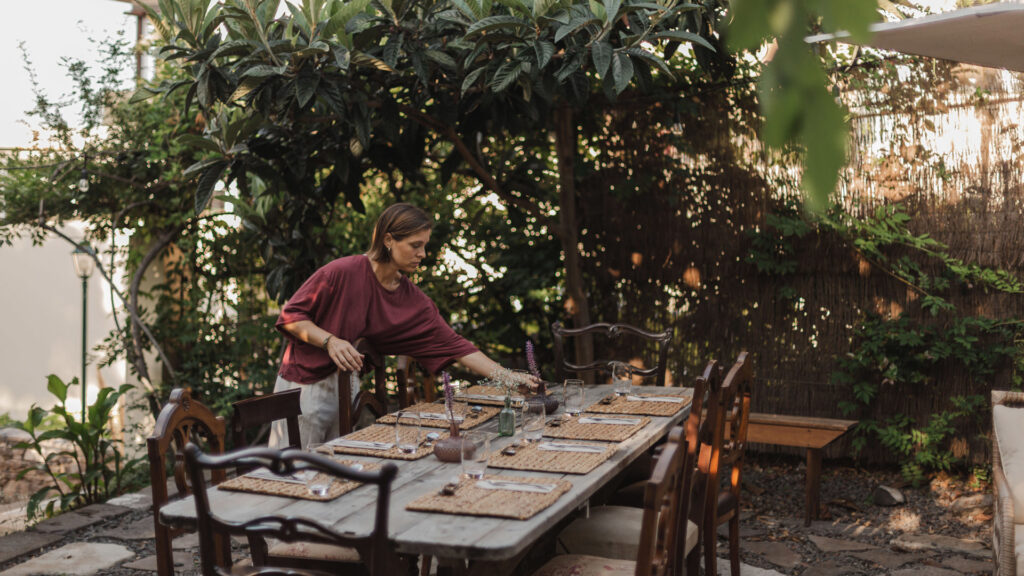
The most interesting entry on this list and the one most different from what the word “restaurant” typically implies. Gazebo operates from a private home setting in Funchal, intimate, personal, with a maximum of a small number of covers per service and a chef who cooks what they choose rather than what a commercial kitchen requires. It received its Michelin listing in recent years and has become one of the most sought-after bookings on the island, with the smaller menu at 80 euros representing remarkable value relative to the quality and experience.
The atmosphere is the point as much as the food, a meal at Gazebo feels less like a restaurant visit and more like being invited to dinner by someone who happens to cook at an extraordinary level. Book well in advance.
Oxalis at Casa Velha
Casa Velha do Palheiro, Sao Goncalo, Funchal · Fine dining · 12-course tasting menu
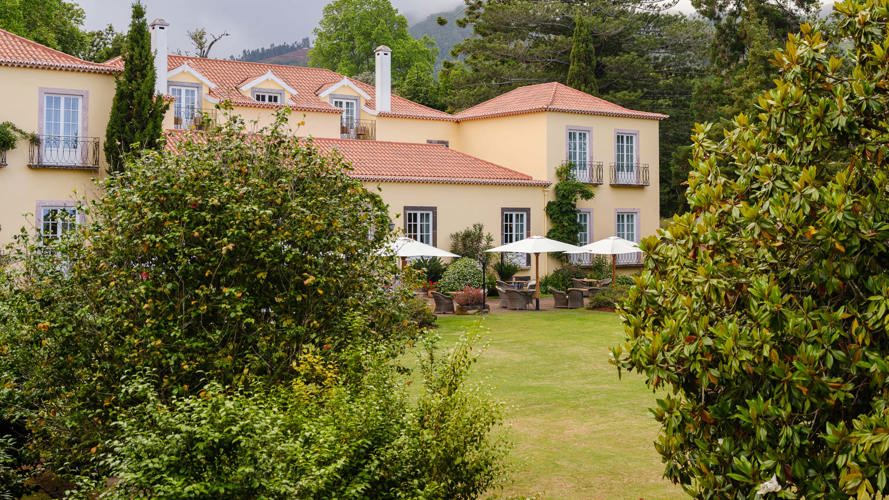
Set within the grounds of Casa Velha do Palheiro, a Relais and Chateaux property on the hillside above Funchal, surrounded by one of the finest private gardens in the Atlantic islands ,Oxalis is chef Gonzalo Bita Bota’s 12-course exploration of Madeiran and Portuguese ingredients in contemporary form. Menu highlights have included tuna belly with ponzu, smoked fish broth, and parrotfish with fennel and miso, technically precise dishes that draw on the island’s Atlantic fishing tradition without being constrained by it.
The drive up to Casa Velha through the gardens and estate is itself part of the experience. Allow the full evening.
Abrigo do Poiso
Estrada do Poiso, Poiso · Traditional · Main courses 12-20 euros
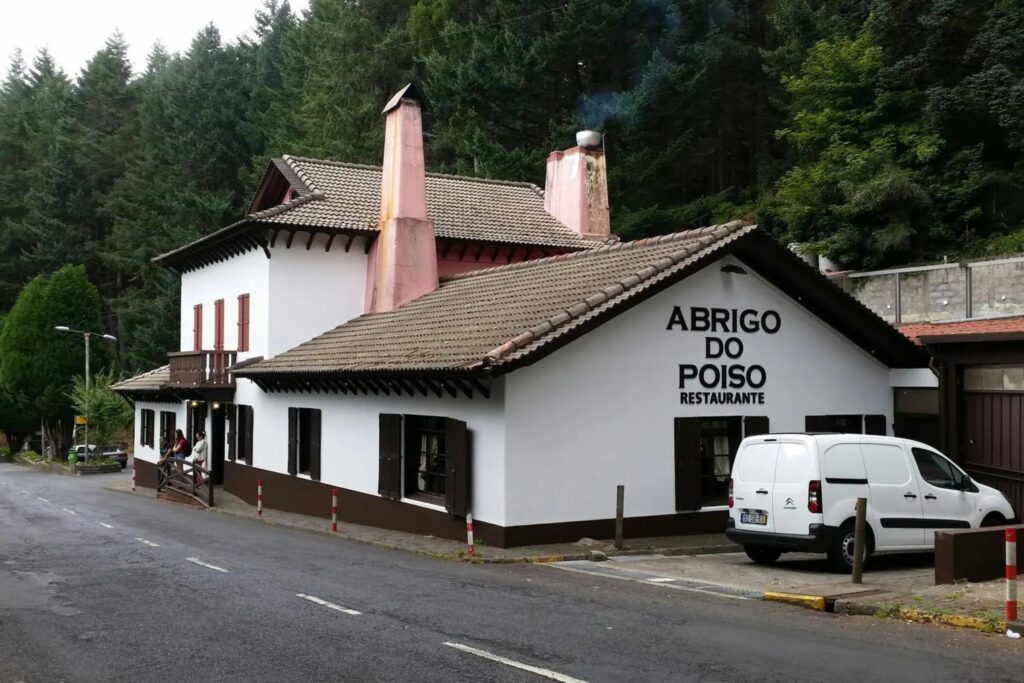
The antidote to everything above, and equally essential. Located in the mountains between Funchal and Santana at approximately 1,000 metres above sea level, Abrigo do Poiso is the restaurant most recommended by locals when asked where to eat genuinely traditional Madeiran food. The espetada here is cooked on a wood fire in the traditional manner, arrives hanging from a hook, and is as good as espetada gets. The interior is warm and simple, the prices are very low, and the clientele on any given weekday lunchtime is predominantly Madeiran.
It is worth driving into the mountains specifically to eat here. Take the road up from Funchal via Terreiro da Luta, the mountain scenery on the way up adds context to the food when you arrive.
Quinta do Furao
Achada do Gramacho, Santana · Hotel restaurant · Main courses 20-35 euros
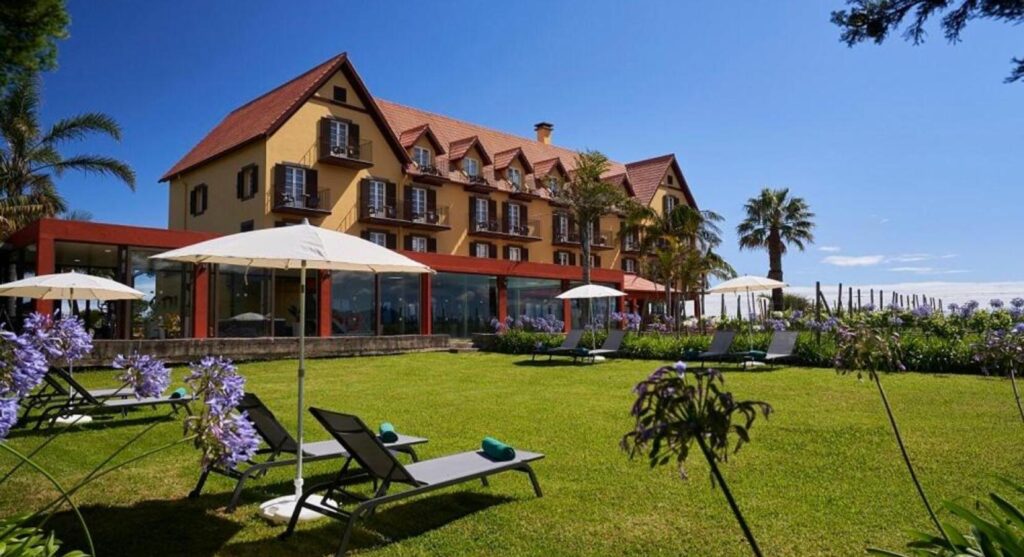
On the north coast above Santana, with ocean views across to the mainland that stretch to the horizon on clear days, Quinta do Furao’s restaurant is the finest setting for a north-coast lunch on the island. The menu focuses on fresh Madeiran seafood and traditional dishes using local produce from the hotel’s own gardens. The limpets here are particularly good, the proximity to the north coast fishing community shows in the freshness of the catch. If you are driving the north coast road, time your journey to arrive for lunch.
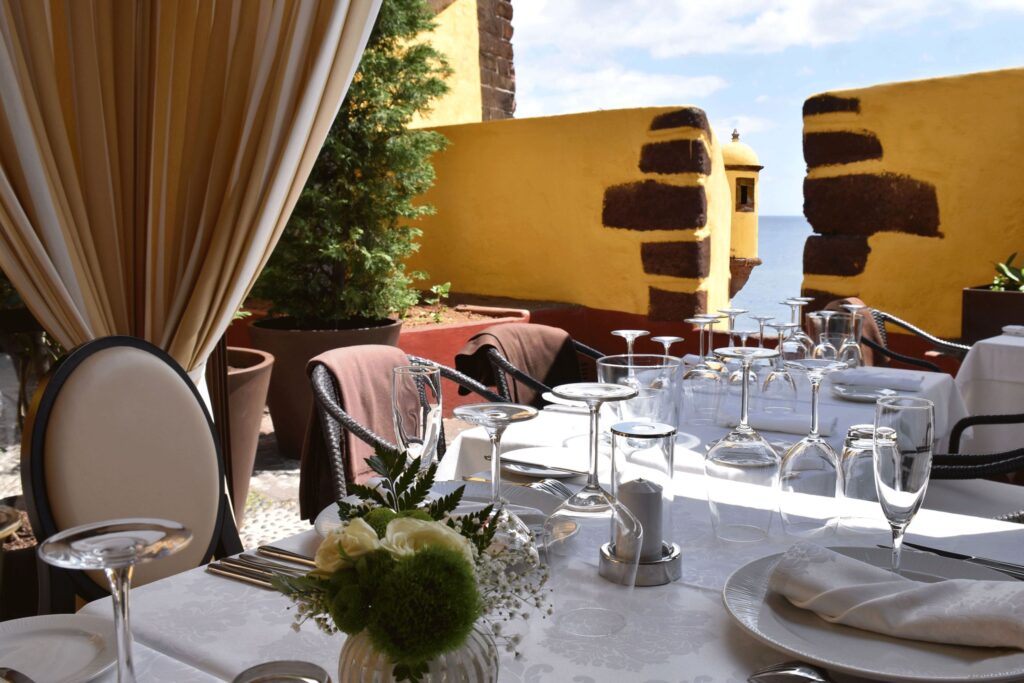
Restaurante do Forte
Forte de Santiago, Zona Velha, Funchal · Contemporary Portuguese · 25-45 euros per person
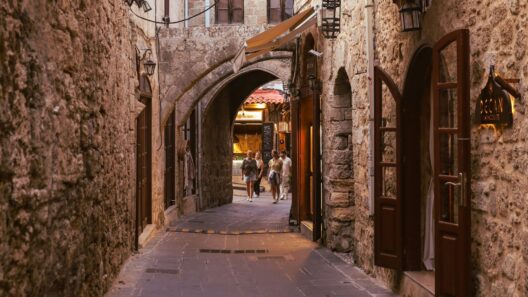
Inside the 17th-century Forte de Santiago in Funchal’s old town, with panoramic views across the bay from the fortress walls. The menu blends regional, national and international cuisine in a setting that balances historical atmosphere with contemporary cooking. The location, in the heart of the Zona Velha alongside the painted doors and cobblestone streets, makes it a natural choice for a dinner that combines the old town neighbourhood with good food.
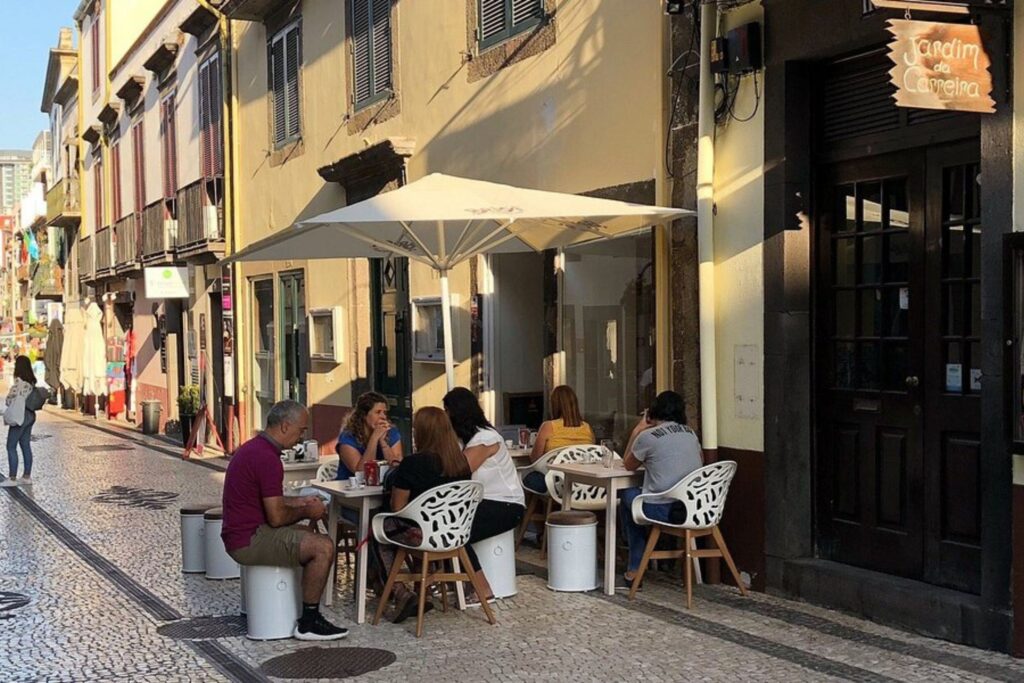
O Americano
Zona Velha, Funchal · Traditional tapas · Under 20 euros per person
The best budget option in the old town and the most useful recommendation for visitors who want to eat well without spending Michelin money. Traditional Madeiran dishes in tapas format, served at outdoor tables on a cobblestone street in the heart of the Zona Velha. Order the house tuna braised with sweet potatoes, the lapas, the bolo do caco. Drink Coral beer or the house wine. Cost per head with drinks: very little. Quality: genuinely high.
Food experiences worth seeking out
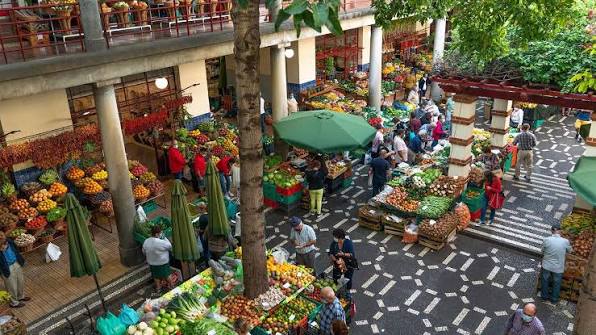
Mercado dos Lavradores
The morning market is a food experience in its own right before any restaurant visit. The ground floor flower market, the tropical fruit stalls on the upper level, and the fish market below, where the espada catch from the previous night is laid out each morning, together give the clearest picture of what Madeiran food actually is before it reaches a plate. Arrive between 7am and 9am for the market at its most active. The banana variety sold here, small, sweet, much better than any mainland equivalent, is worth buying immediately and eating before you leave the building.
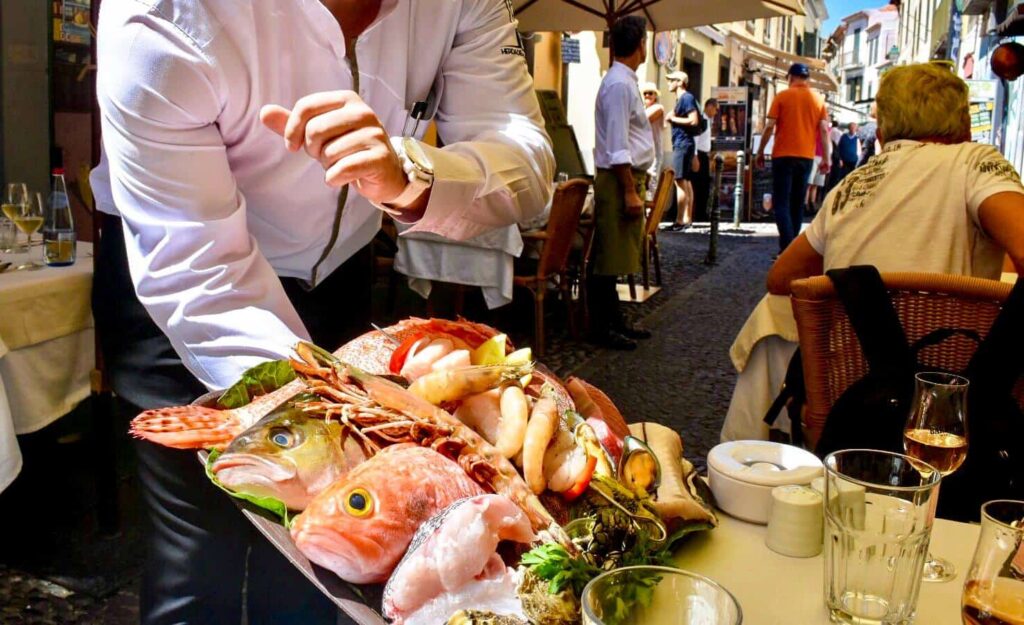
A food tour of Funchal
For visitors who want structured introduction to Madeiran food culture, guided food tours of Funchal departing from the Mercado dos Lavradores cover 7 to 11 tastings across the old town in 3 to 4 hours, with context on the history and production of each dish. Consistent reviews across multiple operators make this the most efficient single morning for getting a comprehensive picture of the island’s food scene. Book in advance as group sizes are limited.
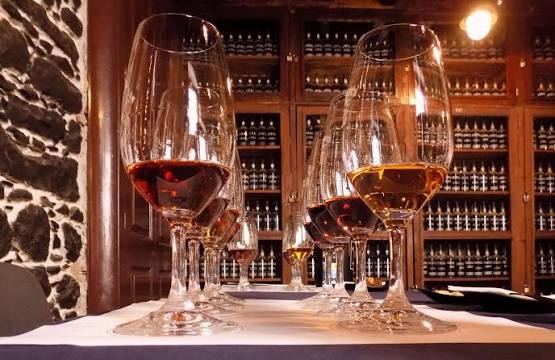
Blandy’s Wine Lodge tasting
The most accessible introduction to Madeira wine, in the most atmospheric setting available for it. Blandy’s 17th-century lodge in central Funchal offers tasting experiences running from a brief three-wine introduction to a comprehensive vertical tasting including vintage wines. The oldest bottles on display in the lodge date to the 19th century. The guide-led tours provide context on the Estufagem process, the grape varieties, and the extraordinary longevity of the wine in a way that makes the tasting experience considerably more interesting than simply drinking it. Book at blandy’s.com.
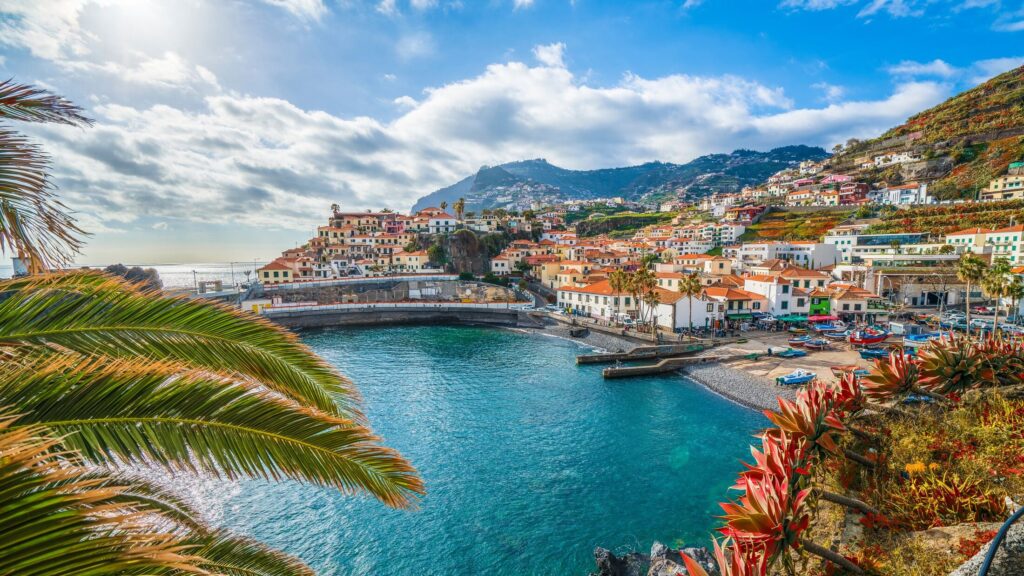
Poncha at Camara de Lobos
Not a restaurant and not a food tour, just the correct way to spend a late afternoon on the island. Drive the coast road west from Funchal to Camara de Lobos, park above the harbour, walk down to the fishing village below, and find Rei da Poncha or Adega da Quinta. Order a poncha. Stand at the bar. Talk to whoever is standing next to you. Churchill painted the harbour from a spot above this village. The harbour looks much the same as it did then.
Where to eat by situation
First night in Funchal – traditional, unfussy, the right dishes: O Americano in the Zona Velha. Lapas, espada com banana, bolo do caco, Coral beer. Under 30 euros per person. Walk the old town before dinner.
Special occasion, want the best in Madeira: Il Gallo d’Oro at The Cliff Bay. Book months ahead. Allow the full evening.
Sunset drinks and a view before dinner: Desarma’s 11th floor terrace. Order a glass of Sercial Madeira wine, dry, chilled. Watch the city light up below.
North coast day, need lunch: Quinta do Furao above Santana. Time your drive to arrive at noon.
Mountain lunch, traditional food, local atmosphere: Abrigo do Poiso. Order the espetada. No reservations needed on weekdays.
Understand Madeira wine properly: Blandy’s Wine Lodge. Book the guided tasting. Go before lunch when the palate is fresh.
Drink poncha the right way: Rei da Poncha, Camara de Lobos. Late afternoon. Traditional lemon and honey first.
Practical notes on eating in Madeira
Reservations: Essential at Il Gallo d’Oro, William, Desarma, and Gazebo, book weeks to months ahead during peak season (June to September). The traditional mountain restaurants and most old town options take walk-ins readily. For Quinta do Furao on the north coast, a reservation for lunch is advisable on weekends.
Meal times: Madeiran lunch runs from approximately 12:30 to 14:30. Dinner begins around 19:30 and the kitchen closes earlier than you might expect at traditional restaurants, by 21:30 at many places outside the main tourist areas. Do not leave dinner until 22:00.
Pricing: Madeira is, by European island standards, genuinely good value. A traditional meal of lapas, espada or espetada, dessert, and house wine at a non-Michelin restaurant in Funchal or the mountain villages costs 25 to 40 euros per person. The Michelin dining experiences run 160 to 295 euros per person for tasting menus excluding wine. There is relatively little in between at the very high end, the island’s mid-range restaurant scene is strong rather than exceptional.
Tipping: Not obligatory but appreciated. Five to ten percent at traditional restaurants is considered generous. Michelin establishments are accustomed to European tipping norms.
The rest of the Madeira series
Everything you need to go properly:
- Madeira: the complete guide – what it is, where it is, how to plan a week or two weeks from scratch
- Madeira’s levada walks – every trail worth doing, the 2026 SIMplifica booking system explained, what to pack
- Where to stay in Madeira – from Reid’s Palace to a north coast wellness retreat
- The best tours and activities in Madeira – whale watching, jeep safaris, catamaran sunsets and the Pico do Arieiro sunrise that changes how you think about early mornings
- Madeira’s secret landscapes – the eight places the standard itinerary never reaches
- Why Madeira is the most underrated island in Europe – the editorial case for why this island belongs at the top of every serious traveller’s list
Ready to experience Madeira? Book the flight now: