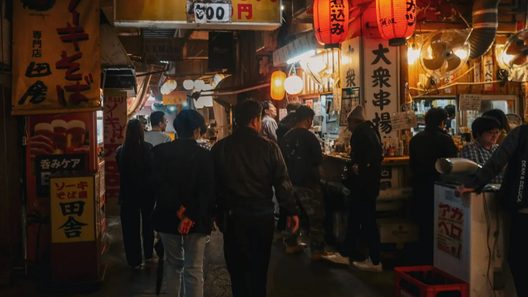
There is a village on the northern tip of Okinawa’s main island where the average age of the residents is higher than almost anywhere else on earth. The men and women who live there work in their gardens into their eighties. They eat meals together every day. They have a word, ikigai, that means something close to “a reason for getting up in the morning,” and they use it not as philosophy but as daily practice. They are, by every measurable metric of health and vitality, among the longest-lived human beings in recorded history.
This is not the reason most people visit Okinawa. But it is the reason Okinawa is different from every other island destination in Asia, and from almost every other place on earth. The Blue Zone is not a tourist attraction. It is the residue of a way of life, a culture, a diet, a philosophy, that developed over centuries on a chain of subtropical islands 800 kilometres south of Tokyo, at the intersection of Chinese, Southeast Asian, and Japanese influences, that produced something the rest of the world is now scrambling to understand.
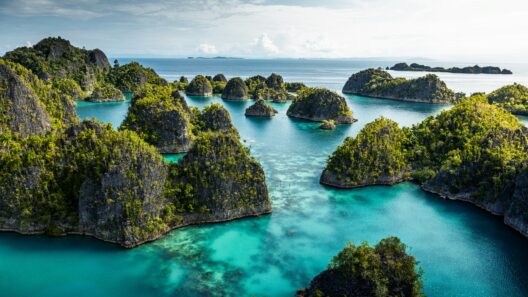
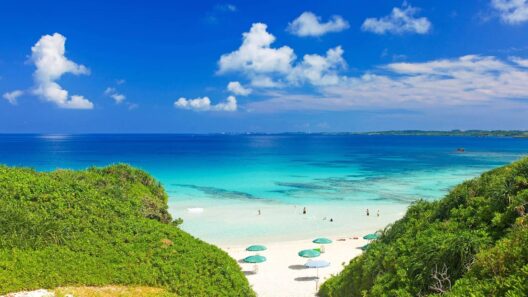
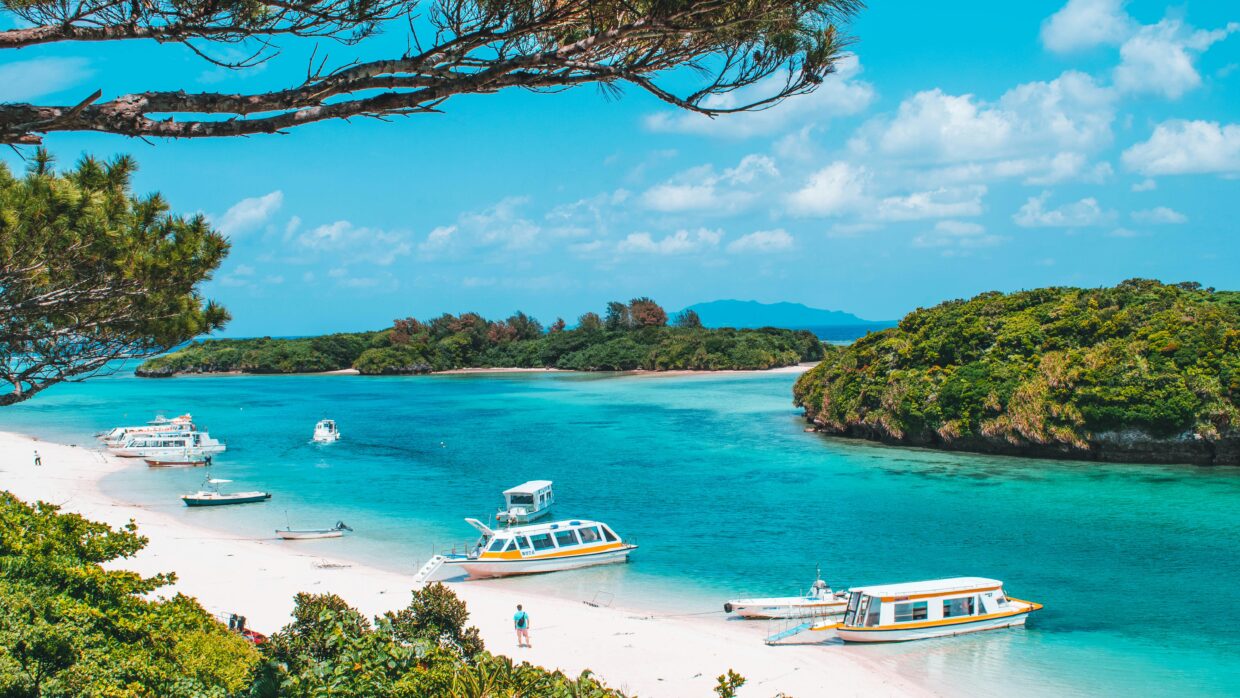
The rest of Okinawa is also extraordinary. The coral reefs of the Kerama Islands have visibility that rivals the Maldives. The underwater ruins off Yonaguni are among the most mysterious dive sites on earth. The beaches of Miyako and Ishigaki are, by any serious comparison, among the finest in Asia. The food is unlike anything on the Japanese mainland, champuru, Okinawa soba, sea grapes, awamori, and the Ryukyuan culture, with its own language, its own music, its own castle architecture and spiritual traditions, is entirely distinct from the Japan of Tokyo and Kyoto.
Okinawa is Japan’s most extraordinary secret. This is the guide to going properly.
What Okinawa actually is
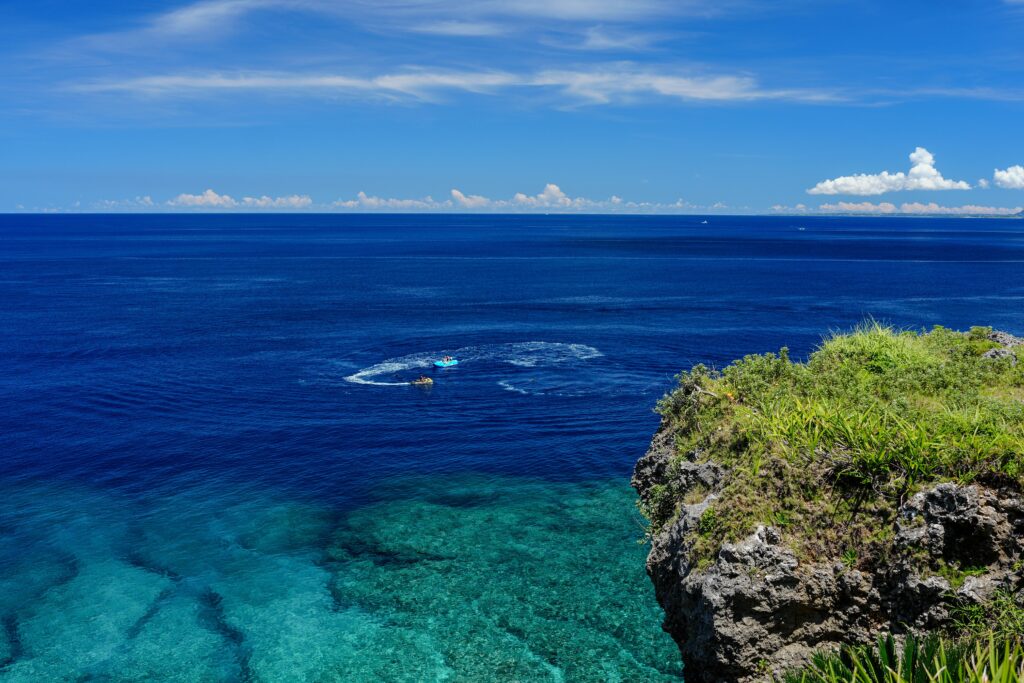
Okinawa is not a single island. It is a prefecture of 160 islands stretching 1,000 kilometres from east to west and 400 kilometres from north to south, grouped into three main clusters: the Okinawa Islands (centred on the main island, Okinawa Honto), the Miyako Islands to the southwest, and the Yaeyama Islands further still, where the westernmost inhabited island of Yonaguni sits closer to Taiwan than it does to mainland Japan.
The entire archipelago sits in the subtropics, warmer than mainland Japan year-round, cooled by the Kuroshio Current, with sea temperatures that allow coral reef ecosystems of extraordinary diversity across the island chain. The main island, where most visitors begin, is 106 kilometres long and between 3 and 28 kilometres wide, larger than it looks on a map, and more varied than most visitors expect.
What makes Okinawa unlike every other prefecture of Japan is its history. The islands formed an independent kingdom, the Ryukyu Kingdom, from the 15th century until 1879, when Japan annexed the archipelago by military force in what Okinawans still refer to simply as “the annexation.” The Ryukyu Kingdom was a sophisticated trading nation with deep cultural and diplomatic ties to China, Southeast Asia, Korea, and Japan simultaneously, and the civilisation it produced, in architecture, music, food, craft, and spiritual practice, is entirely distinct from anything on the Japanese mainland.
That distinctiveness survived the annexation. It survived the Battle of Okinawa in 1945, the bloodiest land battle of the Pacific War, in which roughly a quarter of the civilian population died, and the subsequent 27 years of American administration that followed the war’s end. Today it exists in the Ryukyuan language still spoken in rural communities, in the sanshin (a three-stringed instrument descended from the Chinese sanxian), in the eisa drumming tradition, in the architecture of the gusuku castle sites, and most profoundly in the food and the philosophy of daily life that made these islands a Blue Zone.
Understanding this history changes how you see everything here. Okinawa is not a Japanese beach destination. It is a distinct civilisation that happens to be administered as a Japanese prefecture.
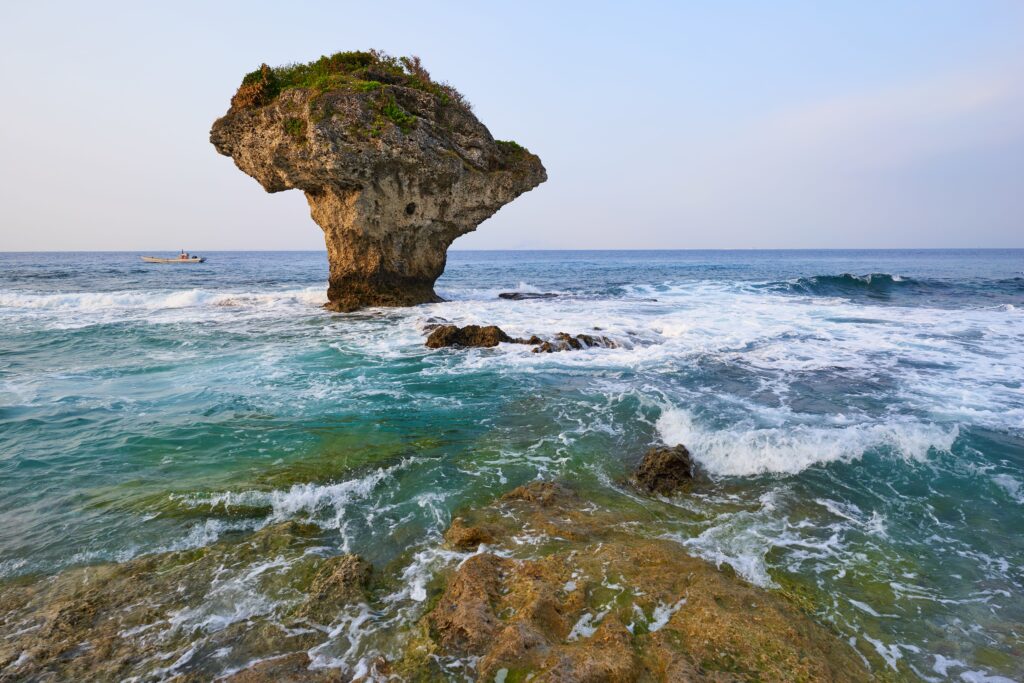
The Blue Zone: what it means for travellers
Okinawa is one of five Blue Zones identified globally by researcher and National Geographic Fellow Dan Buettner, regions where people consistently live longer, healthier lives than anywhere else on earth. The others are Sardinia in Italy, Nicoya in Costa Rica, Ikaria in Greece, and Loma Linda in California. Among the five, Okinawa has historically recorded the highest concentration of centenarians, particularly women, and has been studied more extensively than any of the others.
The longevity here is not the product of a single factor. Researchers have identified a cluster of interconnected causes: diet, social structure, physical activity, purpose, and stress management working together in ways that reinforce each other.
The Okinawan diet is plant-based, low in calories, and nutritionally dense. Sweet potato was historically the dietary staple, not rice, as in mainland Japan. Goya (bitter melon), tofu, seaweed, and turmeric appear daily. Meat is eaten sparingly, used primarily as flavouring rather than as the main component of a meal. Okinawans follow the principle of hara hachi bu, a Confucian teaching that advises eating until you are 80 percent full, which modern nutritional research has confirmed as one of the most reliable practices for long-term caloric moderation.
The social structure is equally significant. The moai, small groups of friends who commit to each other for life, meeting regularly, providing mutual financial and emotional support, is one of the most studied aspects of Okinawan social culture. The moai functions as a built-in support network that reduces the chronic stress and social isolation that researchers now identify as among the most significant predictors of early mortality in Western societies.
Ikigai, the reason for getting up in the morning, is perhaps the most frequently cited element in Western writing about Okinawan longevity, and also the most misunderstood. It is not a bucket list or a life goal in the Western sense. It is a daily practice of finding meaning in small things: tending a garden, preparing food for a grandchild, teaching a skill to someone younger. The Okinawan centenarians studied by Blue Zone researchers do not retire in the Western sense. They simply keep doing the things that give them purpose.
As a traveller, the Blue Zone is not something you visit so much as something you absorb. The longevity culture is embedded in the food, the pace, the markets, the older residents you encounter in the northern villages. A guided experience at the Blue Zone longevity restaurant near the Churaumi Aquarium, where a short film made with eight grandmothers nearing 100 is followed by a meal of exactly what those grandmothers eat daily, is the most direct encounter with this philosophy available to visitors. It is one of the more genuinely unusual dining experiences in Japan.
The main island: what to know and where to go
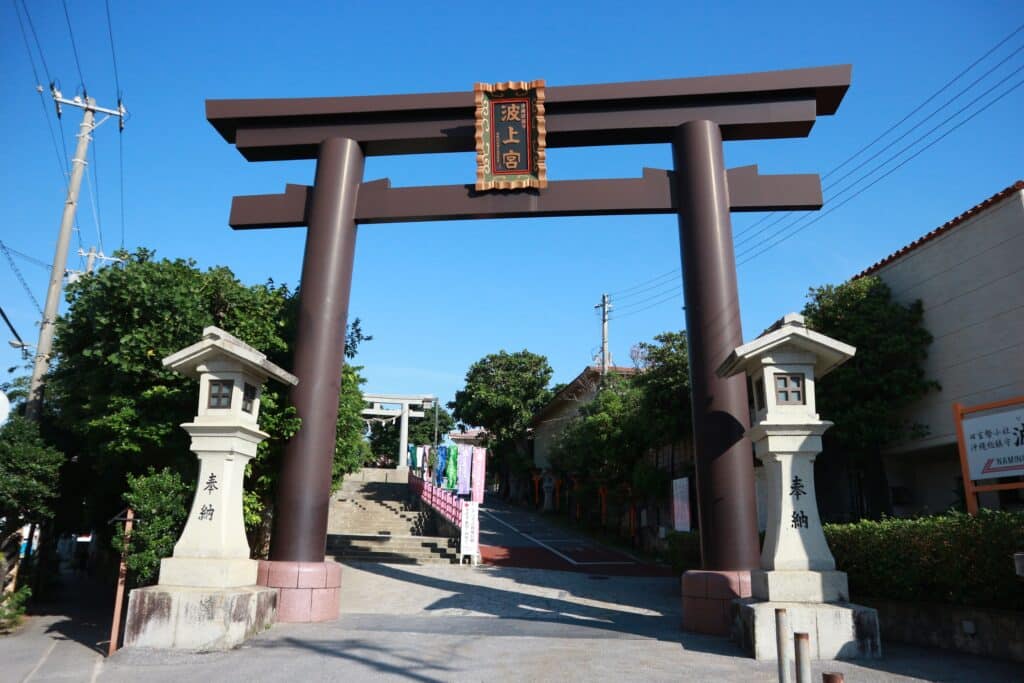
Naha
The capital of Okinawa Prefecture and the natural starting point for any visit. Naha is a modern, walkable city with the highest concentration of Ryukyuan heritage accessible to visitors, a market street considered among the finest in Japan, and a proximity to the island’s central and southern historical sites that makes it the logical base for the first days of a visit.
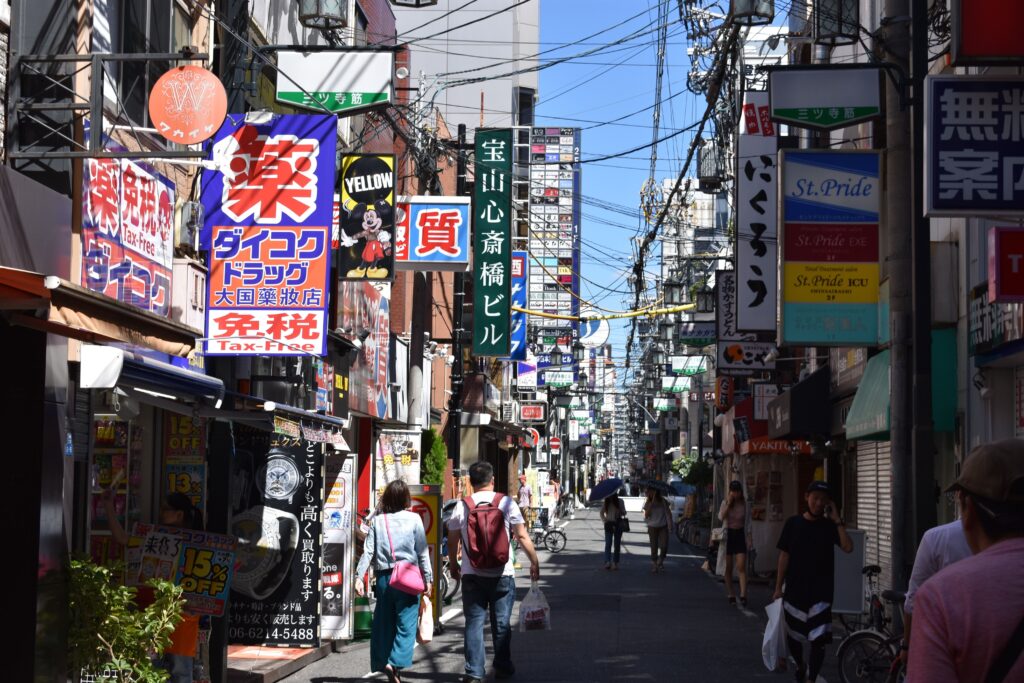
Kokusai Dori – International Street, is Naha’s main commercial strip: 1.6 kilometres of shops, restaurants, and stalls selling everything from awamori bottles to Okinawan crafts. It is busy and tourist-oriented, but the covered market arcades that branch off it, the Makishi Public Market in particular, reveal a more genuine Naha beneath the souvenir layer. The market’s seafood section, where vendors selling extraordinary tropical fish and shellfish occupy the ground floor and the restaurants above will cook your purchase immediately, is one of the finer market experiences in Japan.
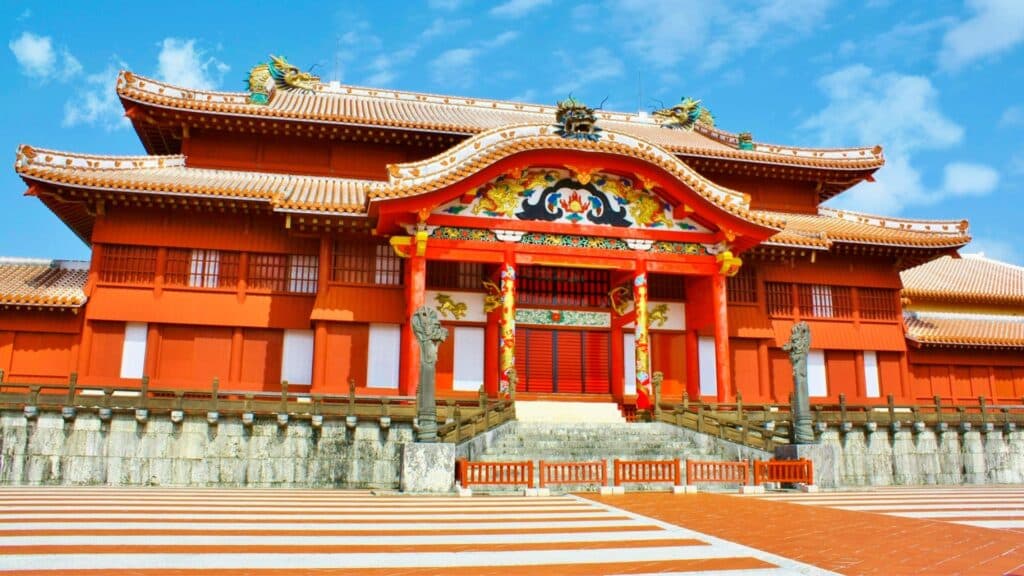
Shuri Castle is the most significant Ryukyuan heritage site on the main island and a UNESCO World Heritage Site, the political, cultural, and spiritual centre of the Ryukyu Kingdom for over 450 years. The main hall (Seiden) was severely damaged by fire in October 2019 and has been under restoration since. The main hall is expected to reopen fully in late 2026, check the current restoration status before visiting. The surrounding castle complex, including the outer walls, gate structures, and gardens, is fully open and genuinely extraordinary even in its partially restored state.
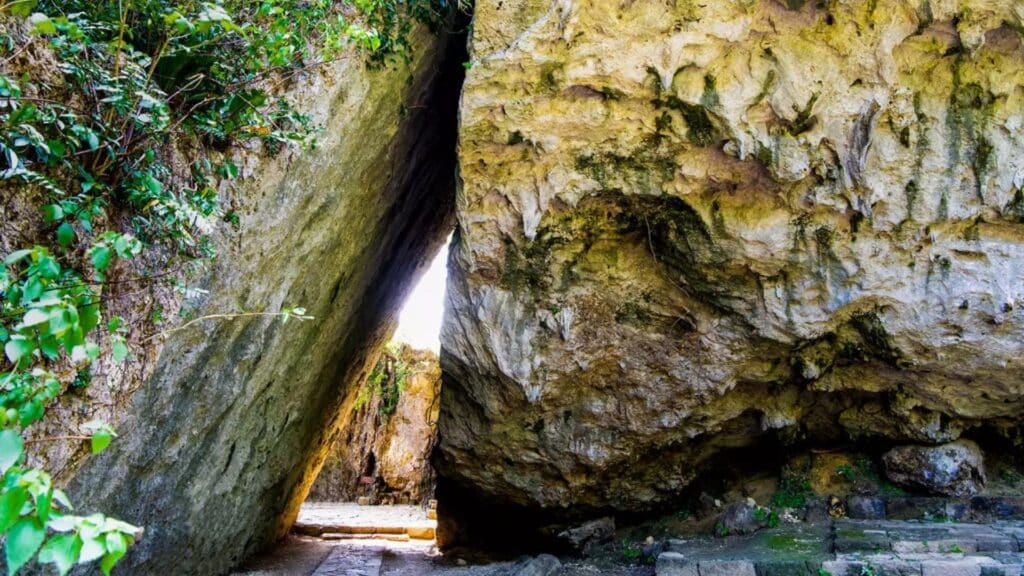
Sefa-utaki is the most sacred of the Ryukyuan spiritual sites, a grove of ancient limestone formations where the Ryukyu Kingdom’s highest spiritual ceremonies were conducted for centuries, accessible only to women during the kingdom’s era. It is located on the Chinen Peninsula southeast of Naha, requires a 20-minute walk through forested limestone terrain, and costs 300 yen to enter. The atmosphere inside the grove, the scale of the rock formations, the ancient banyan trees, the quality of the silence, is unlike anything in mainland Japanese spiritual sites.
Central Okinawa
The central section of the main island contains the highest concentration of historical sites outside Naha, including several of the UNESCO-listed gusuku castle ruins, and the Okinawa Churaumi Aquarium, one of the largest and most extraordinary aquariums in the world.
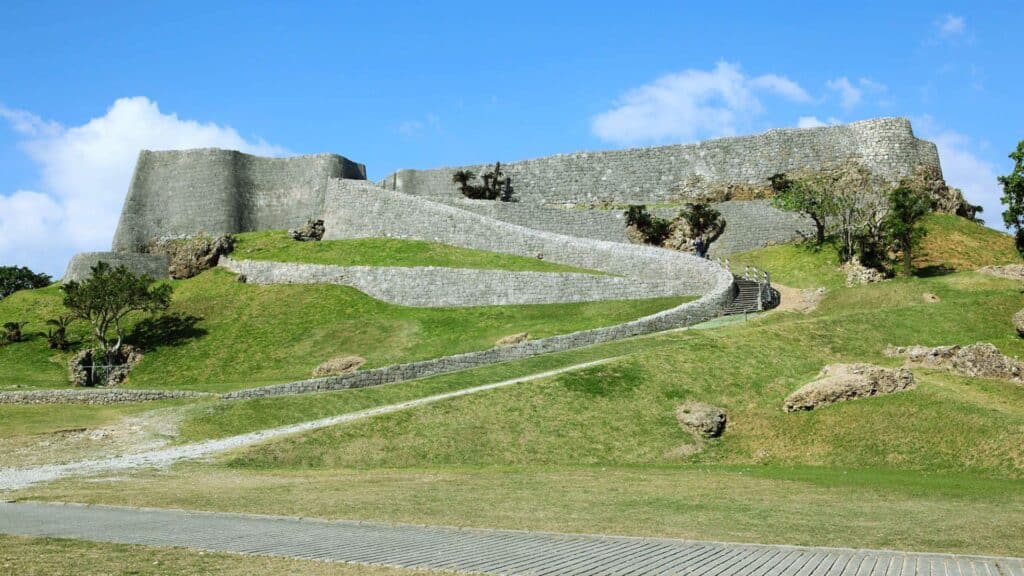
Nakagusuku Castle ruins – a UNESCO World Heritage site with some of the finest stonework visible in any of the gusuku castle remains, on a promontory with views across the central island to both coasts simultaneously. Entry 500 yen.
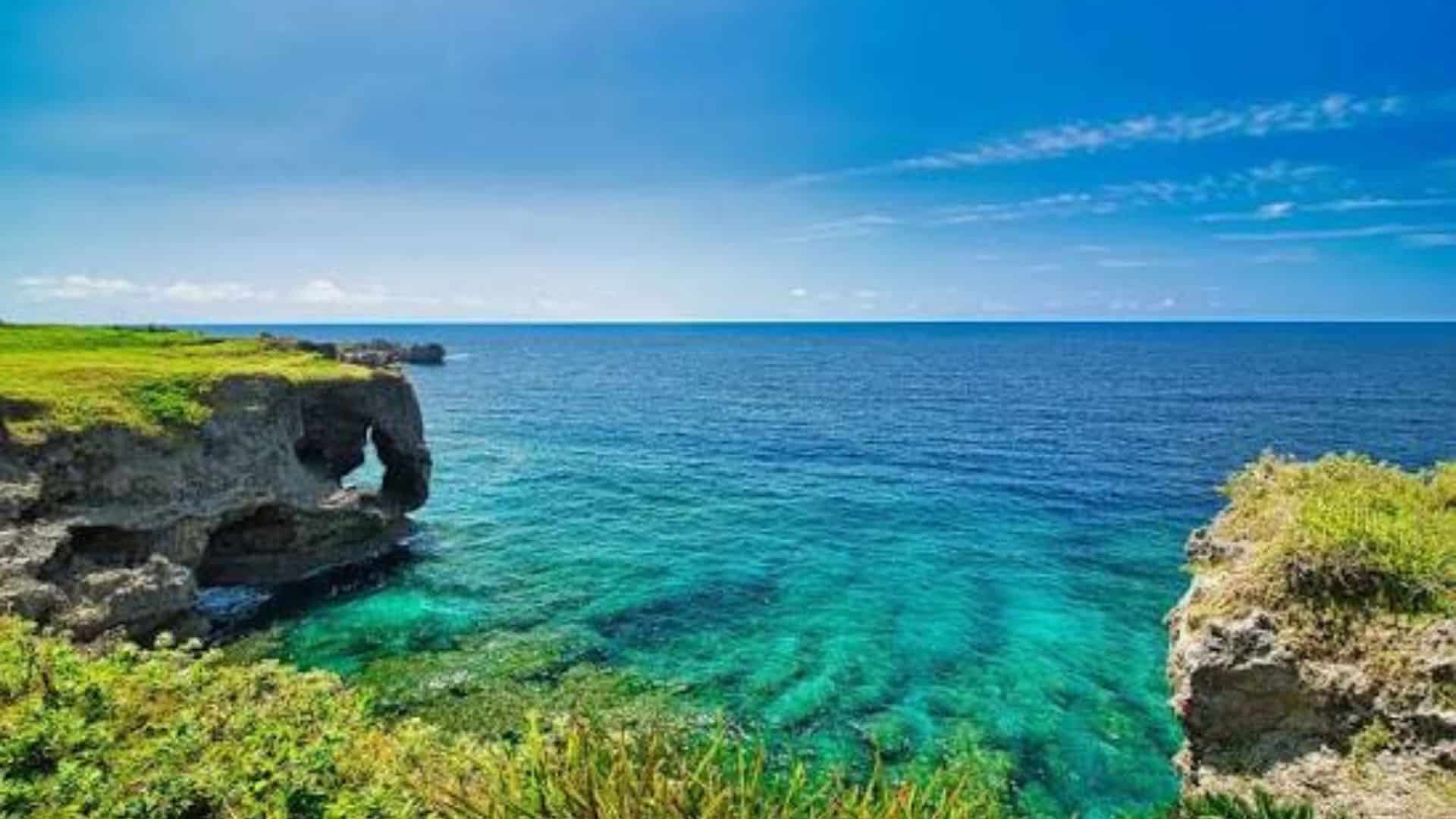
Cape Manzamo – a coral limestone promontory shaped by erosion into what Ryukyuan legend describes as an elephant’s trunk, with turquoise water visible in both directions below the clifftop promenade. One of the most photographed natural formations on the main island. Entry 100 yen.
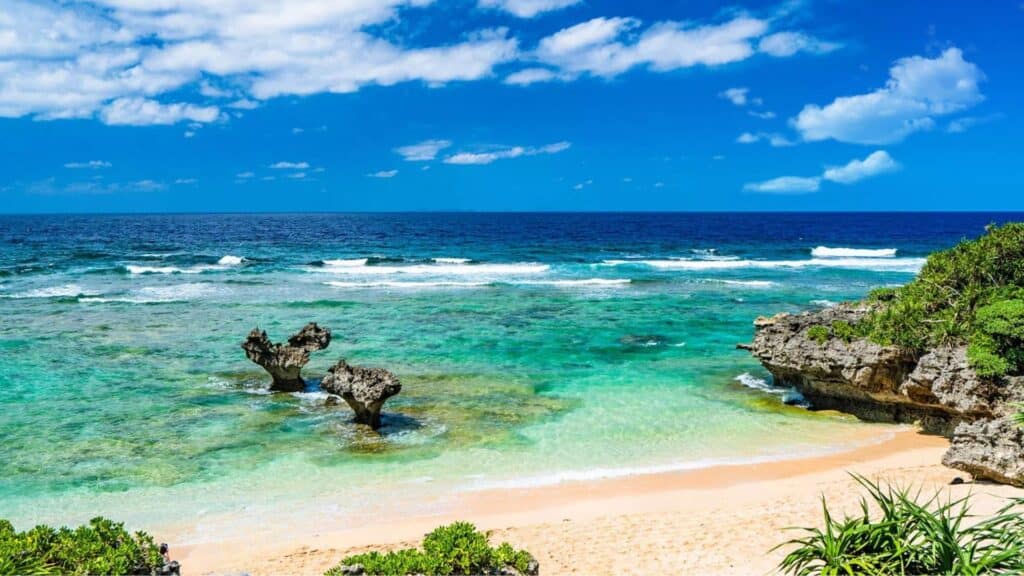
Kouri Island – a small circular island connected to the main island by a 1.9-kilometre bridge, with Kouri Beach, white sand, turquoise water, reliably one of the most beautiful beaches accessible from the main island, at its centre. The Kouri Ocean Tower offers panoramic views at 82 metres above sea level. Both the bridge and beach are free to access.
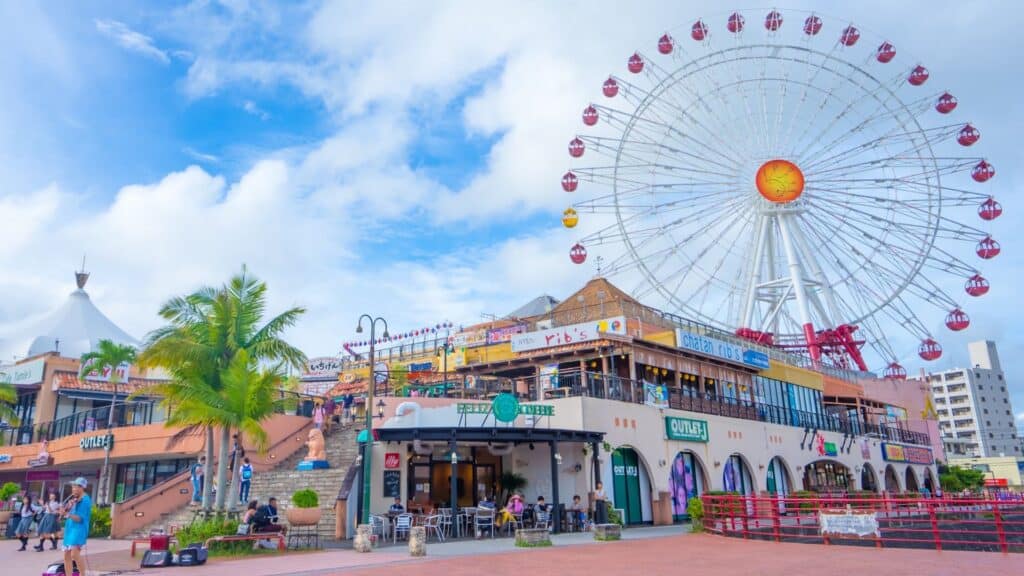
American Village – a shopping and entertainment complex in Chatan that reflects Okinawa’s complex relationship with the American military presence that has been a defining feature of the island since 1945. More interesting culturally than it sounds: the Okinawan-American hybrid culture visible here, in the food, the aesthetics, the community, is genuinely distinctive and found nowhere else in Japan.
Northern Okinawa: Yanbaru
The north of the main island is the least visited and the most rewarding for travellers who have time to reach it. The Yanbaru National Park covers the northern third of the island in subtropical evergreen forest, approximately 80 percent of the area, that is home to species found nowhere else on earth, including the Okinawa rail, a flightless bird designated as a national natural monument.
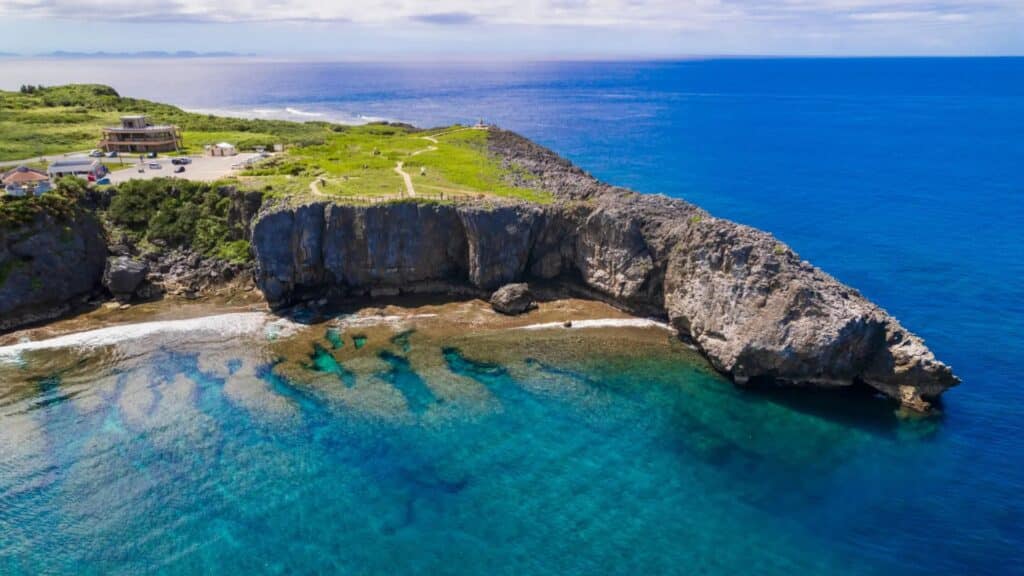
Cape Hedo is the northernmost point of the main island, where the East China Sea meets the Pacific on both sides of a dramatic rocky headland. The drive through the Yanbaru forest roads is part of the appeal, and the cape itself, rugged, windswept, sacred in Ryukyuan legend as the place where the island was founded, is one of the more quietly powerful natural sites in the prefecture.
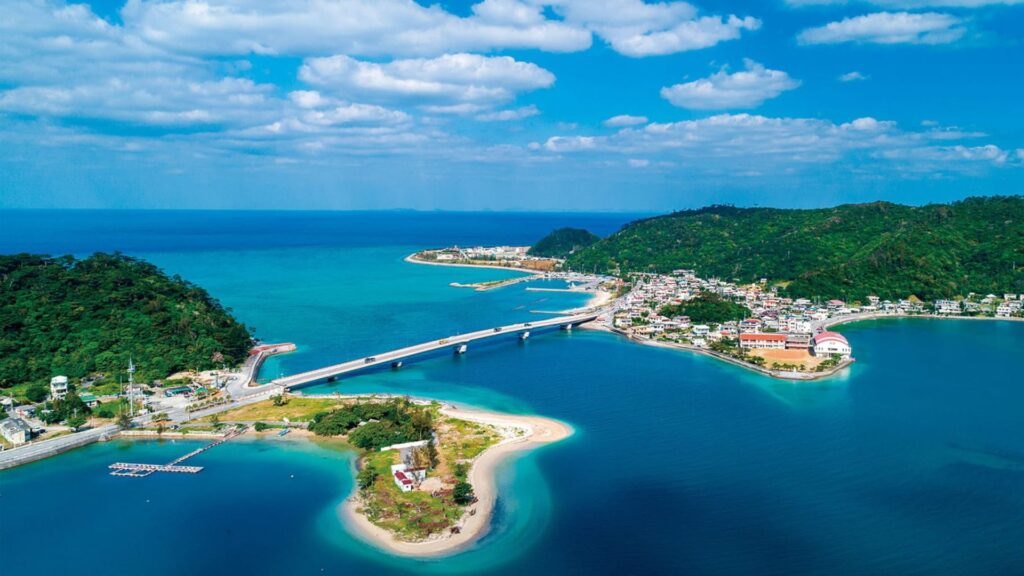
The Blue Zone communities of the north, particularly the villages around Ogimi, traditionally home to the highest concentration of centenarians on the island, are the most authentic encounter with the longevity culture available to visitors. The Ogimi Village Longevity Festival, held annually in September, celebrates the community’s elderly residents with traditional dance, music, and food.
The Okinawa Churaumi Aquarium, on the Motobu Peninsula in the north, is one of the largest aquariums in the world and home to the Kuroshio Sea tank, the second-largest aquarium tank on earth, which displays whale sharks, manta rays, and an extraordinary diversity of tropical marine life in conditions that accurately reflect the open ocean. Entry 2,180 yen for adults. Budget a minimum of three hours.
The southern sites: history and memory
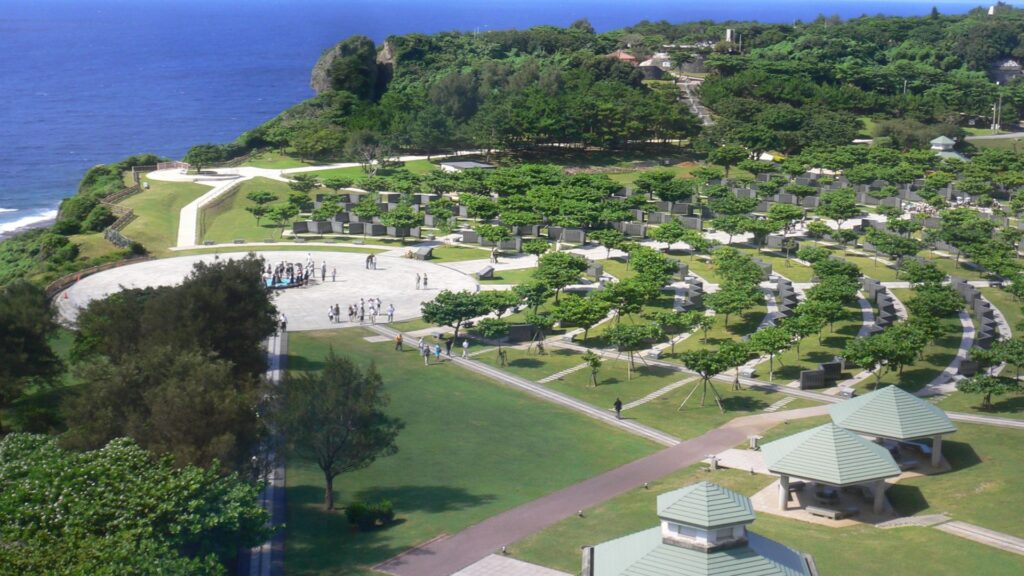
The south of the main island contains the most significant sites relating to the Battle of Okinawa, the land battle fought between April and June 1945 that was the bloodiest of the Pacific War, in which an estimated 107,000 Japanese military personnel, 77,000 American military personnel, and between 42,000 and 150,000 Okinawan civilians died.
The Cornerstone of Peace at Mabuni Hill lists the name of every individual who died in the battle, from every nation involved, carved into black granite walls that curve across the hilltop above the sea. It is the most complete memorial to any single battle in the Pacific War and one of the most moving memorial sites in Japan.
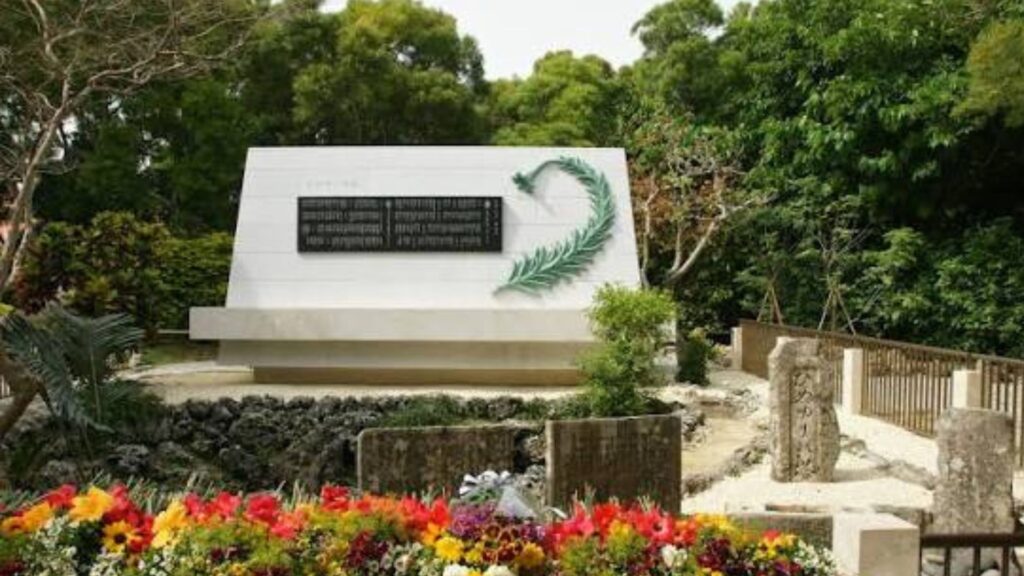
The Himeyuri Peace Museum tells the specific story of the 222 female students and their teachers who were mobilised as nursing volunteers in the final months of the battle and died in its last days. The museum is operated by the survivors and their descendants, and the specificity of the individual stories, the photographs, the personal effects, the first-person accounts, makes it one of the most powerful small museums in the Asia-Pacific region.
These sites are not optional context for understanding Okinawa. They are central to it. The relationship between Okinawa and the Japanese mainland, the continued presence of US military bases on the island, the Ryukyuan independence movement that exists in various forms today, all of it has its roots in what happened in 1945. Visiting these sites is part of seeing Okinawa properly.
The outer islands: where Okinawa becomes extraordinary
The outer island groups, the Kerama Islands, the Miyako Islands, and the Yaeyama Islands, are the reason serious travellers extend their Okinawa trip beyond the main island. Each cluster delivers a different experience, and each is the subject of a dedicated post in this series.
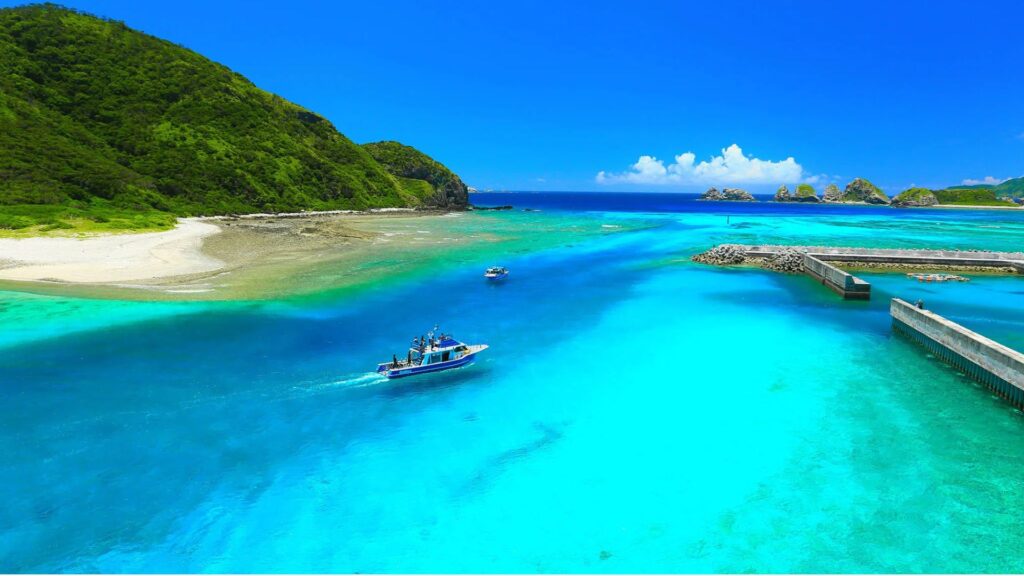
The Kerama Islands sit 30 minutes from Naha by high-speed ferry and contain some of the clearest water in Japan, exceptional coral reefs for snorkelling and diving, and humpback whale sightings from January to March. Tokashiki and Zamami are the main islands with accommodation, and a day trip from Naha or a one or two-night stay adds a dimension to any visit that the main island cannot provide.
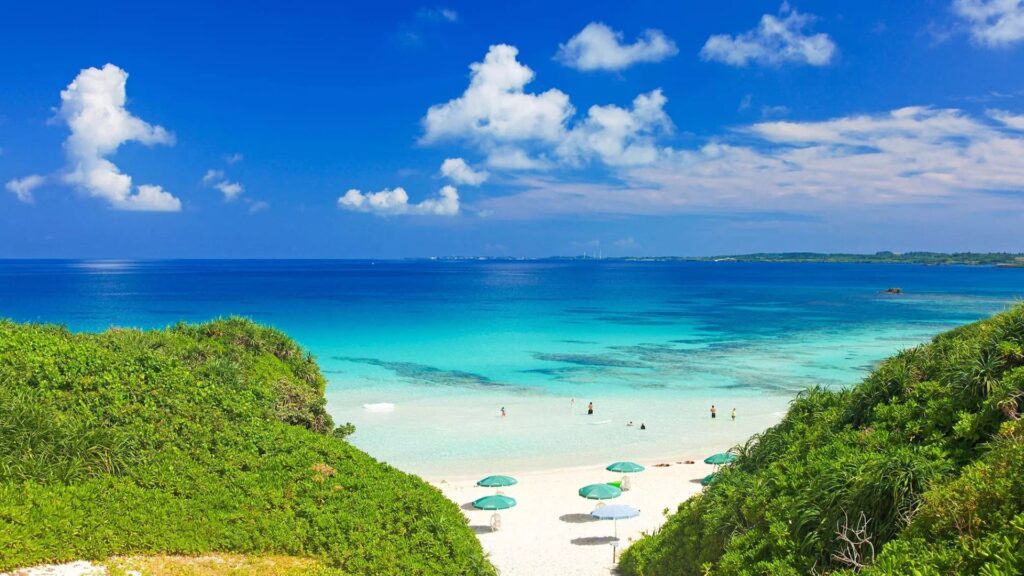
Miyako Island is 290 kilometres southwest of Naha, a 45-minute flight, and is widely considered the finest beach destination in all of Japan. Yonaha Maehama Beach, on the western coast, is frequently included in serious rankings of the best beaches in Asia: seven kilometres of white powder sand and water of a clarity and colour that belongs in the Maldives category rather than the Japan category.
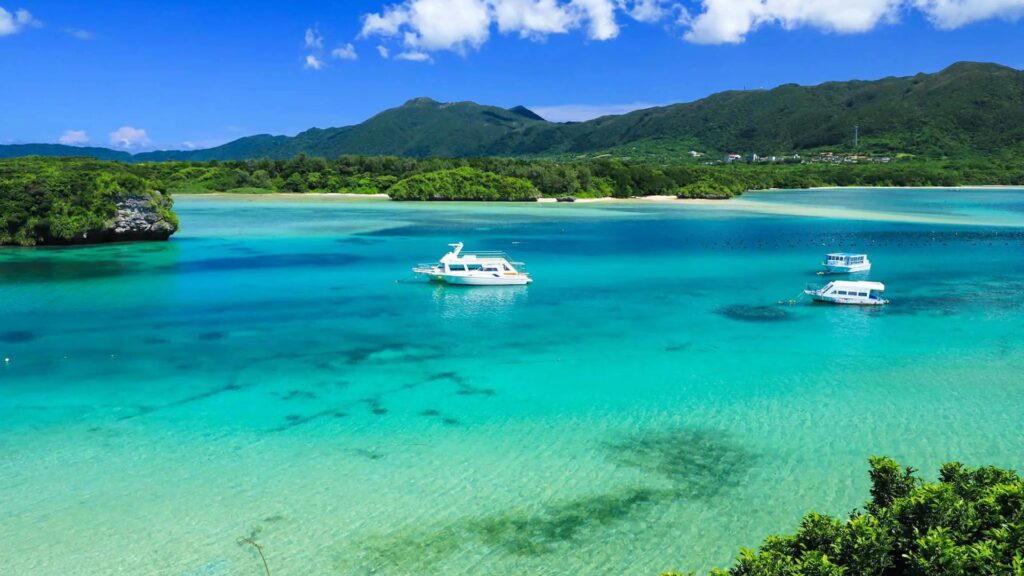
Ishigaki Island in the Yaeyama group is the hub for the most remote and extraordinary island experiences in the prefecture, a base for day trips and overnight visits to Taketomi Island (a preserved Ryukyuan village of traditional red-tile roofed houses, reachable by ferry in ten minutes), Iriomote Island (subtropical jungle covering 90 percent of the island’s surface, crossed by rivers navigable by kayak), and Yonaguni Island with its mysterious underwater ruins.
Each of these islands is covered in detail in the outer islands post in this series.
Food: the short version
The food post in this series covers Okinawan cuisine in the depth it deserves. For the pillar post, the essential things to know:
Okinawan food is not Japanese food. It shares some ingredients and some techniques but it arrived at them by a different route , via China, Southeast Asia, and the Ryukyu Kingdom’s own agricultural traditions, and the result is a cuisine distinct in flavour, philosophy, and purpose from anything on the mainland.
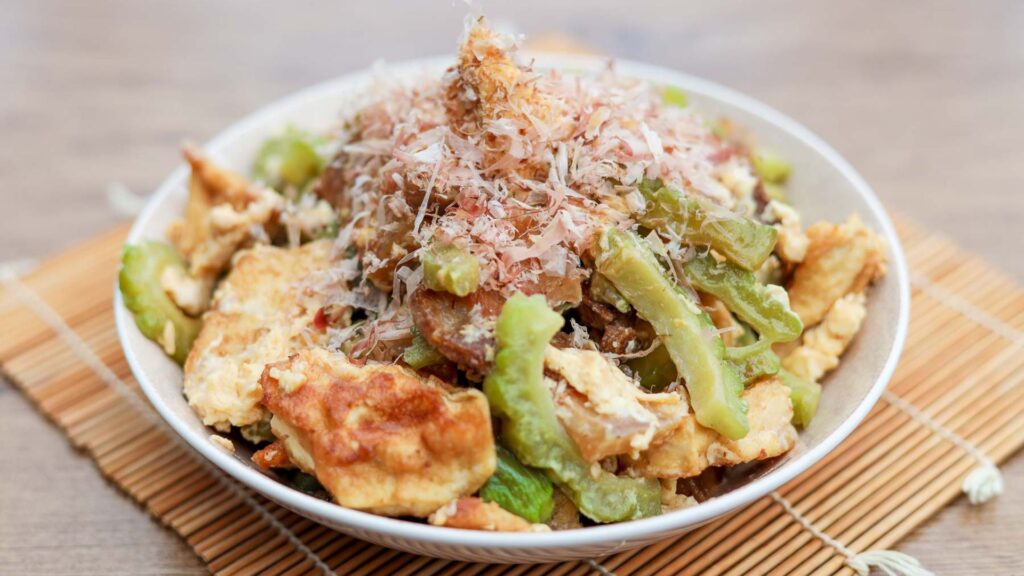
Champuru is the defining Okinawan dish, a stir-fry of tofu, vegetables, egg, and a protein seasoned with simple soy and the wok’s heat. Goya champuru, made with bitter melon, is the most traditional version and the one most directly connected to the longevity diet.
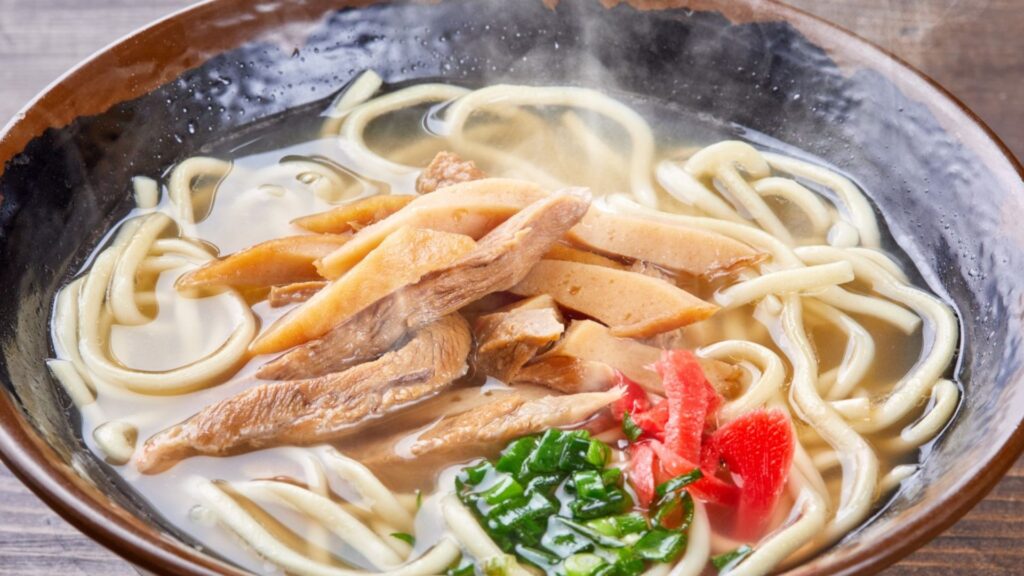
Okinawa soba is not buckwheat noodles in the mainland Japanese sense, it is a wheat noodle served in a pork-based broth with rafute (braised pork belly), fish cake, and pickled ginger. The broth is richer and cleaner than ramen, and soba restaurants in Naha and across the main island are among the finest casual dining experiences available.
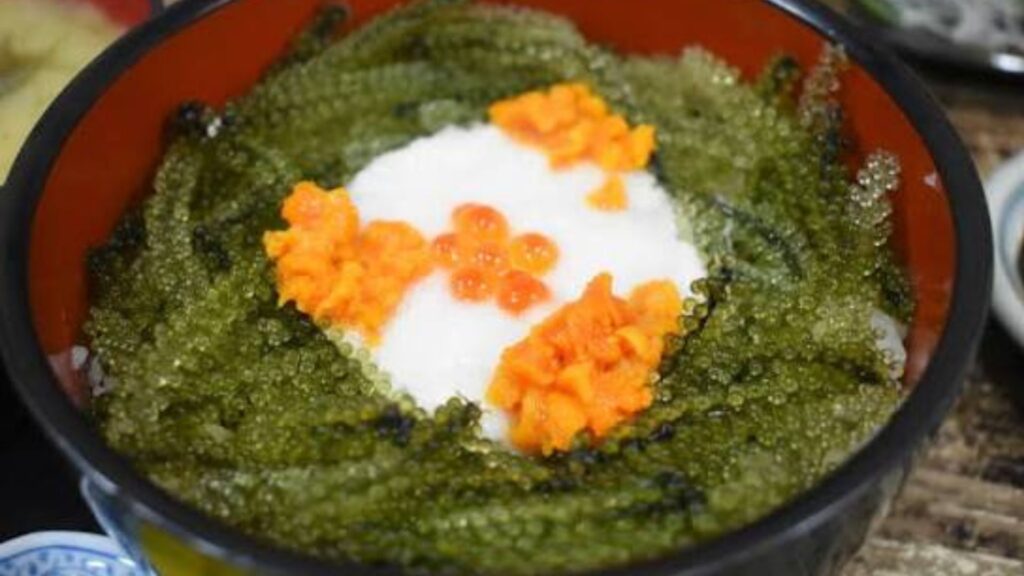
Sea grapes (umibudo) are a seaweed variety unique to Okinawa, clusters of tiny, translucent spheres that pop pleasantly in the mouth and taste of the sea with a freshness that has no equivalent. They appear as a side dish across the island and are worth seeking out at every opportunity.
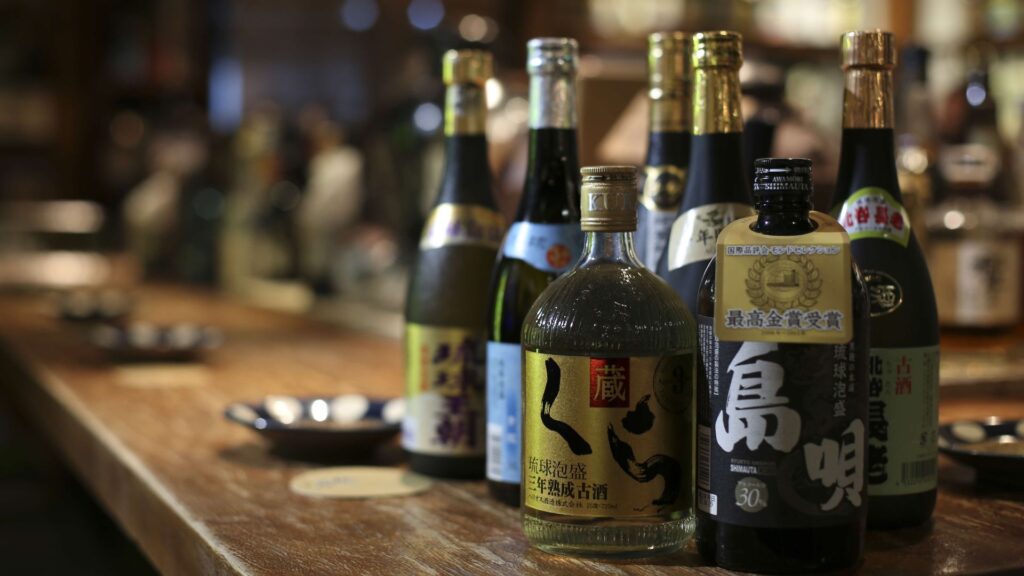
Awamori is Okinawa’s own spirit, a rice-based distillate that predates mainland Japanese sake by several centuries and is aged in clay pots rather than barrels. It is stronger than sake, smoother than shochu, and drunk diluted with water or on the rocks at the izakayas and restaurants of Naha. The finest aged versions, kusu, aged for three years or more, are among the more complex spirits produced anywhere in Asia.
When to visit
Spring (March to May) is the finest overall season. Temperatures are warm but not humid, the water is warm enough for snorkelling and diving, the beaches are uncrowded, and the humpback whale season (January to March) overlaps with the early spring shoulder period. Cherry blossoms bloom earlier in Okinawa than anywhere else in Japan, typically late January to February, creating an unusual combination of tropical warmth and the most Japanese of seasonal spectacles.
Summer (June to September) is the peak tourist season and the hottest, most humid period. The rainy season runs from mid-May to mid-June. Typhoon season peaks from August to October, typhoons are frequent and can be severe, requiring flexibility in any itinerary built around ferry travel to the outer islands. The beaches are at their most beautiful and most crowded. July and August are the busiest and most expensive months.
Autumn (October to November) is Okinawa’s second-best season and the one most underrated by visitors. Temperatures moderate, humidity drops, the typhoon risk diminishes sharply after mid-October, and the outer island ferry routes become reliably accessible again. The water temperature is still warm enough for comfortable snorkelling through November.
Winter (December to February) is mild by Japanese mainland standards, temperatures typically 15 to 20 degrees Celsius, and the least crowded season. The sea is too cool for comfortable swimming on the main island, but whale watching season around the Kerama Islands (January to March) makes this a compelling period for specific itineraries. Heritage sites and cultural attractions are uncrowded and enjoyable year-round.
Getting there and around
From Tokyo: Okinawa Naha Airport is served by multiple airlines from Haneda and Narita, with flights taking approximately 2.5 to 3 hours. ANA and JAL both operate frequent routes; Peach Aviation and Jetstar Japan offer budget options. For the outer island groups, Miyako and Ishigaki are served directly from Tokyo, Osaka, and Naha.
From international destinations: Naha Airport receives direct international flights from Taipei, Seoul, Shanghai, Hong Kong, Bangkok, and Singapore. From Europe, Australia, and North America, the typical routing is via Tokyo, Osaka, or Taipei.
Getting around the main island: A rental car is the most practical option for exploring beyond Naha. The Yui Rail monorail covers central Naha including Shuri Castle and the main shopping districts, but the rest of the island requires either a rental car or guided tour. Japanese driving is on the left; international driving licences are valid for the first year of residence, making rental straightforward for most visitors.
Getting to the outer islands: High-speed ferries run from Naha’s Tomari Port to the Kerama Islands (30 minutes to Zamami, 35 minutes to Tokashiki). Flights from Naha serve Miyako (45 minutes), Ishigaki (55 minutes), and Yonaguni (75 minutes). From Ishigaki, local ferries serve Taketomi (10 minutes) and Iriomote (35 to 45 minutes).
A suggested itinerary: 10 days across the islands
Days 1-2 – Naha. Kokusai Dori and the Makishi Market. Shuri Castle. Sefa-utaki. Naha’s izakaya scene for first encounters with Okinawa soba, champuru, and awamori.
Day 3 – Southern Okinawa. Cornerstone of Peace. Himeyuri Peace Museum. The castle ruins of the south. Return to Naha for dinner.
Day 4 – Central Okinawa. Cape Manzamo. Nakagusuku Castle. Kouri Island beach. Overnight in the north.
Day 5 – Northern Okinawa. Yanbaru National Park. Cape Hedo. Blue Zone village communities around Ogimi. Churaumi Aquarium. Overnight in the north.
Days 6-7 – Kerama Islands. Ferry from Naha to Zamami or Tokashiki. Snorkelling, diving, beach time. January to March: humpback whale watching. Return to Naha or fly direct to Ishigaki.
Days 8-10 – Yaeyama Islands. Base on Ishigaki Island. Day trip to Taketomi (traditional village, buffalo cart tours). Day trip or overnight on Iriomote (jungle kayaking, mangrove rivers, Pinaisara waterfall hike). Optional: flight to Yonaguni for the underwater ruins.
The series: exploring Okinawa in depth
This is the first post in a series dedicated to Okinawa. Each post that follows goes deeper into a specific dimension of the island group:
- The beaches and waters of Okinawa – snorkelling, diving, the finest beaches from the Keramas to Miyako and the Yaeyamas
- Eating in Okinawa – champuru, soba, sea grapes, awamori, the longevity diet and where to experience it properly
- Where to stay in Okinawa – luxury beach resorts, traditional ryokan, outer island guesthouses
- The best tours and activities in Okinawa – whale watching, kayaking, cultural experiences, island hopping
- The outer islands: Kerama, Miyako and Yaeyama – the islands beyond the main island that reward the traveller willing to take an additional flight
- Why Okinawa is the most extraordinary island group in Asia – the editorial case
Some links in this post are affiliate links. If you book through them, flight.now earns a small commission at no extra cost to you. Learn more here