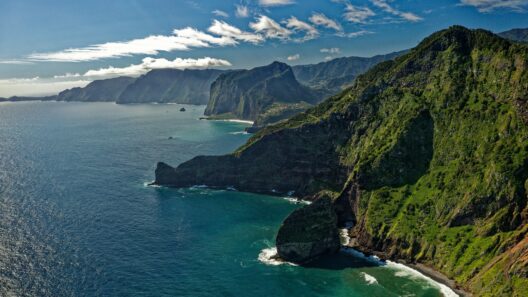
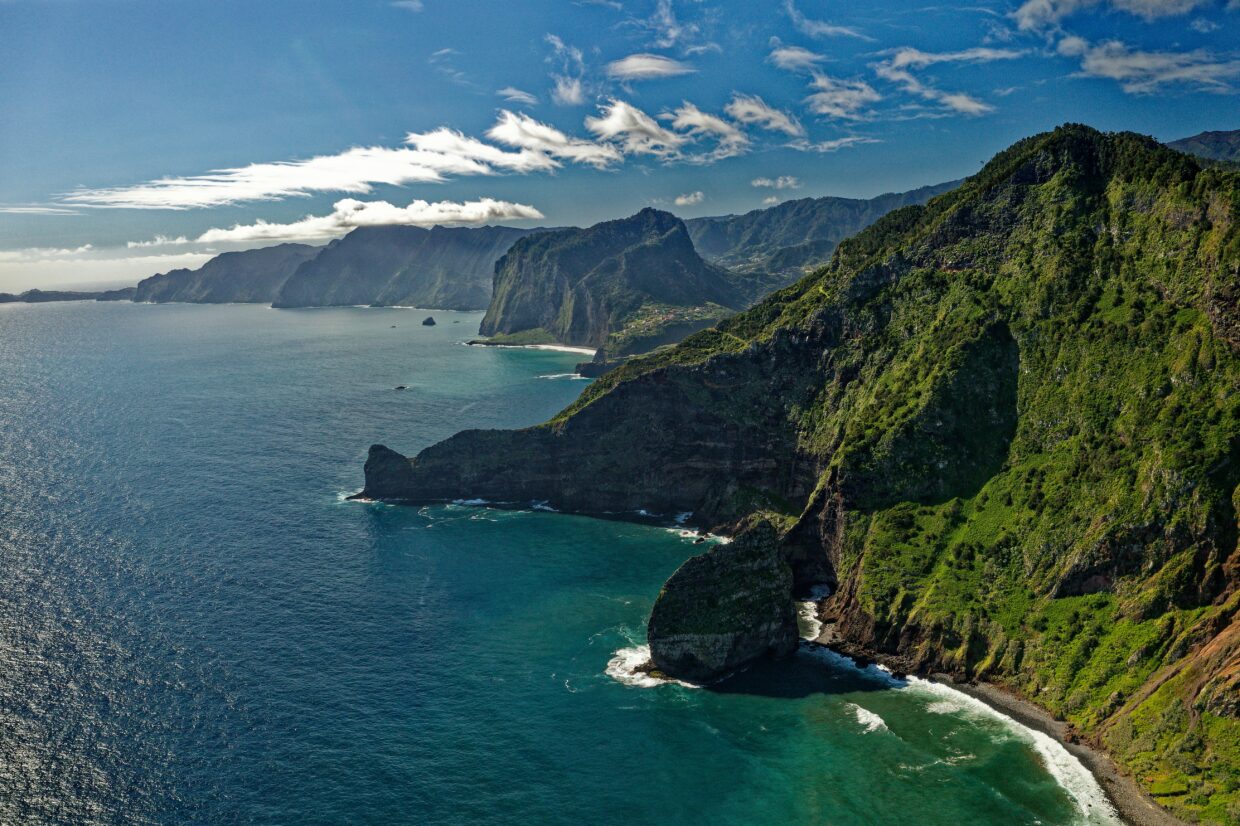
The first thing Madeira does is surprise you. Not because the photographs lied, they didn’t, but because no photograph adequately conveys the scale of it. You land on a runway that juts out over the sea on concrete stilts, built because the island didn’t have enough flat ground to put an airport on, and you think: this place is serious. Then you drive along the coast toward Funchal, with cliffs dropping vertically into the Atlantic on one side and terraced hillsides disappearing into cloud on the other, and you understand that you have arrived somewhere genuinely unlike anywhere else in Europe.
Madeira sits in the Atlantic Ocean roughly 1,000 kilometers off the coast of Portugal and 700 kilometers from Morocco, closer to Africa than to its own capital city in Lisbon. It is not a beach destination, the island has very few beaches, and the ones it has are largely volcanic pebble. It is not a party island. It has a reputation that arrived before most of its current visitors were born and has been stubbornly difficult to shift ever since. That reputation is wrong about almost everything, except one thing: the climate is extraordinary, mild and green and warm in every month of the year, earning Madeira the nickname the Island of Eternal Spring.
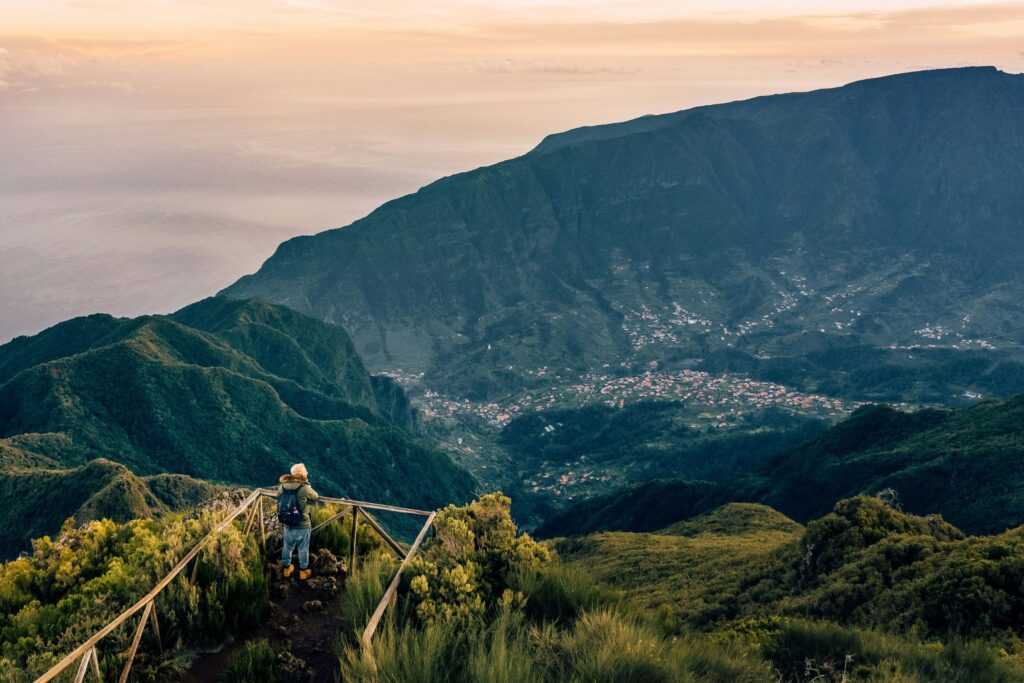
What Madeira actually is, for the traveller willing to look past those preconceptions, is one of the most dramatically beautiful islands on earth, a place where 2,000 kilometres of ancient irrigation channels have been converted into hiking trails through laurel forests so old they predate the last ice age, where whale watching is among the finest in Europe, where the capital city has more Michelin-starred restaurants per capita than most mainland Portuguese cities, and where the mountain peaks break through the clouds at 1,800 metres to deliver views that make everything at sea level feel very small.
It is also, relative to what it offers, one of Europe’s most undervisited islands. That will change. This guide will help you get there first.
Why Visit Madeira? Reasons to Add It to Your Bucket List
Before the practical details, the honest case for why this island deserves more than a passing consideration.
Madeira is one of very few destinations in the world that rewards every type of traveller simultaneously. Serious hikers will find 2,000 kilometres of levada trails and mountain routes that rival anything in mainland Europe. Divers and whale watchers will find Atlantic waters teeming with sperm whales, pilot whales, loggerhead turtles, and manta rays. Food travellers will find a culinary tradition, centred on black scabbardfish, limpets, bolo do caco bread, and Madeira wine, that is entirely its own and largely unknown outside the island. Architecture lovers will find Funchal’s historic centre, with its mosaic pavements, baroque churches, and colonial-era merchant houses, as fine as anything in the Azores or the Canaries.
The island is also, by European standards, accessible. Direct flights from Dublin, London, Manchester, Paris, Amsterdam, and most major European hubs make it reachable in under four hours from much of the continent. The cost of living on the island, food, taxis, guided tours, entrance fees, is lower than mainland Portugal, which is already lower than most of Western Europe.
Five days is the minimum to see it properly. Seven days allows you to move at the pace the island rewards. Two weeks reveals an entirely different Madeira, the north coast villages, the mountain interior, the neighbouring island of Porto Santo with its nine kilometres of golden sand beach, that most visitors never reach.
Funchal Travel Guide: Things to Do in Madeira’s Capital
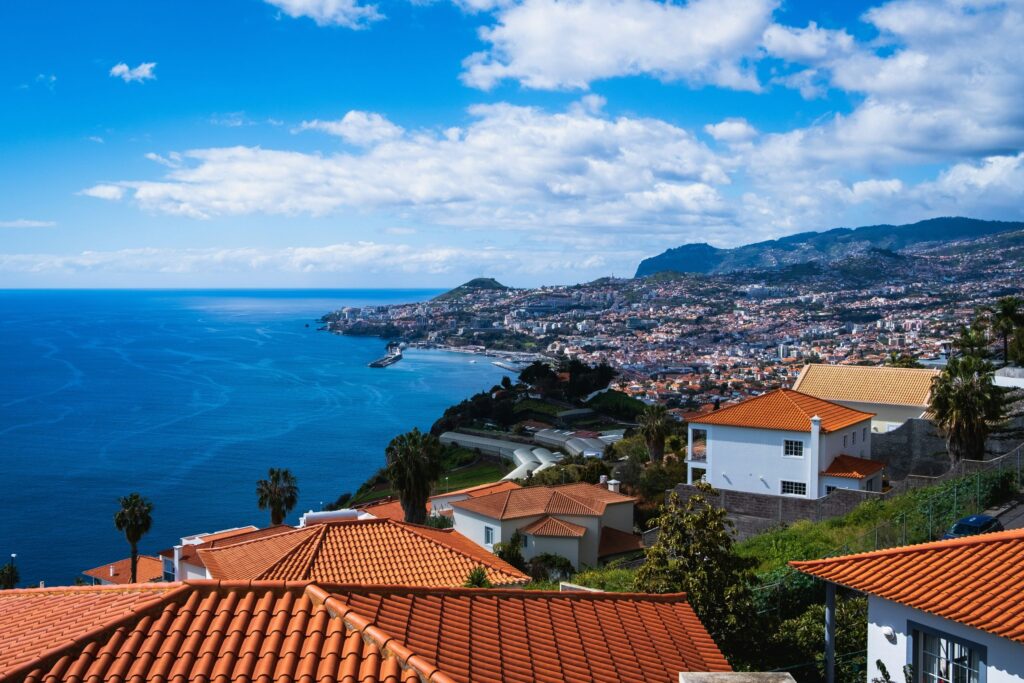
Funchal, home to roughly half of Madeira’s 270,000 population, sits on a natural amphitheatre of hillside terracing on the island’s southern coast. The bay below it, used as a deepwater port since the island’s colonisation in the 15th century, is wide and blue and regularly occupied by large cruise ships, which tells you something about how good the anchorage is and nothing about what Funchal is actually like on the ground.
The historic centre, the old town, or Zona Velha, is the best place to start. The cobblestoned streets are narrow and steep, the buildings covered in traditional Portuguese azulejo tiles, the doors painted with artwork by local and international artists as part of an ongoing public art project that has transformed the neighbourhood from a somewhat neglected dock area into one of the most photographed urban spaces in the Atlantic islands.
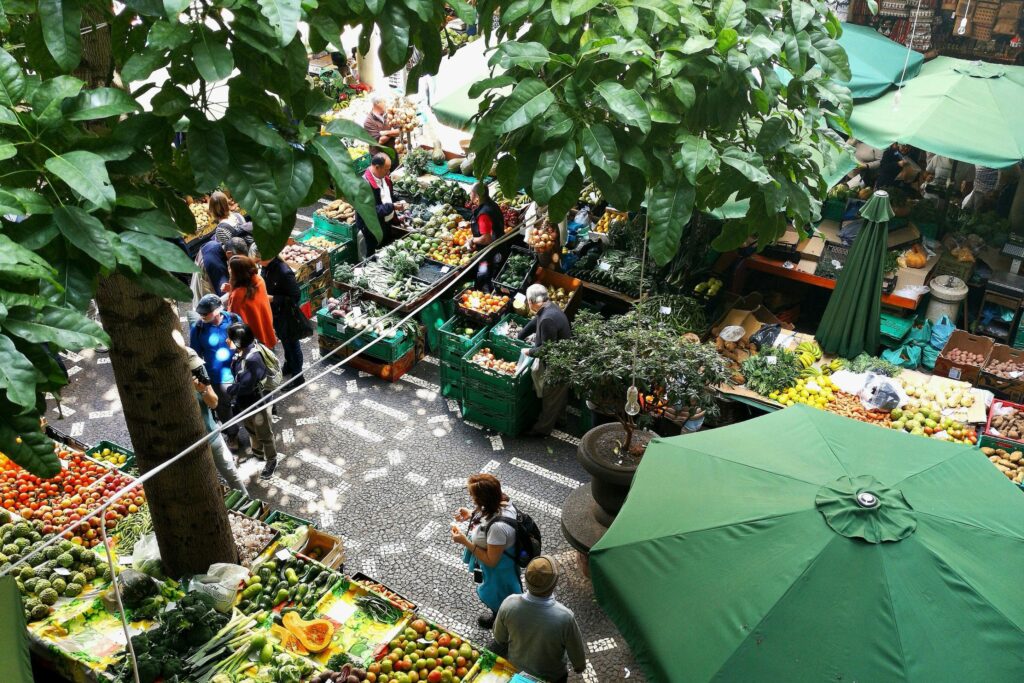
The Mercado dos Lavradores, the Workers’ Market, is the sensory heart of Funchal. Flower sellers in traditional Madeiran dress fill the ground floor with bird-of-paradise flowers, proteas, and orchids that grow naturally in the island’s volcanic soil. The floor above is given over to tropical fruit, custard apples, passion fruit, tamarillos, and a banana variety smaller and sweeter than anything you will find in a supermarket on the mainland, and below that, a fish market where the catch from the previous night’s deep-water fishing is laid out daily. The espada, the black scabbardfish, with its extraordinary deep-sea physiology, its enormous eyes adapted to total darkness, its flesh delicate and white, looks like something from another world. It tastes like nothing else.
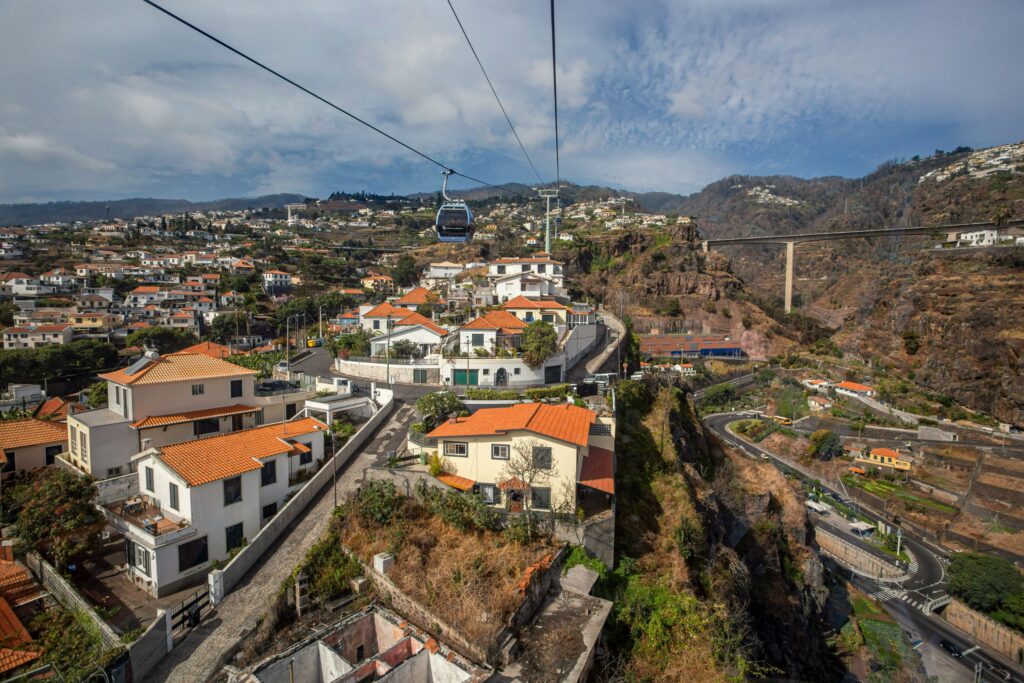
The Cathedral (Se) of Funchal, whose construction began in 1492 under the orders of King Manuel I, anchors the historic centre with a Manueline tower and an interior of gilded cedarwood ceilings that takes most visitors by surprise. The Monte Palace Tropical Gardens, reachable by cable car from the waterfront and set around a former palace at 550 metres above sea level, contain one of the finest collections of azulejo tile panels in Portugal alongside botanical gardens covering 70,000 square metres of hillside.
The cable car itself, the Teleférico do Funchal, running from the Zona Velha up to Monte, is the finest single viewpoint over the bay and the city, providing a perspective on Funchal’s remarkable topography that no viewpoint on the ground can match.
From Monte, the traditional wicker toboggan ride, the Monte toboggan, operated by carreiros in white uniforms and straw hats who steer the wooden sleds with their feet on the cobblestone descent, returns riders to the Livramento neighbourhood below in approximately 10 minutes. It covers two kilometres and reaches gradient of 18 percent on the steeper sections. Whether this constitutes a tourism gimmick or a genuine cultural experience depends on your perspective, it has been operating in roughly this form since the 19th century, when it was used as practical transport, so arguably both.
Best Levada Walks in Madeira: Hiking Trails You Cannot Miss
If you leave Madeira having only visited Funchal and perhaps one viewpoint, you will have seen a beautiful city. If you leave having walked the levadas, you will understand why people come back.
The levada system is one of the most remarkable feats of engineering in European history. Beginning in the 15th century and expanded continuously through the 18th and 19th centuries, the network of irrigation channels, narrow stone channels carrying water from the wet northern mountains to the drier agricultural south, now covers over 2,000 kilometres of the island. The paths that run alongside them, originally used by maintenance workers, have been developed into one of Europe’s most distinctive and extraordinary hiking trail networks.
What makes levada walking unlike anything else available in European hiking is the consistency of the gradient. Because the channels must maintain a constant, gentle slope to carry water by gravity, the trails follow the contours of the hillside with almost no vertical gain or loss. You walk beside flowing water through ancient laurel forest, along cliff edges with Atlantic views, through tunnels cut into the rock, past waterfalls that appear without warning around corners, at a pace that is leisurely but through a landscape that is spectacular.
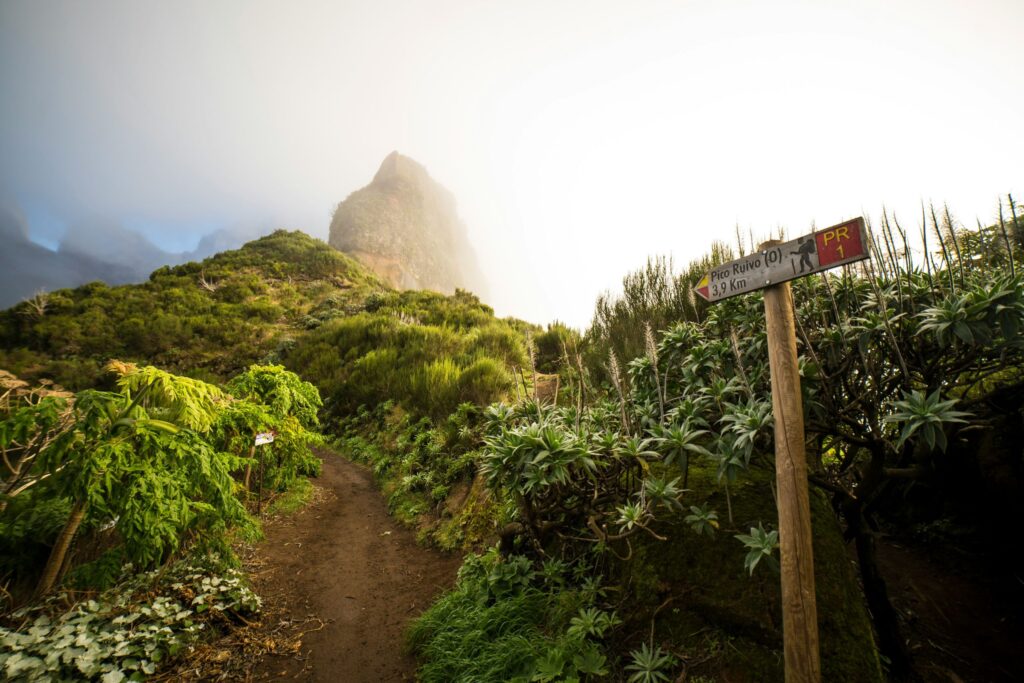
Important 2026 update: From 2026, Madeira has introduced a booking and fee system for its classified hiking trails. All walkers must book a time slot in advance and pay a fee of 4.50 euros per person per trail. The PR1 trail (Vereda do Areeiro), reopened in May 2026 after closure, now costs 10.50 euros per person and operates in one direction only. Book through the official Madeira hiking portal before your trip, popular trails on weekends fill quickly.
The levada walks worth knowing
PR1 – Vereda do Areeiro (Pico do Arieiro to Pico Ruivo) The most dramatic hike on the island, connecting Madeira’s third-highest peak (Pico do Arieiro, 1,818 metres) with its highest (Pico Ruivo, 1,862 metres) via a ridge trail through cloud forest, past tunnels, and across exposed ridgelines with views to both coasts simultaneously on clear days. The PR1 now operates in one direction only, Pico do Arieiro to Pico Ruivo, and costs 10.50 euros per person. Allow four to five hours. It is worth every minute.
A sunrise start from Pico do Arieiro, driving up before dawn, standing on the peak as the sun comes up above the clouds below you, is the single most extraordinary morning available anywhere on the island.
Levada do Caldeirao Verde The most iconic of the classic levada walks. A 13-kilometre round trip through the UNESCO laurisilva laurel forest in the north of the island, passing through four tunnels and ending at a waterfall dropping into a natural pool at the head of a glacial valley. The forest here, dense, dripping, green in every possible direction, looks genuinely prehistoric, which is accurate: the laurisilva forests of Madeira and the Canaries are the last remaining examples of the subtropical forests that once covered much of southern Europe before the last ice age. Walking through them feels like walking through geological time.
PR18 – Levada do Rei The easiest and most family-friendly of the recommended levada walks. A gentle path through a UNESCO World Heritage area alongside a channel feeding the island’s oldest levada system. The trail follows the line of giant tree heathers, plants that in Madeira grow to full tree height, and passes through some of the densest and most beautiful sections of laurel forest on the island. Distance is approximately 7 kilometres return. Suitable for all fitness levels.
Levada das 25 Fontes Named for the 25 springs that feed the pool at the end of the trail. A moderate walk of approximately 8 kilometres return through laurel forest in the Rabaçal nature reserve in the island’s northwest, ending at a wide natural pool fed by multiple waterfalls simultaneously. One of the most photographed locations in Madeira and for good reason.
Levada dos Tornos to Monte A gentler route close to Funchal, offering views across the bay while passing through the gardens and terraces of the hillside above the city. Passes a traditional tea house where you can stop for Madeiran poncha and bolo do caco. The ideal introduction to levada walking for those based in Funchal who want a half-day option.
The island’s extraordinary viewpoints
Madeira is a island of miradouros, viewpoints, each revealing a different angle of the same extraordinary landscape.
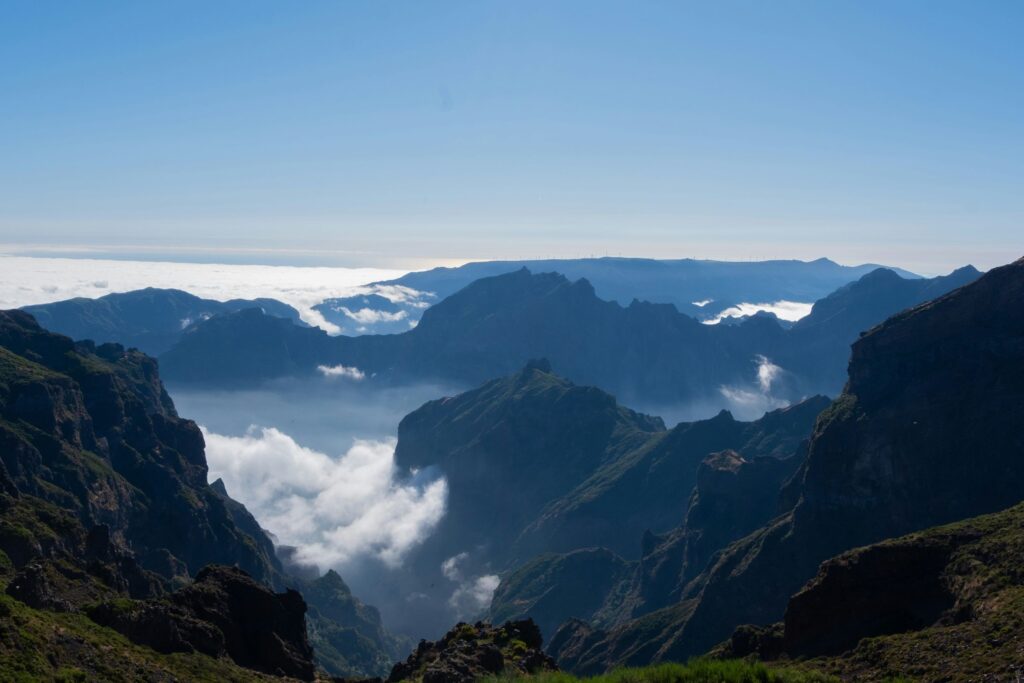
Cabo Girao The second highest sea cliff in Europe and one of the most vertiginous viewpoints in the Atlantic islands. A glass skywalk extends out from the cliff edge at 580 metres above the sea, with the Atlantic visible through the glass floor beneath your feet. The view encompasses the south coast from Funchal to Ribeira Brava, with the island’s terraced agricultural hillsides cascading down to the water on both sides.
Pico do Arieiro Reachable by car to within five minutes of the summit, making it the most accessible high-altitude viewpoint on the island. At 1,818 metres, on clear mornings it sits above the cloud layer entirely, with neighbouring peaks rising through the white below and a 360-degree view encompassing the entire island, the neighbouring island of Porto Santo to the northeast, and on exceptional days the outline of the Canaries to the south.
Balcoes A short 40-minute walk from the village of Ribeiro Frio into the mountains, arriving at a terrace viewpoint above a deep glacial valley with Madeira’s central peaks visible on three sides. One of the finest panoramas on the island for the effort required to reach it.
Sao Lourenco Peninsula The easternmost tip of Madeira, where the landscape changes entirely from the lush green of the island’s interior to an arid, rocky cape of volcanic rock formations in red, ochre, and black. A 5-kilometre circular trail covers the peninsula, with the sea visible on both sides and the rock formations creating a moonscape entirely unlike the rest of the island.
The north coast
The north coast of Madeira is where the island reveals its most dramatic, most rugged, and least visited face. The roads are narrow and winding. The cliffs are vertical. The villages are small and quieter than anything on the southern coast. The ocean on the north side is wilder, the waves larger, the light different.
Porto Moniz At the northwestern tip of the island, Porto Moniz has natural lava pools, tidal pools formed in the solidified lava flows, which are the finest swimming spot on the island. The pools are filled with seawater from each tide, crystal clear and sheltered from the Atlantic swell by the rock formations around them. There are two complexes, one public and one private, both extraordinary. After swimming, the seafood restaurants above the pools serve limpets, grilled fish, and poncha while the Atlantic crashes on the rocks below.
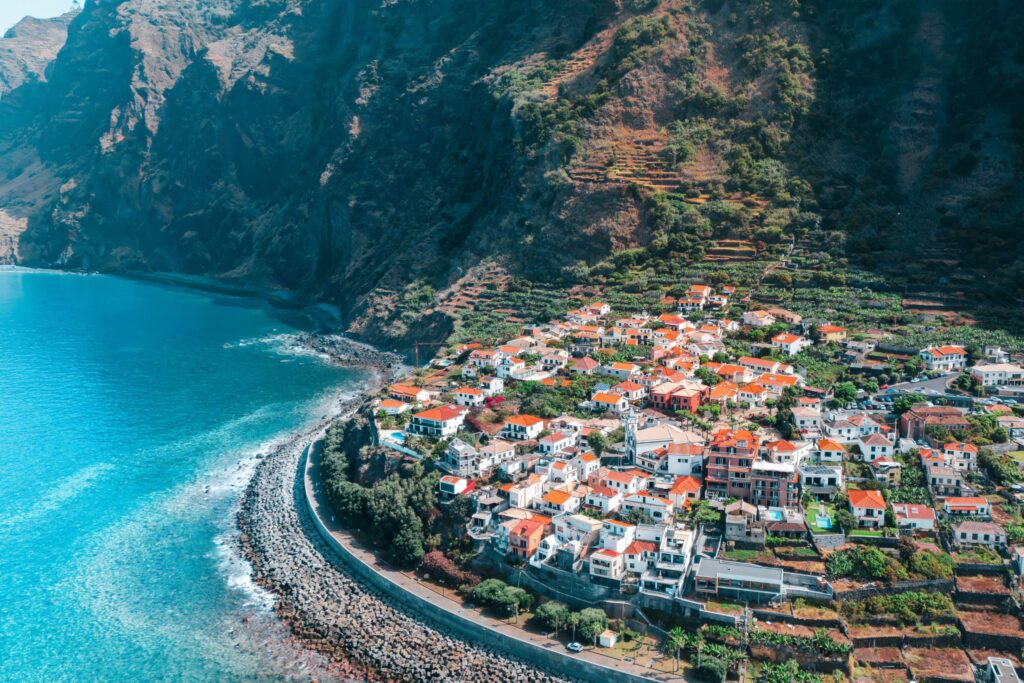
Seixal A small village on the north coast with a natural black sand beach, rare in Madeira, and a waterfall that falls directly from the cliff onto the road above the village. The drive along the north coast road from Seixal toward Sao Vicente, with tunnels cut through the cliff faces and the ocean visible hundreds of metres below, is one of the finest coastal road journeys in the Atlantic islands.
Santana Famous for its palheiros, traditional A-framed thatched houses painted in primary colours, so small and so perfectly formed that they look like something from a fairy tale. Several have been preserved as a UNESCO-recognised cultural site. The surrounding countryside is some of the most productive agricultural land on the island.
Food and drink in Madeira
Madeiran food is not Portuguese food with minor variations. It is its own cuisine, shaped by the island’s geography, its Atlantic fishing tradition, and its position as a historic trading port between Europe, Africa, and the Americas.
Espada com banana (black scabbardfish with banana) The most distinctively Madeiran dish and the one most likely to confuse the uninitiated. The espada, a deep-sea fish so adapted to pressure and darkness that it cannot survive being brought to the surface alive, is caught by line fishermen at depths of 800 to 1,600 metres off the island’s steep underwater cliffs. The flesh is delicate, white, and mild. It is almost universally served with a slice of fried banana and passionfruit sauce, a combination that sounds improbable and tastes extraordinary. This is the dish to order on your first night.
Lapas (limpets) Limpets are found on volcanic rocks throughout the Atlantic islands, but Madeira’s version, grilled on a hot plate with garlic butter and a squeeze of lemon, served in the shell, eaten with toothpicks, is one of the finest expressions of the ingredient anywhere. You will find them at virtually every restaurant on the island. You will order them every time.
Bolo do caco A flat, circular bread made from sweet potato and wheat flour, cooked on a basalt stone griddle and served warm with garlic butter. The correct accompaniment to almost everything, and one of the more addictive things you will eat in Europe.
Madeira wine One of the world’s great fortified wines and one of the most misunderstood. Madeira wine is distinctive for its extraordinary longevity – bottles from the 18th century are still drinkable, and the flavour profile (caramel, dried fruit, a characteristic nuttiness, and a bracing acidity that prevents it from being cloying) is unlike any other fortified wine. The major producers – Blandy’s, Henriques and Henriques, Barbeito, offer cellar tours and tastings in Funchal. The oldest bottles will cost more than your flight. The everyday bottles, available everywhere, cost very little and are very good.
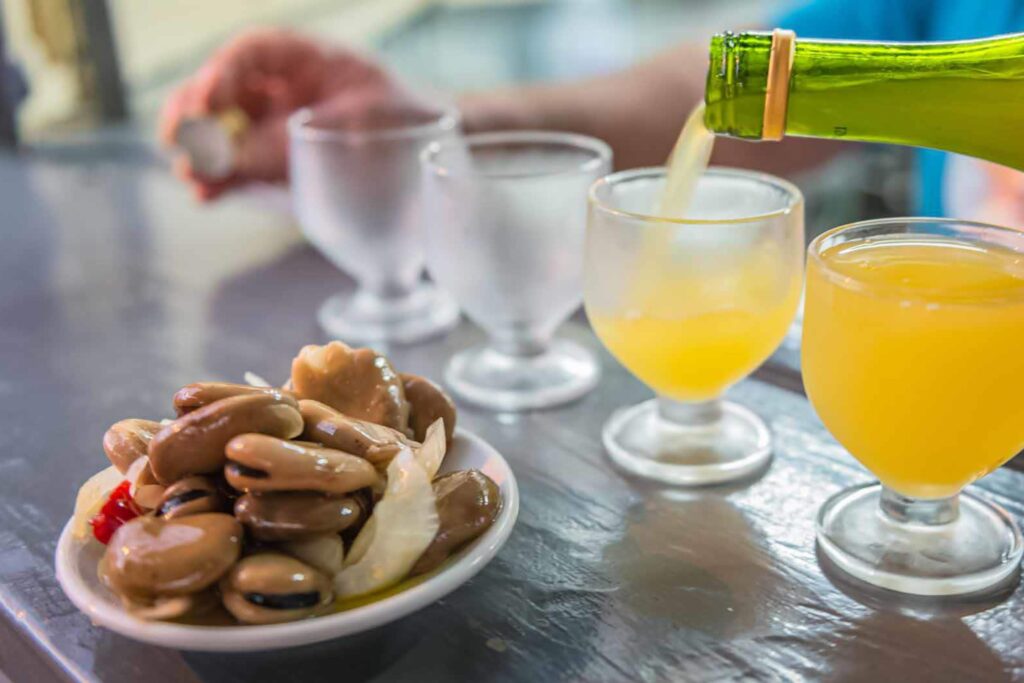
Poncha The island’s signature spirit and the drink most closely associated with Madeiran culture. Made from aguardente de cana (sugarcane rum), honey, and lemon juice, it is mixed vigorously with a wooden implement called a mexelote until frothy. It is stronger than it tastes. The poncha bars of Camara de Lobos, the fishing village west of Funchal where Winston Churchill famously painted the harbour view, are the traditional place to drink it standing at the bar, in the company of local fishermen who have been doing exactly this for generations.
Wildlife and whale watching
The deep-water trench surrounding Madeira, where the ocean floor drops dramatically within a short distance of the coast, creates one of the richest marine environments in the North Atlantic. Sperm whales, pilot whales, fin whales, and humpback whales are all present in Madeiran waters, with pilot whales and sperm whales year-round residents rather than seasonal visitors.
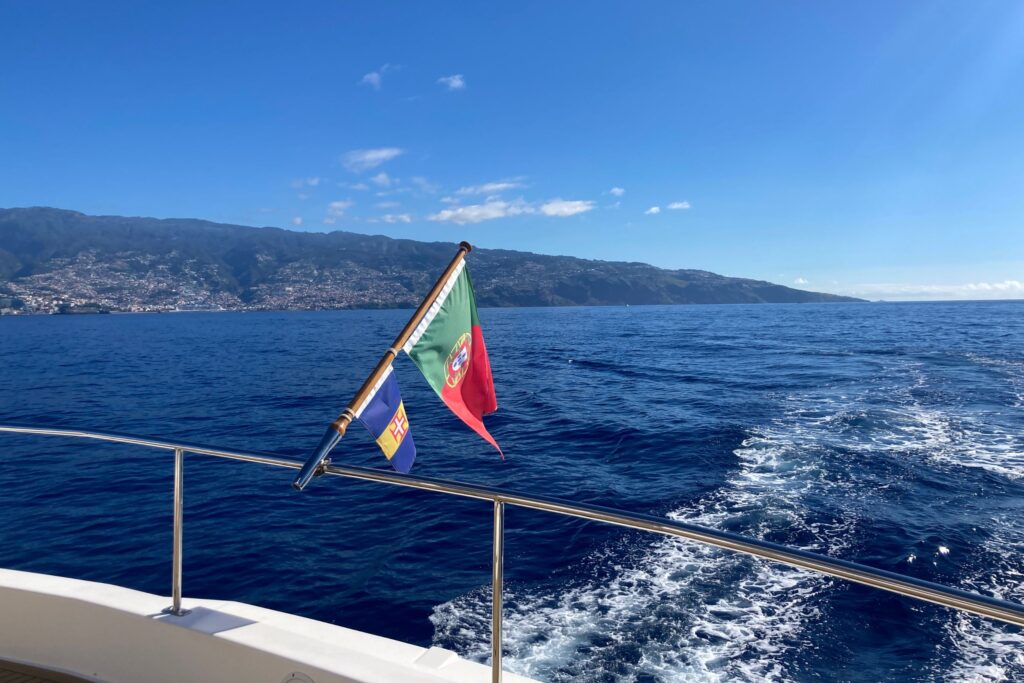
Whale watching tours depart daily from Funchal from May through September, with peak sightings between May and August. The tours are run in traditional wooden vessels and modern rigid inflatables, with marine biologists on board providing context. The experience of watching a sperm whale dive – the tail lifting clear of the water as the animal descends toward the deep-water feeding grounds directly below – is one of the finer wildlife encounters available from any European port.
Common dolphins, Risso’s dolphins, Atlantic spotted dolphins, and loggerhead sea turtles are regular sightings year-round. Between March and October, blue sharks and manta rays can be seen on snorkelling and diving excursions from the south coast.
A suggested 7-day itinerary
Day 1 – Arrive Funchal. Afternoon walk through the Zona Velha old town. Evening at a restaurant in the historic centre, espada and lapas, a glass of Madeira wine, bolo do caco while you wait.
Day 2 – Funchal. Morning at the Mercado dos Lavradores. Cable car to Monte and the tropical gardens. Toboggan ride down. Afternoon at Cabo Girao skywalk. Evening in Camara de Lobos for poncha.
Day 3 – Levada walking. PR1 sunrise hike from Pico do Arieiro toward Pico Ruivo (book well in advance, depart before dawn). Afternoon rest. Book: visitmadeira.com hiking portal.
Day 4 – North coast. Drive the north coast road: Sao Vicente, Seixal waterfall, Porto Moniz lava pools for swimming and seafood lunch. Return via Santana and the palheiro houses.
Day 5 – Whale watching and Funchal. Morning whale watching tour from Funchal harbour (May to September). Afternoon Blandy’s wine lodge tour and tasting. Evening in the restaurant strip above the old town.
Day 6 – Levada walk and eastern Madeira. Morning: Levada do Caldeirao Verde or 25 Fontes (book in advance). Afternoon: Sao Lourenco Peninsula walk. Machico beach for a swim if conditions allow.
Day 7 – Depart. Final morning in Funchal’s market. Coffee in the old town. Flight home.
Practical information
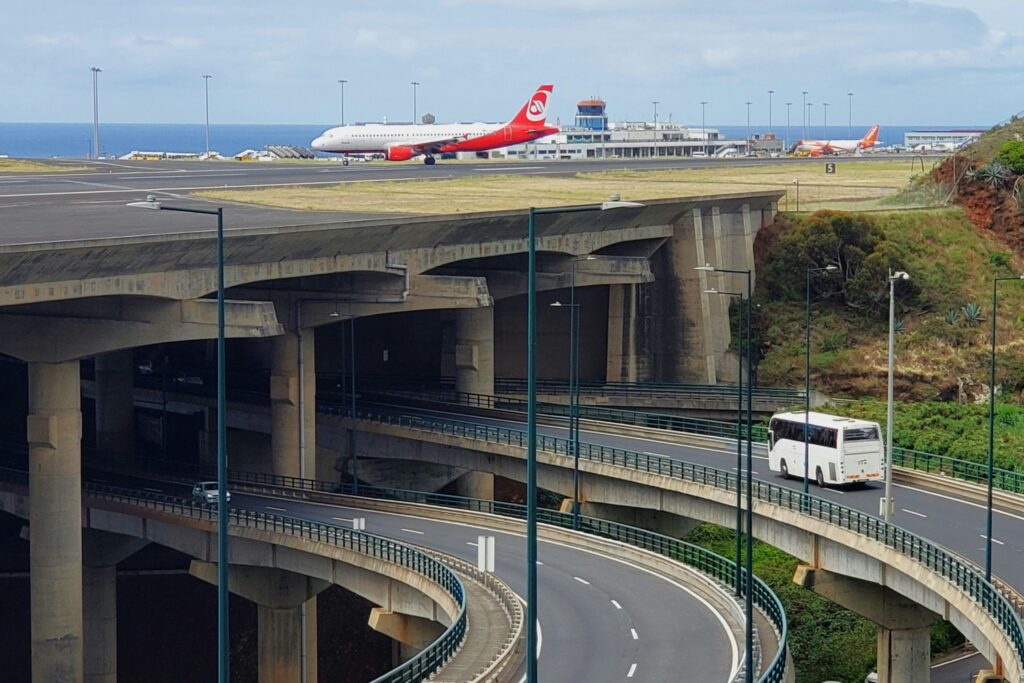
Getting there Cristiano Ronaldo International Airport (FNC), named after the footballer, who was born in Funchal – receives direct flights from most major European hubs. From Dublin, flight time is approximately three hours and fifteen minutes. Ryanair, TAP Air Portugal, and EasyJet operate routes from Ireland and the UK. Direct flights from New York operate seasonally in summer.
From the airport to Funchal, the Aerobus runs regularly into the city centre (40 minutes, 5 euros). Taxis are available outside arrivals and cost approximately 25 to 35 euros to central Funchal. A rental car, collected from the airport, is the single most useful thing you can do for exploring beyond Funchal – the roads are narrow and occasionally alarming on the north coast, but manageable, and the freedom of your own vehicle transforms the island experience.
Getting around Bolt (not Uber, which does not operate on Madeira) covers taxis throughout Funchal. The public bus network (SAM and Horarios do Funchal) is comprehensive and inexpensive but requires planning. A rental car is strongly recommended for any itinerary that includes the north coast, the eastern peninsula, or the mountain interior.
Currency and payments Euro. Cards are accepted at almost all restaurants, hotels, and shops. The buses do not accept cards, get a small amount of cash on arrival. Avoid the yellow and blue EuroNet ATMs throughout the island, which charge very high conversion fees. Use ATMs attached to named Portuguese banks.
Language Portuguese. The Madeiran accent is distinct from mainland Portuguese and slightly closer to Brazilian Portuguese in certain vowel sounds. English is widely spoken in Funchal and at all tourist facilities. Learning a few phrases, bom dia (good morning), obrigado/obrigada (thank you), uma poncha, se faz favor (a poncha, please), is appreciated by locals and practically useful in villages away from the main tourist circuit.
When to visit Madeira is genuinely a year-round destination. The climate is mild in every month, averaging 17 to 23 degrees Celsius throughout the year. Spring (April and May) brings the famous Flower Festival and warm temperatures ideal for hiking. Summer (June to August) is the peak tourist season, busier and slightly more expensive, but with the warmest temperatures and best conditions for whale watching. Autumn (September and October) offers warm, uncrowded conditions and is arguably the finest time to visit overall. Winter (November to March) is the rainy season, the north coast in particular can be very wet, but Funchal remains mild and pleasant, and New Year’s Eve in Funchal is one of the most spectacular fireworks displays in Europe, attracting visitors specifically for the occasion.
Avoid July and August if hiking is a primary objective, the trails are at their busiest and the heat on exposed mountain routes can be significant.
Hiking in 2026: what to know From 2026, all classified hiking trails in Madeira require advance booking and carry a fee of 4.50 euros per person. The PR1 trail from Pico do Arieiro costs 10.50 euros per person and operates one-way only. Book all trails through the official Visit Madeira hiking portal (visitmadeira.com) well before your travel dates. Weekend slots on popular trails fill quickly.
The series: exploring Madeira in depth
This is the first post in a series dedicated to Madeira. The posts that follow go deeper into each aspect of the island:
- Madeira’s levada walks – every trail worth doing, the 2026 SIMplifica booking system explained, what to pack (coming soon)
- Eating in Madeira – espada, lapas, bolo do caco, Michelin restaurants, where to drink poncha properly (coming soon)
- Where to stay in Madeira – from Reid’s Palace to a north coast wellness retreat (coming soon)
- The best tours and activities in Madeira – whale watching, jeep safaris, sunrise hikes and the experiences worth booking before you arrive (coming soon)
- Madeira’s secret landscapes – the eight places the standard itinerary never reaches (coming soon)
- Why Madeira is the most underrated island in Europe – the editorial case for why this island belongs at the top of every serious traveller’s list (coming soon)
Each post links back to this one as the starting point. If you are planning a trip, start here and follow the threads that interest you most.
Read the series. Then book the flight.
Some links in this post are affiliate links. If you book through them, flight.now earns a small commission at no extra cost to you. Learn more here