There is a moment, somewhere between standing inside a 1,300-year-old granite grotto on a mountainside and watching a pastel-coloured capsule float silently above the Korean Sea at sunset, when South Korea stops making sense in the best possible way. You came for the temples. You stayed for the food. You are now seriously reconsidering everything you thought you knew about what this country actually is.
South Korea attracted over 16 million international visitors in 2024 according to the Korea Tourism Organisation, and yet two of its most extraordinary destinations, Gyeongju, the ancient capital of the Silla Kingdom, and Busan, the country’s second city and one of Asia’s most underrated coastal cities – remain genuinely off the radar for most Western travellers. That is an oversight worth correcting before everyone else figures it out.
This is a guide to doing both properly. Two cities, four days minimum, the kind of trip that changes how you think about Korean history, Korean food, and how very quietly extraordinary Korean travel can be.
Gyeongju: the city where the ground is the museum
If you have ever been to a place where the weight of history is physically present in the landscape – where you cannot walk fifty metres without encountering something built a thousand years ago – you will understand what Gyeongju is immediately. If you haven’t, Gyeongju will be the first time.
The former capital of the Silla Kingdom, which ruled a unified Korean peninsula for nearly three centuries from 668 to 935 AD, Gyeongju is designated by UNESCO as one of the world’s ten most important ancient cities. Locals call it an “open-air museum,” which undersells it considerably. The entire city and its surrounding hills are, in effect, a single archaeological site, with royal tombs, palace ruins, Buddhist temples, stone pagodas, and carved mountain Buddhas distributed across an area you can largely explore on foot or by bicycle.
When to visit
Come in autumn. This is not a preference, it is a genuine recommendation based on what Gyeongju actually does in October and November. The city’s ancient sites are surrounded by ginkgo trees, maple groves, and the kind of deciduous canopy that turns the landscape into something that photographers describe and the rest of us struggle to believe is real.
The foliage peak at Bulguksa Temple runs from mid-October to mid-November, when the stone staircases and ancient courtyards are surrounded by red and gold leaves. The Daereungwon Tomb Complex, already one of the most otherworldly landscapes in Korea, becomes deeply atmospheric under autumn light, the golden hour between 3 and 5pm specifically is when the rounded burial mounds glow in a way that no camera entirely captures. Evening illuminations at Donggung Palace and Wolji Pond, running October through November, turn the reflection pool into something from a dream.
Spring, when the cherry blossoms bloom along the Daereungwon Stone Wall Road in early April, is the alternative, equally beautiful, slightly more crowded, and entirely worth considering if autumn travel is not possible.
The UNESCO sites: what to visit, what to know
Bulguksa Temple
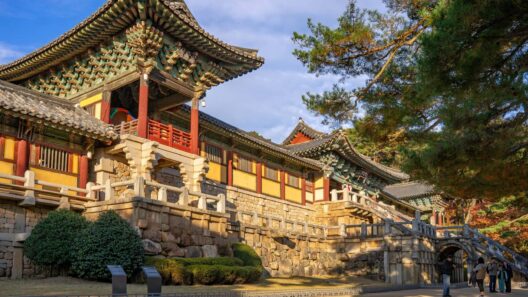
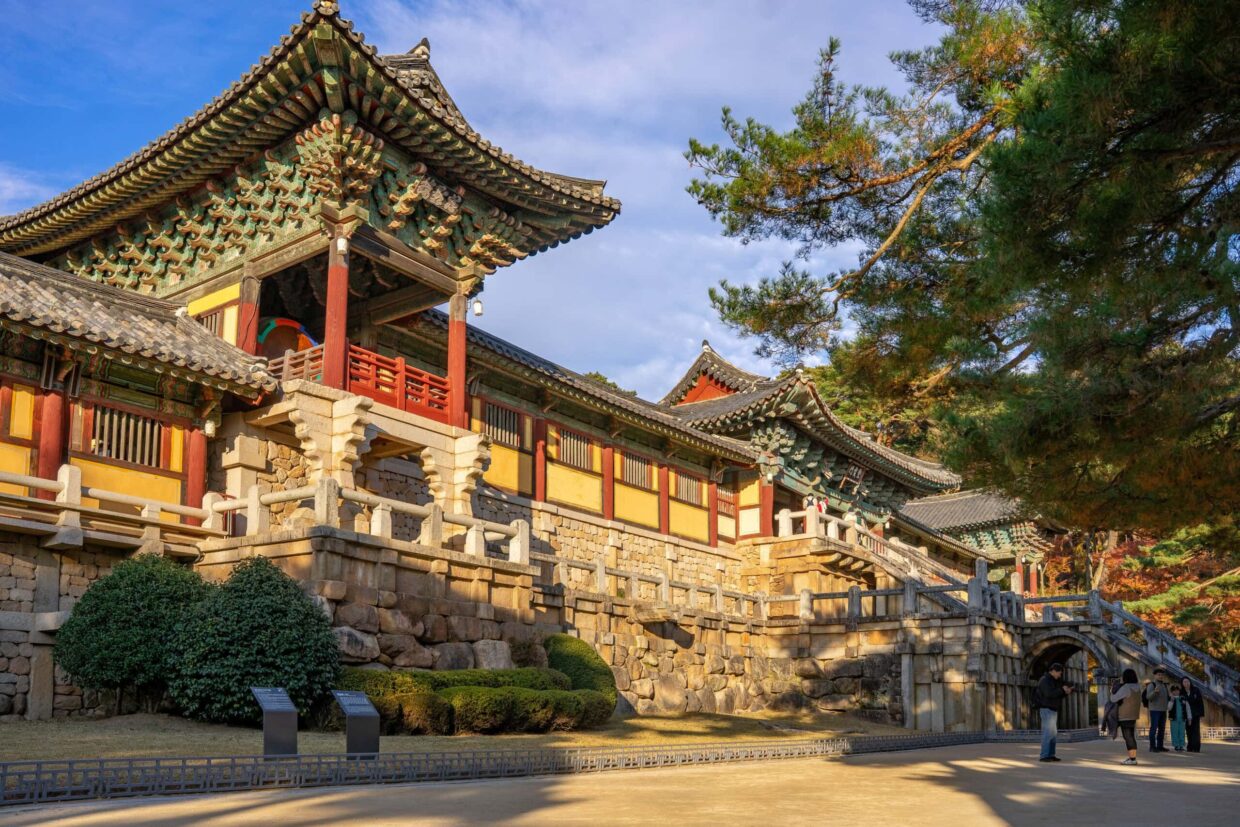
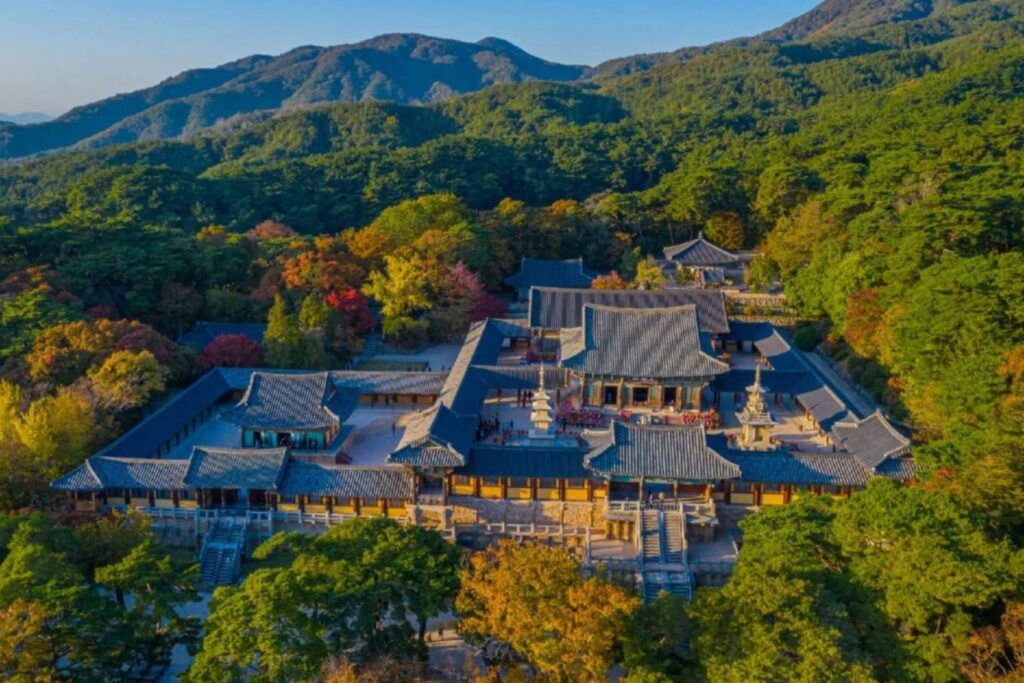
Bulguksa was first listed as a UNESCO World Heritage Site in 1995, one of Korea’s first two such listings, and it remains one of the finest examples of Silla Buddhist architecture in existence. Commissioned in the 8th century by the Silla statesman Kim Daeseong, the temple complex is built on a series of stone terraces rising from the hillside of Mount Toham, with each ascending level representing a step closer to the Pure Land of Buddhist belief.
The stone staircases alone, Cheongungyo (Blue Cloud Bridge) and Baekungyo (White Cloud Bridge), each with 33 steps representing the 33 levels of heaven in Buddhist cosmology, are architectural masterpieces that have survived largely intact for over 1,200 years. Inside the main courtyard, the twin stone pagodas Seokgatap (three stories, austere and geometric) and Dabotap (multi-tiered, ornately decorative) face each other across a courtyard in a deliberate architectural conversation between simplicity and complexity. Both are National Treasures. Dabotap appears on the 10 won coin.
Arrive early. By mid-morning during peak season the main courtyard fills with tour groups. The first hour after opening, with autumn light coming through the trees and the complex largely to yourself, is what makes Bulguksa exceptional rather than merely impressive.
Getting there: Bus 10, 11, or 100 from Gyeongju Intercity Bus Terminal (25 to 45 minutes). From Singyeongju KTX Station, take Bus 700. A T-money card is required, cash is no longer accepted on Korean city buses. Get one at any convenience store on arrival.
Seokguram Grotto
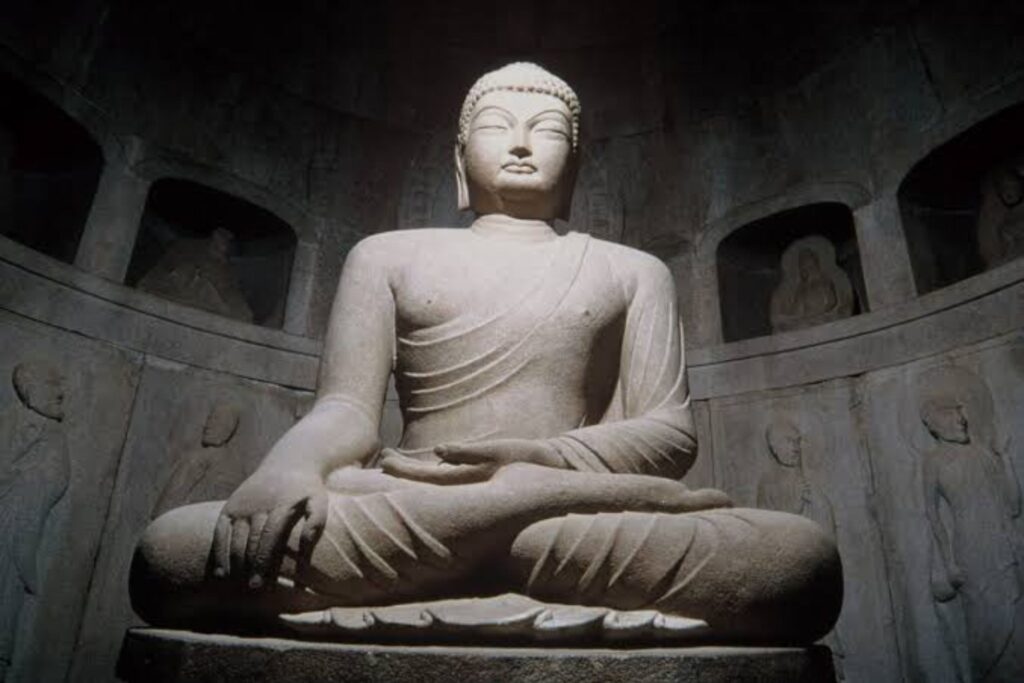
Seokguram is the spiritual companion to Bulguksa, also UNESCO-listed since 1995, also commissioned by Kim Daeseong in the 8th century, built, according to the historical text Samguk Yusa, to honour his parents in a previous life, while Bulguksa was built for his parents in his present life. The ambition behind both buildings, considered together, is staggering.
Inside a man-made granite chamber on the upper slope of Mount Toham sits a 3.5-metre seated Buddha, carved from a single piece of white granite, surrounded by bodhisattvas and guardian figures in precise geometrical arrangement. The chamber itself is a feat of Silla engineering, a free-hanging dome constructed using stone nails driven horizontally between the blocks to maintain balance and stability without mortar, in a technique that was not replicated anywhere in Korea before or since. The Buddha faces east, originally aligned to catch the first sunrise of each new year over the East Sea.
Photography inside the chamber is not permitted. Visitors view the interior through glass, which some find frustrating and others find appropriate given the atmosphere. The view from the grotto terrace, looking east toward the coast, is one of the finer mountain views in Korea.
The bus between Bulguksa and Seokguram runs once per hour, Bus 12 departs Bulguksa at 40 minutes past the hour, returns from Seokguram on the hour. Missing it means a taxi (approximately 12,000 KRW, 20 minutes). Plan the visit to Bulguksa around this schedule rather than the other way around.
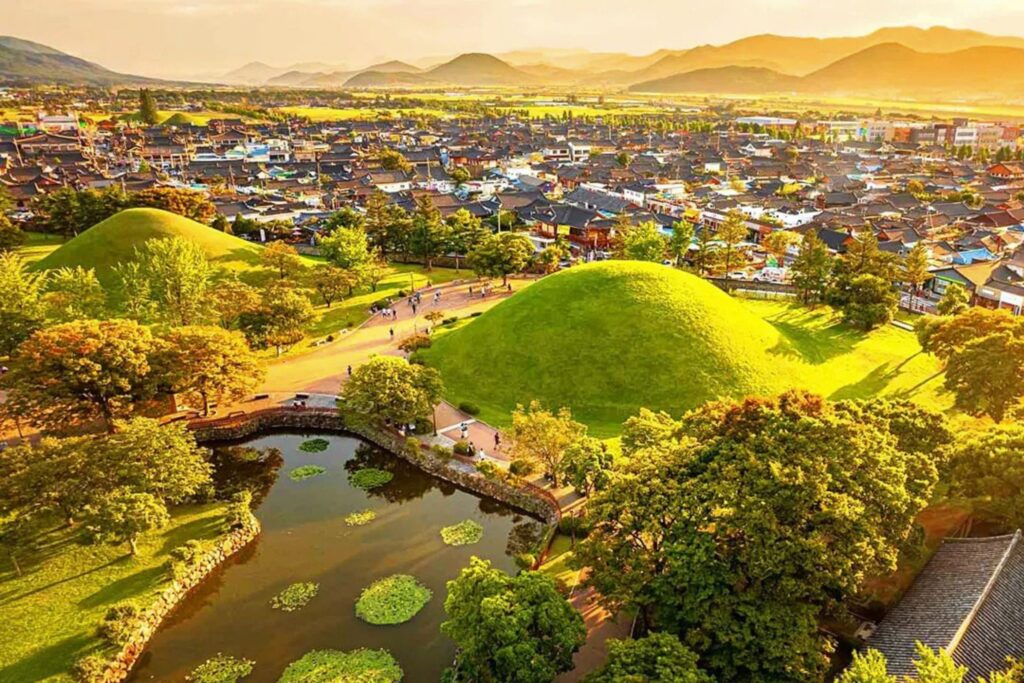
Daereungwon Tomb Complex
Nothing quite prepares you for Daereungwon. The complex, a 126,500 square metre park containing 23 large burial mounds from the Silla Dynasty, looks, from the entrance, like a field of very large, very green hills. Then you get closer. Each mound is a royal tomb, some reaching 12 to 23 metres in height and 80 metres in diameter, containing the remains of Silla monarchs and their courts, along with the gold crowns, jewellery, weapons, and ceremonial objects that have made the Silla Dynasty one of the most archaeologically significant civilisations in East Asian history.
The tombs were not hidden or buried, they were placed prominently within the city as statements of dynastic power, which is why Gyeongju’s ancient capital was built around rather than over them. Walking among them now, with autumn foliage framing the mounds on every side and the city visible in the distance, produces a particular kind of silence that has nothing to do with the noise level around you.
One tomb, Cheonmachong, named for the flying horse (cheonma) painted on a pendant found inside during 1973 excavations, is open to visitors. Inside, you can see a reproduction of the tomb structure and some of the extraordinary objects found within it. The original gold crown and artefacts are in the Gyeongju National Museum.
Evening visits, when the complex is illuminated and the city quietens around it, are strongly recommended if you are staying overnight in Gyeongju. The autumn night illumination runs from late October through mid-November with free admission during evening hours.
The broader Gyeongju Historic Area
The Daereungwon complex is one of five districts that together make up the Gyeongju Historic Area UNESCO listing of 2000, which encompasses almost the entire city and surrounding mountains. The others worth dedicating time to:
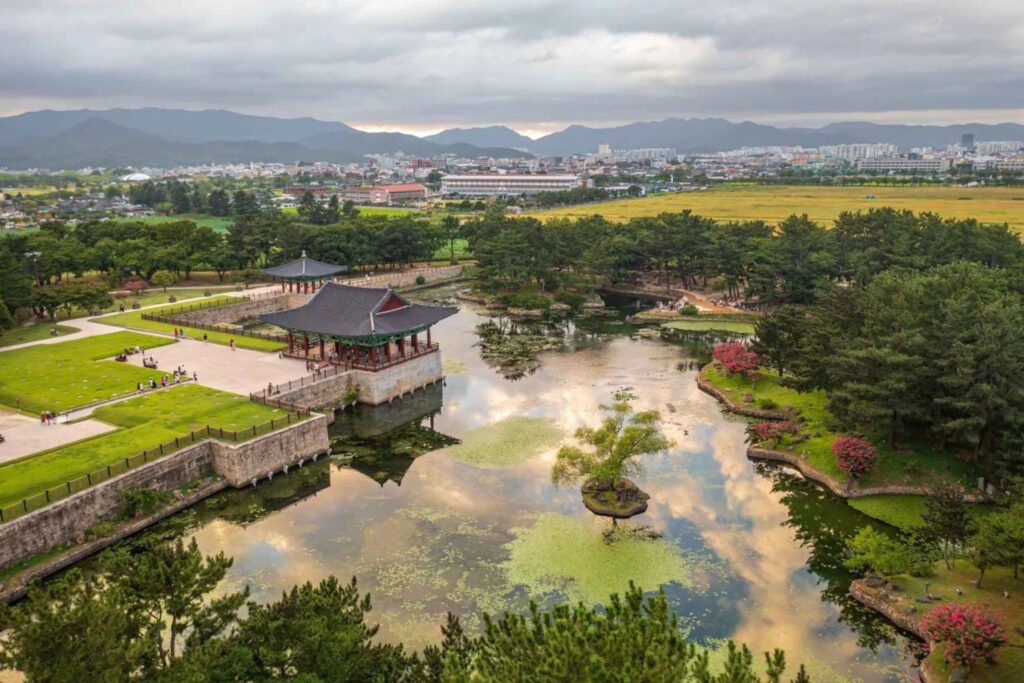
Donggung Palace and Wolji Pond – A reconstructed Silla palace garden with a reflection pond that becomes the most photographed location in Gyeongju at night, when the pavilions and their reflections merge in the still water. The night illumination is a non-negotiable experience. Allow an hour minimum, more if you arrive at sunset and stay into the evening.
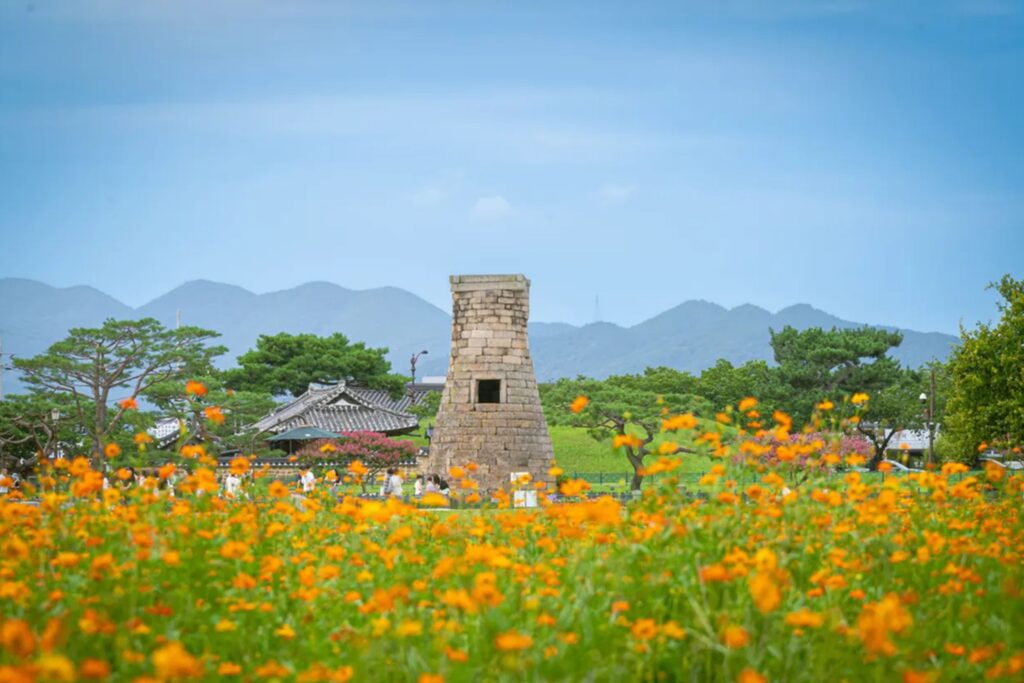
Cheomseongdae Observatory – The oldest astronomical observatory in East Asia, built in 634 AD during the reign of Queen Seondeok. A cylinder of 365 stones (one for each day of the year) sitting in an open field near the tomb complex, it is quieter and smaller than photographs suggest, but its context – a 7th-century woman ruler commissioning a scientific instrument for astronomical observation in what is now seen as one of the most conservative societies in Asian history – gives it a significance that grows the more you think about it.
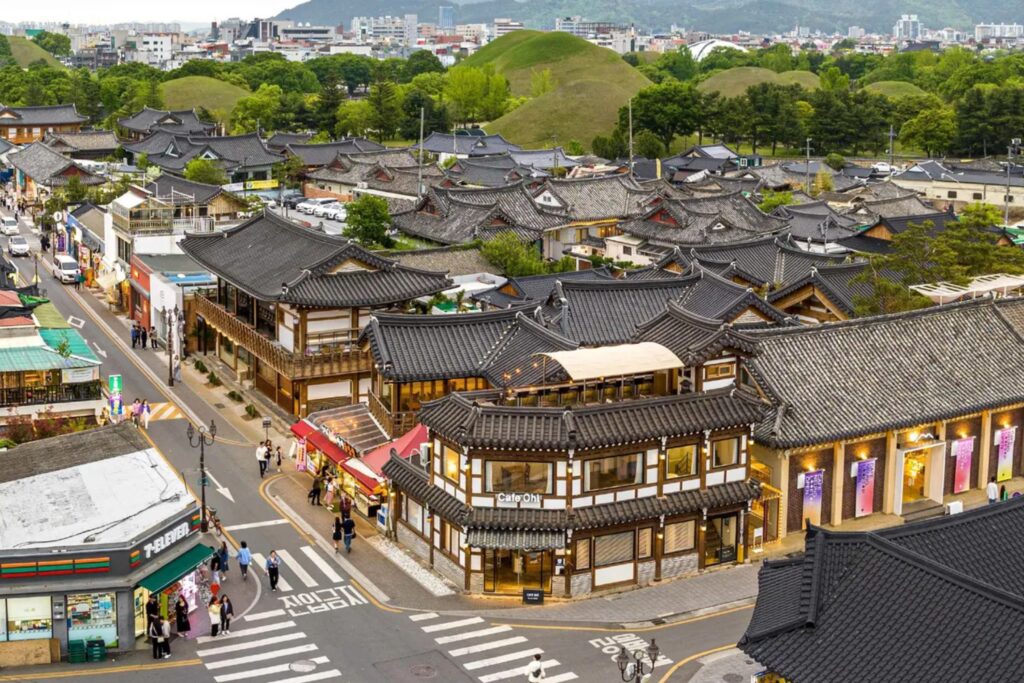
Hwangnidan-gil – The neighbourhood immediately west of the Daereungwon complex, where traditional hanok buildings now house independent cafes, craft shops, and small restaurants. This is where to eat, drink, and wander after the historical sites. The area becomes particularly lively in the early evening.
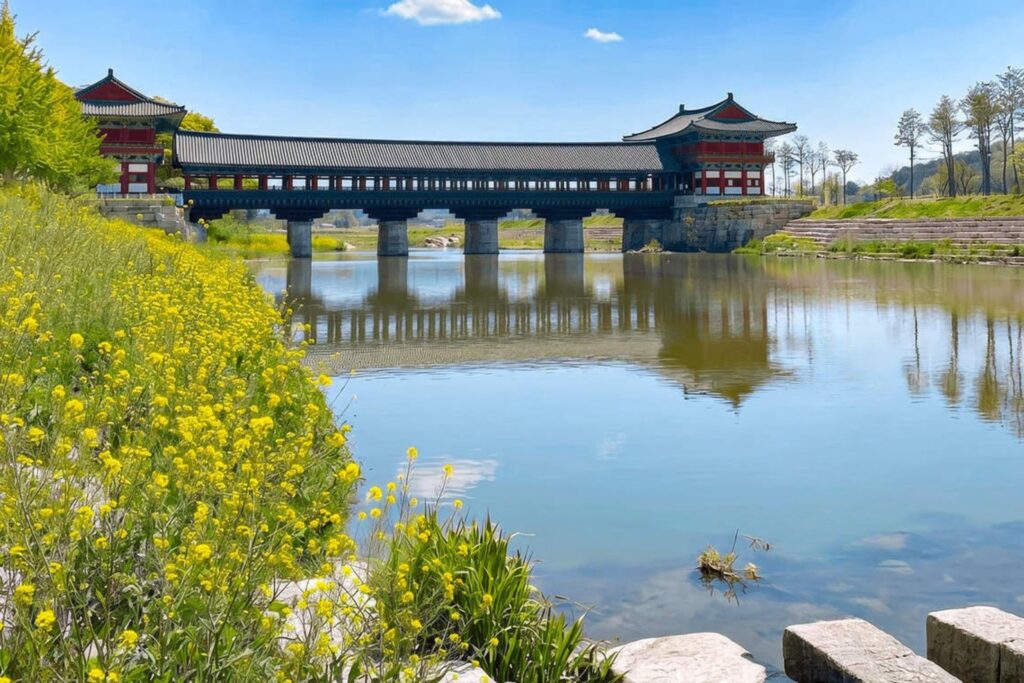
Gyochon Hanok Village and Woljeonggyo Bridge – A traditional village of preserved Korean wooden houses clustered around an illuminated bridge over the Namcheon River. At night, with the bridge lit and the hanok rooflines visible beyond it, this is one of the more quietly beautiful scenes in Korean travel.
Getting around Gyeongju
The downtown area – Daereungwon, Cheomseongdae, Wolji Pond, Hwangnidan-gil, Gyochon Village – is compact and walkable. Allow a full day for this zone. Bulguksa and Seokguram require a half day on their own, planned around the bus schedule. Plan for a minimum of two full days in Gyeongju; three days allows a more leisurely pace and time for Namsan Mountain, which rewards those who find it.
Getting to Gyeongju: From Seoul: KTX from Seoul Station to Singyeongju takes approximately 2 hours 10 minutes. From Singyeongju Station take Bus 700 to the city centre (55 minutes). From Busan: KTX from Busan Station to Singyeongju takes approximately 30 minutes. The two cities are ideally combined in a single trip.
Busan: where the city meets the sea
Two hours south of Seoul and 30 minutes from Gyeongju by KTX, Busan is a city that surprises almost everyone who visits it. South Korea’s second city and largest port is simultaneously a major industrial and commercial hub, one of Asia’s great seafood destinations, home to some of the most architecturally dramatic Buddhist temples in the country, and the location of what is genuinely one of the most enjoyable novelty travel experiences in East Asia.
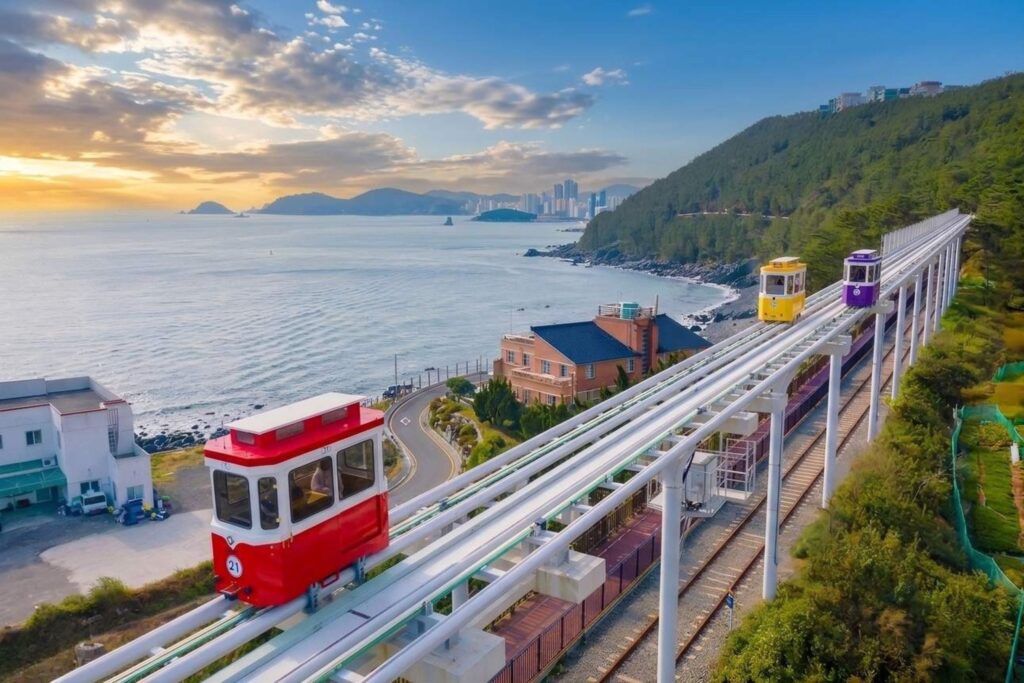
The Busan Sky Capsule
You have almost certainly seen photographs of the Sky Capsule without realising it. The pastel-coloured retro pods, red, yellow, blue, green, gliding along an elevated coastal track above the Korean Sea, with Haeundae Beach stretching out in the distance, have become one of the most recognisable images in Korean travel content. Having ridden it, the photographs do not exaggerate. The experience is genuinely better in person.
The Sky Capsule is part of Haeundae Blueline Park, built along the tracks of the old Donghae Nambu railway line, which closed in 2013 and was reimagined as a coastal tourism experience in 2020. The capsules travel at approximately 15km/h between Mipo Station and Cheongsapo Station, a 2.3-kilometre route that takes 30 minutes one-way, at 7 to 10 metres above the coastline, giving uninterrupted views of the sea in one direction and the Busan skyline in the other.
Each capsule fits up to four people and operates as a private car, you will not be seated with strangers. There is a small table inside, windows that open for fresh air, and enough space for the experience to feel leisurely rather than cramped.
The practical details that most visitors find out too late: tickets sell out weeks in advance, particularly at sunset, which is universally considered the best time to ride. Book through Klook rather than the official website, which is difficult to navigate and does not reliably accept foreign payment cards. Book at least two to four weeks ahead for a sunset slot; one week minimum for any other time. The Mipo to Cheongsapo direction gives the most direct coastal views; the return direction faces the sunset and the city skyline. Both are excellent.
After the capsule, the walk back along the Busan Green Railway, a coastal path that runs parallel to the track, is the best way to return. Two elevated glass-floor observation decks along the route extend out over the sea, and the Cheongsapo lighthouse at the far end of the route has appeared in enough K-dramas to have its own dedicated following.
Getting there: Busan Metro Line 2 to Haeundae Station (Exit 5 or 7), then a 15-minute walk toward the beach to Mipo Station. A T-money card covers all Seoul, Busan, and Gyeongju public transport.
What else to do in Busan
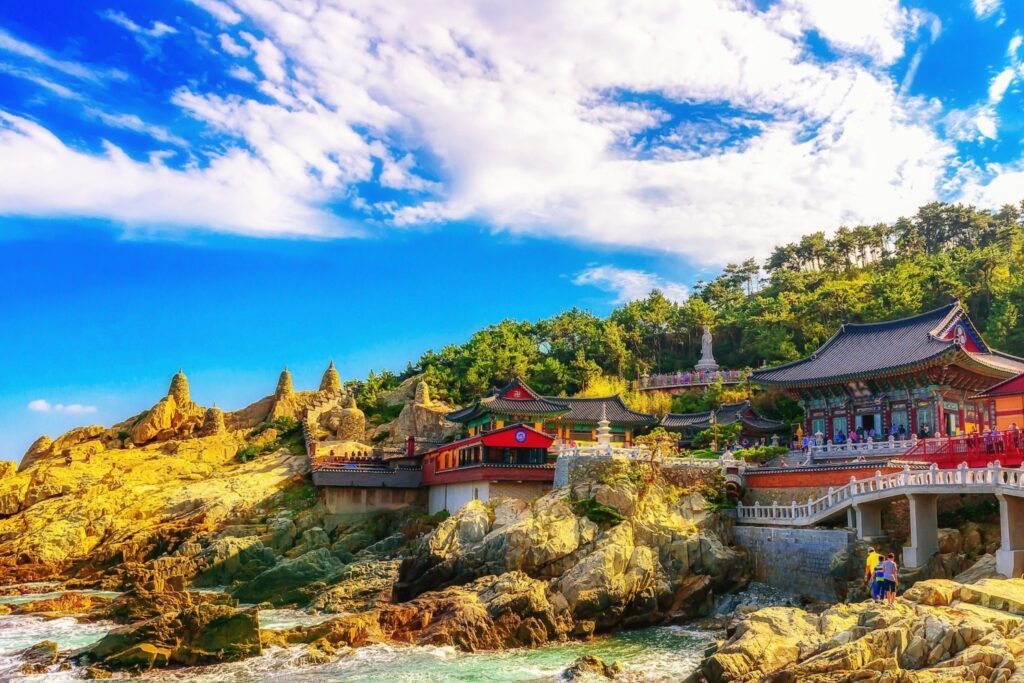
Haedong Yonggungsa Temple – One of the most dramatically situated Buddhist temples in Korea, built directly on coastal rocks at the edge of the sea. Unlike most Korean temples, which are set in mountain forests, Yonggungsa was founded on the shoreline so that the sea deity could be enshrined. Sunrise visits, when the light comes off the water and the temple is still quiet, are the finest time to be here.
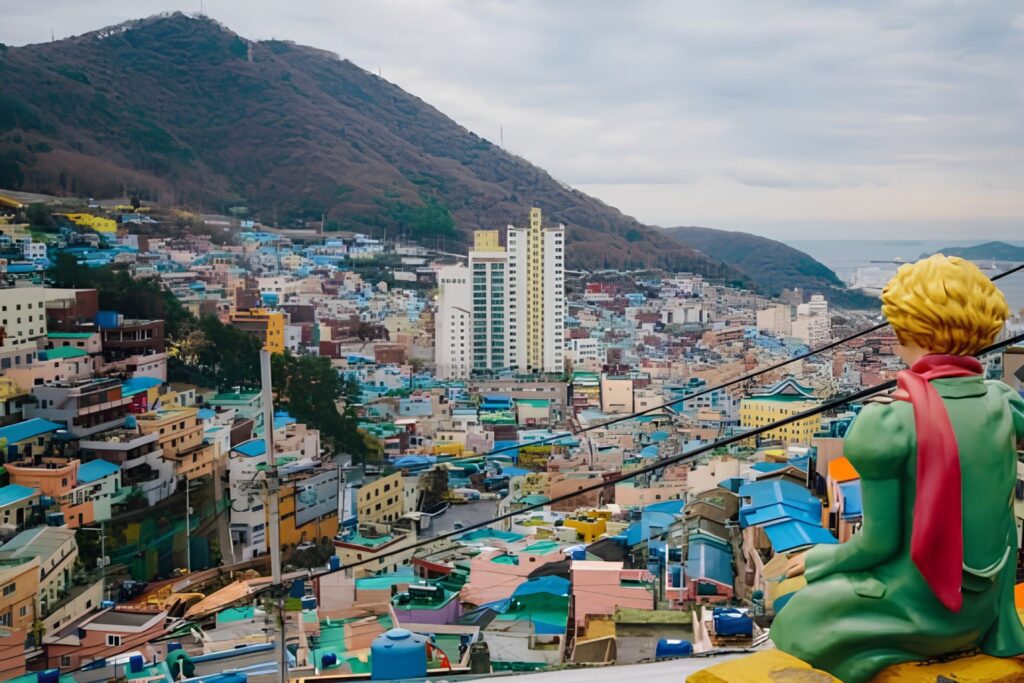
Gamcheon Culture Village – A hillside neighbourhood of tightly packed houses painted in vivid colours, originally a settlement for refugees during the Korean War, now a living arts district with murals, sculpture, small galleries, and independent cafes built into every available wall and staircase. It photographs beautifully, functions as a genuinely inhabited community, and is one of the more interesting urban transformations in Korean travel.
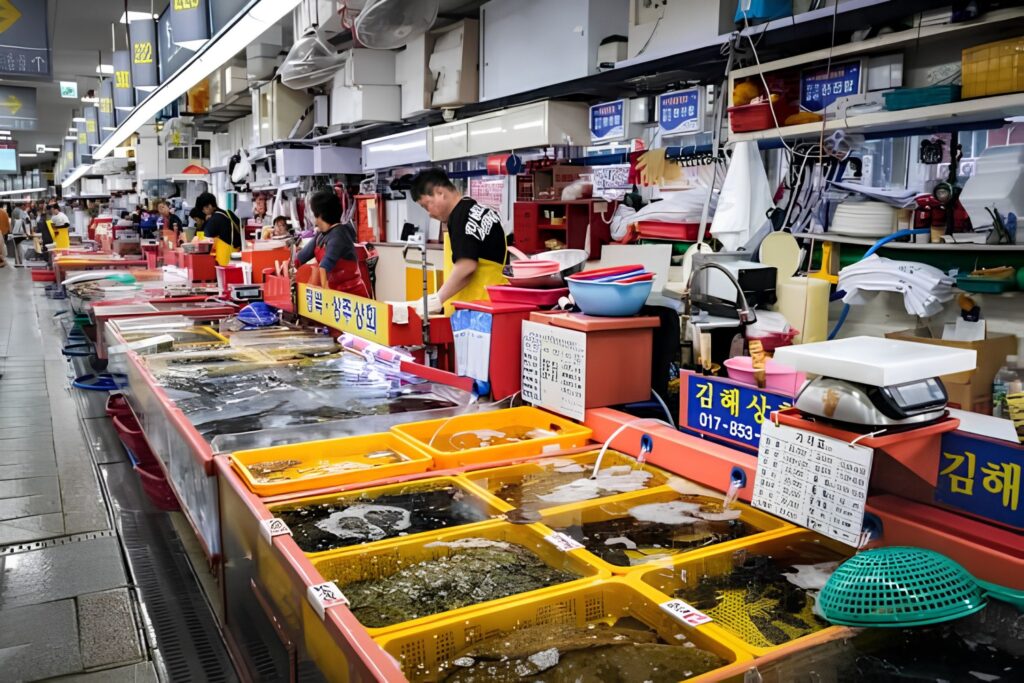
Jagalchi Fish Market – Korea’s largest seafood market, on Busan’s waterfront, where the catch comes in daily and is sold and cooked on the spot across multiple floors of stalls and restaurants. Go for breakfast or lunch when the market is at its most active. Order whatever the vendor next to you is eating.
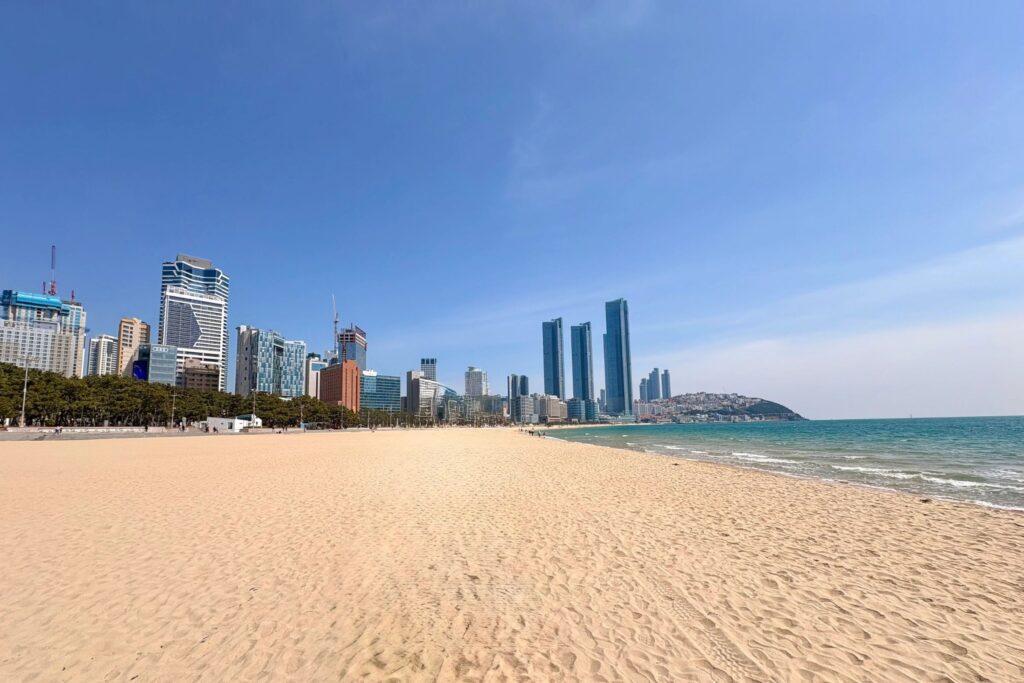
Haeundae Beach – South Korea’s most famous beach, long and wide and lined with high-rise hotels, crowded in summer and atmospheric in every other season. The beach itself is the backdrop to the Sky Capsule rather than a destination in isolation, but the seafood restaurants lining the streets behind it are excellent and worth an evening.
A suggested itinerary: 4 days, two cities
Day 1 – Arrive Gyeongju. Afternoon: Hwangnidan-gil cafes, evening at Donggung Palace and Wolji Pond illuminations.
Day 2 – Gyeongju. Morning: Bulguksa and Seokguram (arrive early, plan around bus schedule). Afternoon: Daereungwon Tomb Complex (3 to 5pm for golden hour light). Evening: Cheomseongdae, Gyochon Village, Woljeonggyo Bridge.
Day 3 – KTX to Busan (30 minutes). Morning: Haedong Yonggungsa Temple. Afternoon: Gamcheon Culture Village. Late afternoon/sunset: Sky Capsule (book this slot in advance, weeks ahead).
Day 4 – Busan. Morning: Jagalchi Fish Market. Afternoon: Haeundae Beach area, local seafood lunch. Depart from Busan.
This itinerary works in either direction. If you are flying into Seoul, travel Gyeongju first, then Busan, and fly out from Busan’s Gimhae Airport. If flying into Busan, reverse it.
Practical information
Getting a T-money card: Pick one up at any convenience store (CU, GS25, 7-Eleven) immediately on arrival. It covers all metro, bus, and city transit across Korea and is essential from the first day.
Language: Korean characters (Hangul) are used on all signage. The major tourist sites in Gyeongju and Busan have English signage, and Google Maps works reliably throughout both cities. A translation app with camera function, Google Translate or Papago, handles menus and smaller signs.
Currency: Korean Won (KRW). Cards are accepted almost everywhere in both cities. ATMs at GS25 and 7-Eleven convenience stores reliably accept foreign cards.
Food to try in Gyeongju: Gyeongju bread (gyeongju bbang), a small pastry filled with red bean paste, sold everywhere and deeply good. Ssambap (rice and vegetables wrapped in leaves, served at traditional restaurants near the historic sites). Makgeolli (milky rice wine) in the Hwangnidan-gil bars.
Food to try in Busan: Milmyeon (cold wheat noodles, a Busan specialty). Dwaeji gukbap (pork rice soup, the city’s most famous dish, eaten at any hour). Raw seafood straight from Jagalchi Market. Ssiat hotteok (a street food pancake filled with seeds and nuts, sold throughout the beach area).
When to book
For an autumn visit (the recommended season), the Sky Capsule sunset slot is the single most time-sensitive booking in this itinerary. Secure it four weeks ahead of your travel date. Everything else in both cities can be booked closer to the time or on arrival, with the exception of popular Gyeongju hanok guesthouses which fill during the peak autumn foliage period (late October to mid-November).
The KTX between cities is bookable on Korail’s English website (korail.com) or on the Korail app. Book seats two to three days ahead during autumn; same-day booking is usually possible outside peak periods.