
There are places that exceed their reputation and places that deliver exactly what the photographs promised. Raja Ampat does both simultaneously, which is a difficult thing to pull off.
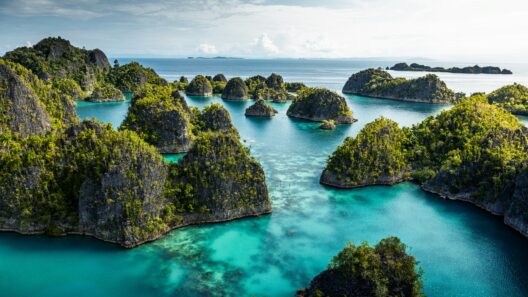
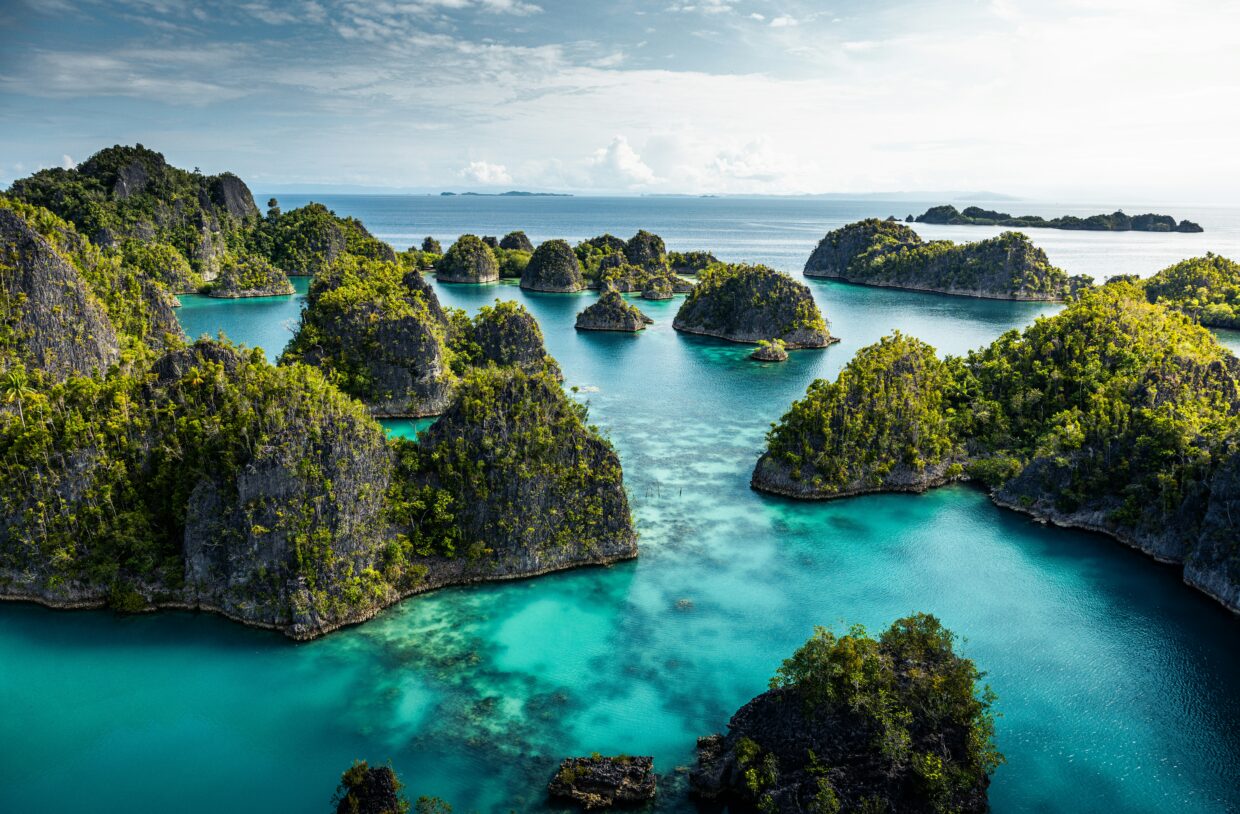
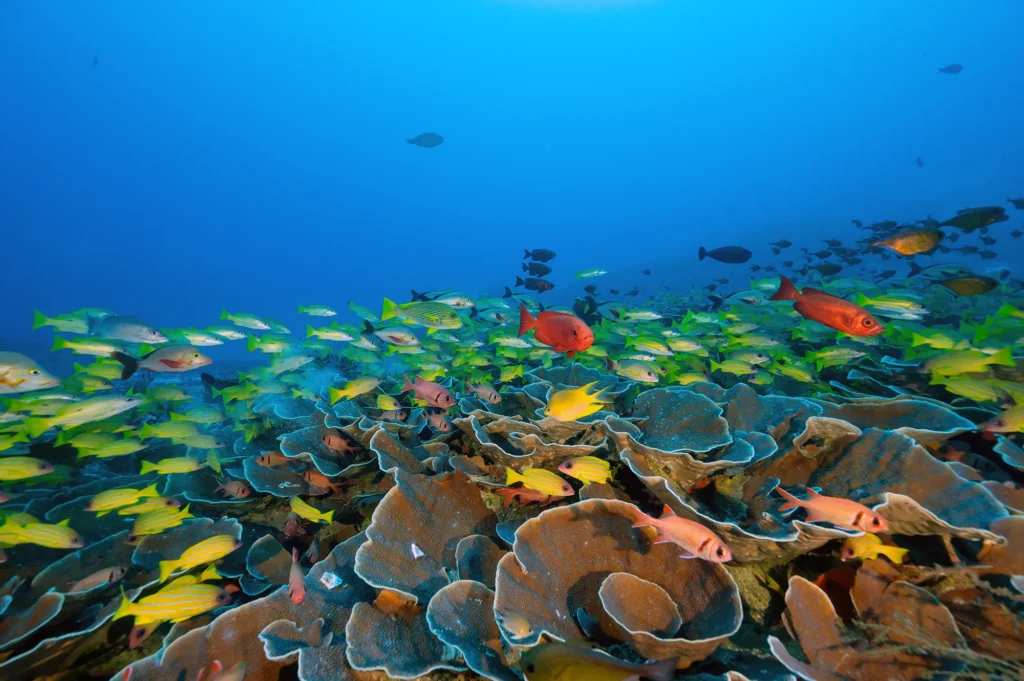
The photographs show limestone karst towers rising from electric blue water, dense jungle covering every surface, tiny emerald lagoons tucked between islands that look as though they were scattered by hand. The reality is those photographs, plus the underwater world beneath them, which no photograph has yet found a way to adequately represent. Over 600 species of coral. More than 1,500 species of fish. A single dive site at Cape Kri holds the world record for the most fish species counted on a single dive: 374, in one session, at one location. For context, the entire Caribbean contains fewer coral species than Raja Ampat’s most studied reef.
Raja Ampat, meaning “Four Kings,” is an archipelago of over 1,500 islands off the northwest coast of West Papua in eastern Indonesia. It sits at the heart of the Coral Triangle, where nutrient-rich currents from the Pacific and Indian Oceans converge to create the most biodiverse marine ecosystem on Earth. It is not convenient to reach. It is not cheap once you arrive. It is, by a significant margin, one of the most extraordinary places on the planet.
What you are actually dealing with
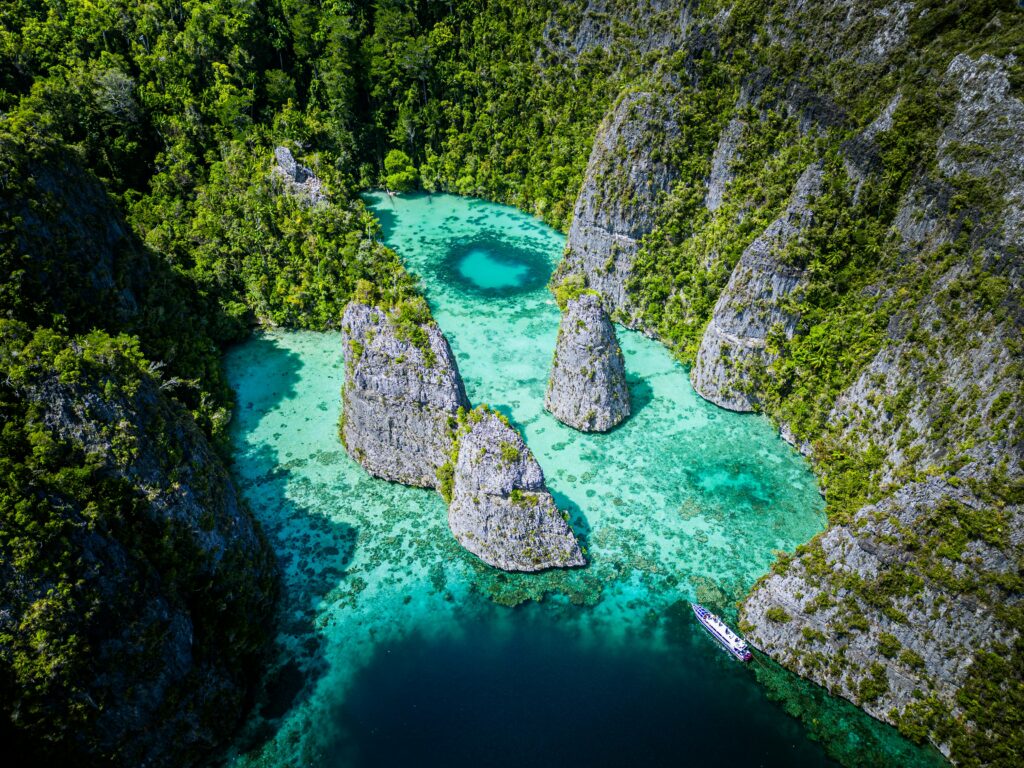
Raja Ampat is not a single island or even a collection of islands in the way that, say, the Maldives is a collection of islands. It is a region: four main islands (Waigeo, Misool, Salawati, and Batanta) surrounded by over 1,500 smaller ones, spread across an area roughly the size of the Netherlands, with no central hub, limited infrastructure, and an experience that rewards planning and flexibility in equal measure.
The four main islands anchor different experiences. Waigeo in the north is the largest and most visited, with the greatest variety of accommodation and access to the famous Dampier Strait dive sites. Misool in the south is the most remote and the most pristine, with ancient rock art caves, spectacular lagoons, and the kind of solitude that most Indonesian destinations stopped offering decades ago. Batanta and Salawati are less visited still, for travellers who want to go further.
The practical base for most visitors is either Waisai (the regional capital on Waigeo, where the ferry from Sorong arrives), Kri Island (the most popular dive-focused base in the Dampier Strait), or a liveaboard vessel that moves between sites across the region.
Raja Ampat is not Bali. There are no nightclubs, no tourist strips, no air-conditioned shopping centres. The local population is predominantly Christian and deeply community-oriented. The experience is, by international standards, raw: the food is simple, the infrastructure is limited, the boat journeys between islands can be long and wet, and the electricity situation varies by island. This is the context in which the marine life, the landscapes, and the hospitality of the local communities operate. Most visitors describe it as the best trip of their lives.
The underwater world
This is why people come, and it deserves honest description rather than superlatives alone.
Cape Kri, off the southern tip of Kri Island in the Dampier Strait, holds the world record for fish species counted on a single dive: 374. The current is strong, the fish life is so dense that visibility is partly blocked by the sheer volume of marine life above the reef, and large pelagic species (tuna, barracuda, grey reef sharks, giant trevally) mix with the reef life in ways that most dive destinations around the world cannot offer. Even snorkelling above Cape Kri gives a sense of what the record was about.
Manta Ridge and Manta Sandy in the Dampier Strait are the primary manta ray sites. Between October and April, large aggregations of oceanic manta rays gather at cleaning stations here, circling in slow spirals above the reef while smaller fish pick parasites from their gills. Diving or snorkelling beneath a manta ray with a four-metre wingspan moving at the pace of curiosity is the kind of experience that permanently changes how people think about marine environments.
Blue Magic, also in the Dampier Strait, is where strong currents bring open-ocean life onto the reef, producing encounters with hammerhead sharks, whale sharks (seasonally), and schools of fish so dense they create moving shadows on the sandy bottom.
Friwen Wall on Friwen Island is a vertical reef wall covered in huge sea fans, giant trevally, sharks, and sea turtles, with the added bonus of being adjacent to one of the best snorkelling lagoons in the region.
Misool in the south is where serious divers go for soft coral coverage so complete it is sometimes described as the best in the world. The underwater topography is dramatic: walls, overhangs, caves, and pinnacles covered from top to bottom in pink, orange, and yellow soft corals, with schooling fish, pygmy seahorses in the sea fans, and the kind of macro life that dive photographers plan entire trips around.
The Passage on Waigeo is a narrow channel between two islands where the currents create extraordinary fish concentrations and unusual reef formations, accessible for both divers and strong snorkellers.
Non-divers need not feel excluded. The shallow reefs at Arborek Jetty, Yenbuba, and around most of the homestay islands offer snorkelling that most divers would rank above their best experiences in conventional destinations. The marine life in Raja Ampat exists at all depths, not only below the recreational diving limit.
Above the water
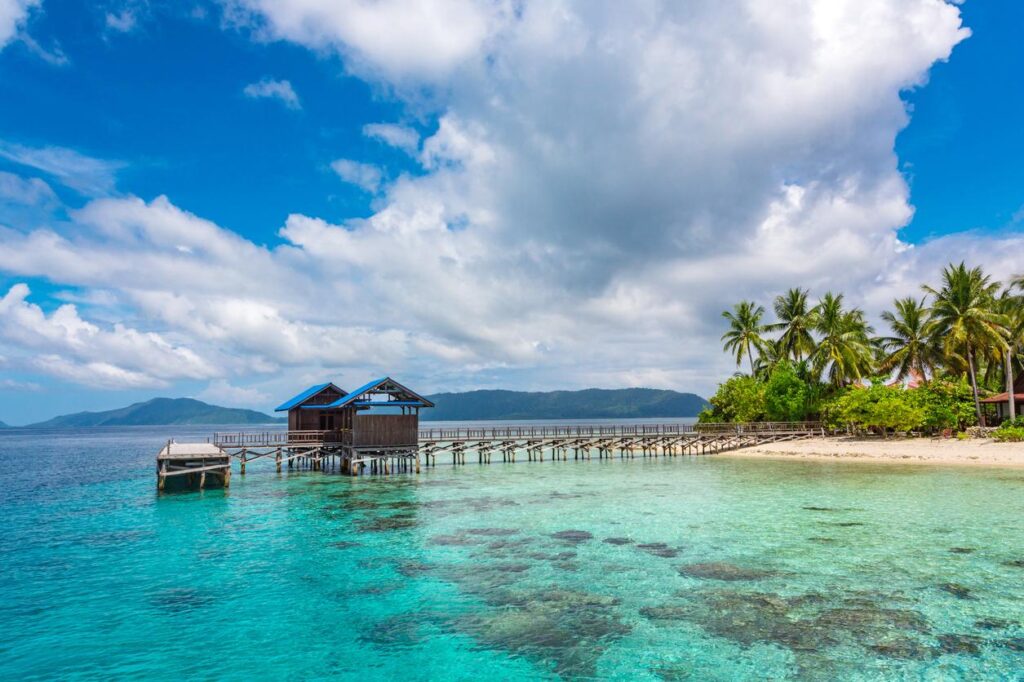
Piaynemo viewpoint is the image most people have seen before arriving: a panorama of limestone karst islands scattered across turquoise water, photographed from a viewpoint on the Fam Islands (often labelled incorrectly as “Pam Islands” on maps). The short but steep climb to the viewpoint takes around 20 minutes from the boat landing. The view at the top looks exactly like a desktop screensaver rendered in higher resolution than any screen can display.
Wayag Islands in the far northwest are the more remote, more dramatic version of the same landscape: a labyrinth of karst towers and turquoise lagoons accessible by kayak, with a ridge climb rewarding views that most visitors describe as the most beautiful they have ever seen. Wayag requires a longer boat journey from most bases, making it a day trip or an overnight excursion rather than a quick stop.
Birds of Paradise on Waigeo Island are the wildlife highlight above the waterline. Raja Ampat sits in the Bird’s Head Peninsula of West Papua, one of the few places on Earth where multiple species of Birds of Paradise can be found in a small area. The Wilson’s Bird of Paradise and the Red Bird of Paradise both have display sites on Waigeo, accessible through guided tours with local expert Benny Mambrasar, whose family has been guiding birdwatchers here for decades. Dawn starts, 30 to 45-minute treks through humid forest, and the reward of a male Bird of Paradise displaying in full colour from a branch five metres away: this is one of the most extraordinary wildlife experiences available anywhere in Southeast Asia.
Arborek Village on a tiny island in the Dampier Strait is the most visited of Raja Ampat’s traditional communities, home to around 200 residents. Children greet arriving boats with traditional dances. Local women weave traditional crafts. The community runs its own homestays, guides snorkelling tours from the jetty (the house reef is extraordinary), and actively manages tourism to preserve the village’s character. Visiting respectfully (covered clothing, no wandering off into residential areas without invitation) and spending money directly with village operators makes a genuine economic difference to a community that has chosen engagement with tourism on its own terms.
Misool rock art caves in southern Raja Ampat contain prehistoric red ochre handprints and paintings estimated to be between 3,000 and 50,000 years old, painted directly onto the limestone karst cliffs above the waterline. They are accessible by boat, combined naturally with the lagoon exploration that characterises Misool’s above-water landscape. Very few visitors combine the rock art with the diving on the same trip, which means they constitute one of the most under-visited significant archaeological sites in Southeast Asia.
Batanta waterfall on Batanta Island involves a boat journey through mangroves followed by a jungle trek to a hidden waterfall. The journey is as much the point as the destination: the mangrove ecosystem in Raja Ampat is intact and functioning in ways that most of the world’s tropical coastlines no longer support.
Where to stay
Raja Ampat accommodation divides roughly into three categories, each offering a fundamentally different experience.
Homestays are the most authentic and most community-beneficial option. Family-run operations across the islands, from Arborek and Sauwandarek to more remote locations, offer simple rooms, shared bathrooms, and meals prepared by the family, typically fresh fish, rice, vegetables, and fruit. Quality varies but the hospitality is universally described as exceptional. Prices typically run $50 to $150 per person per night including meals. The Homestay Association (stayrajaampat.com) maintains a directory of vetted operators.
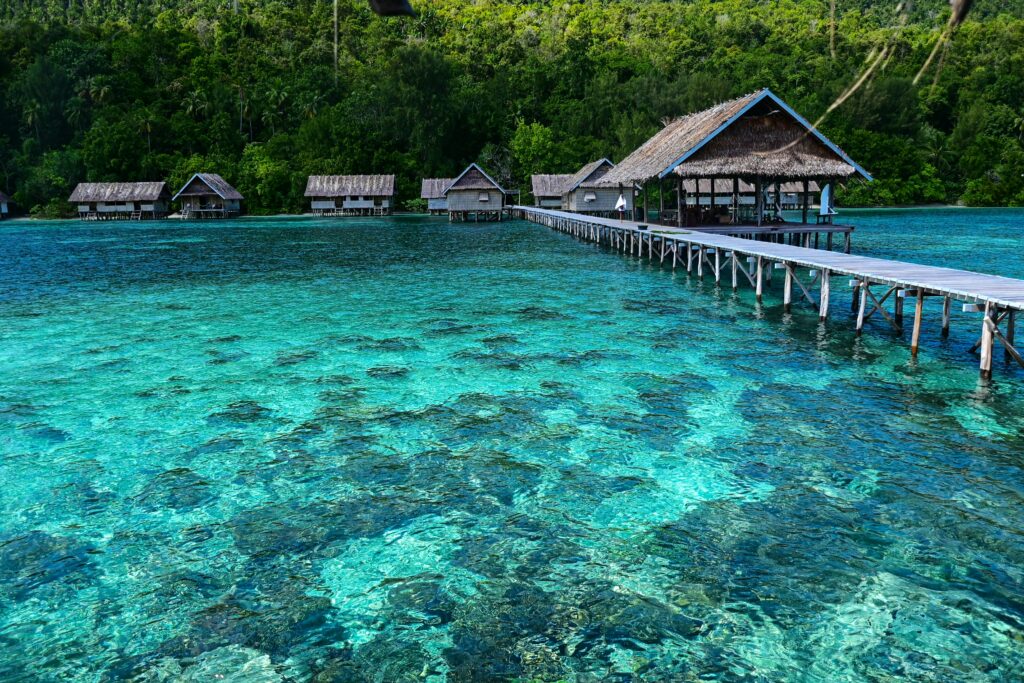
Dive resorts are the middle tier, typically offering wooden bungalows over or near the water, a dedicated dive centre, guided dives and snorkelling included, and a restaurant serving Indonesian and Western food. Raja Ampat Dive Lodge on Mansuar Island runs from around $270 per night. Papua Diving Resorts (Kri Eco Resort and Sorido Bay Resort) are operated by Max Ammer, one of the original explorers of Raja Ampat who mapped many of the iconic dive sites, and are considered the historical heartbeat of diving in the region. Papua Paradise Eco Resort on Birie Island offers overwater bungalows with a barefoot luxury aesthetic.
Luxury resorts are limited in number and large in experience. Misool Eco Resort in southern Raja Ampat, at $500 or more per night, offers stilted water cottages, exceptional dining, a full PADI dive centre, and private access to some of the most pristine reefs in the archipelago. The resort operates its own marine conservation programme and has been protecting the surrounding waters for decades.
Liveaboards are the option for serious divers and those who want to cover the most ground. Traditional Indonesian phinisi vessels with multiple cabins, a dive deck, and a crew that handles all logistics allow guests to cover Dampier Strait, Misool, Wayag, and the remote atolls in a single trip, anchoring at dive sites overnight and moving with the currents and the tides. A week-long liveaboard typically runs $1,500 to $3,500 per person depending on the vessel and inclusions.
How to get there
Step 1: Fly to Sorong. Domine Eduard Osok Airport (SOQ) in Sorong, West Papua is the gateway to Raja Ampat. Direct domestic flights connect Sorong from Jakarta (around 3.5 hours), Makassar, Manado, Bali, and several other Indonesian cities. International visitors typically route through Jakarta or Bali.
Step 2: Sorong to Waisai. From Sorong, the public ferry to Waisai (the capital of Raja Ampat) takes 2 to 2.5 hours and runs twice daily, morning and afternoon. Private speedboats are faster but considerably more expensive. Many resorts arrange transfers directly from Sorong.
Step 3: Waisai to your island. From Waisai, speedboat transfers reach specific islands and homestays. Sharing a boat with other travellers heading in the same direction significantly reduces costs. The Facebook group “Stay Raja Ampat” is the standard resource for coordinating shared transfers.
Entry fees and permits
All visitors must purchase two permits on arrival in Waisai:
Marine Park Entry Permit: IDR 700,000 for international visitors (approximately $45). Valid for one year. This fee funds marine conservation and is enforced at checkpoints throughout the region.
Visitor Entry Ticket: Approximately IDR 300,000 to IDR 1,000,000 depending on visitor type and current fees. Confirm the current amount at the Waisai port office on arrival.
Both fees are non-negotiable, go directly to conservation and community infrastructure, and are genuinely worth paying.
When to go
October to April is peak season: calmer seas, better visibility, and optimal conditions for manta ray sightings in the Dampier Strait. November to March is the sweet spot within this window.
May to September brings the wet season, with rougher seas and reduced visibility, particularly July and August. Prices drop, crowds thin considerably, and the experience shifts toward a more adventurous register. Some dive sites remain excellent even in the wet season.
Note on regional variation: The Dampier Strait (central Raja Ampat, most accessible) and Misool (southern Raja Ampat) have slightly different optimal seasons. Misool diving is at its best from October to April; Waigeo and the north can be dived year-round with adjustments.
Practical notes
Bring cash. ATMs exist in Waisai but are unreliable and have limited withdrawal limits. Cards are rarely accepted on islands. Bring sufficient Indonesian Rupiah for your entire stay, including permits, tips, boat trips, and meals.
Reef-safe sunscreen only. Chemical sunscreens are damaging to coral and are banned in several parts of the marine park. Physical sunscreen (zinc or titanium dioxide-based) is the only acceptable option. Rash guards are the better solution for extended time in the water.
Dive insurance is essential. The nearest decompression chamber is in Sorong, which requires a boat journey. All divers should carry DAN (Divers Alert Network) or equivalent dive-specific insurance before entering the water anywhere in Raja Ampat.
Respect local customs. The communities of Raja Ampat are predominantly Protestant Christian and culturally conservative. Cover up when visiting villages, particularly on Sundays, which are family and religious days. Ask before photographing people. Buy directly from local vendors where possible.
Internet and connectivity are limited outside Waisai and the larger resorts. Embrace it.
Seasickness is a genuine consideration on the long boat journeys between distant islands. Bring medication if you are susceptible.
How long to spend
One week is the minimum that does Raja Ampat justice. It allows time for the journey, a couple of days adjusting to the rhythm of the place, and enough dives or snorkel sessions to build a real relationship with the underwater world.
Ten days to two weeks is the recommended window for anyone who wants to combine central Raja Ampat with Misool, or add Wayag as a longer excursion. Liveaboard itineraries typically run seven to ten days and cover the most ground.
The single most common piece of advice from return visitors: book longer than you think you need. Raja Ampat has a way of making planned departure dates feel like a mistake.
The one thing worth understanding before you arrive
Raja Ampat is one of the last places on Earth where a genuine conservation model is working at scale. The marine park fees, the community-run homestays, the strict no-touch diving rules, and the conscious limits on visitor numbers in the most sensitive areas have together produced something unusual: a destination where the natural world is not merely surviving mass tourism but actually thriving because of how tourism has been managed.
The fishing communities that live here gave up the right to fish certain areas in exchange for income from conservation tourism. The reefs that resulted from that decision are what you are diving on. The entry fee you pay on arrival in Waisai goes directly to the institutions that maintain that agreement.
Going to Raja Ampat with that context in mind changes how the experience sits. It is not merely spectacular. It is a working argument that the spectacular can be preserved if people decide, collectively, that preservation matters more than extraction.
The essentials
- Location: West Papua, eastern Indonesia (1,500+ islands)
- Gateway city: Sorong (SOQ airport)
- Ferry from Sorong to Waisai: 2 to 2.5 hours, twice daily
- Marine Park Entry Permit: IDR 700,000 (~$45) for international visitors
- Best season: October to April
- Accommodation range: Homestays from $50/night to luxury resorts from $500+/night
- Recommended stay: Minimum 7 days; 10 to 14 days ideal
- Must bring: Cash in IDR, reef-safe sunscreen, dive insurance, flexibility
- Pairs well with: Komodo National Park, Banda Sea diving, Toraja highlands in Sulawesi