
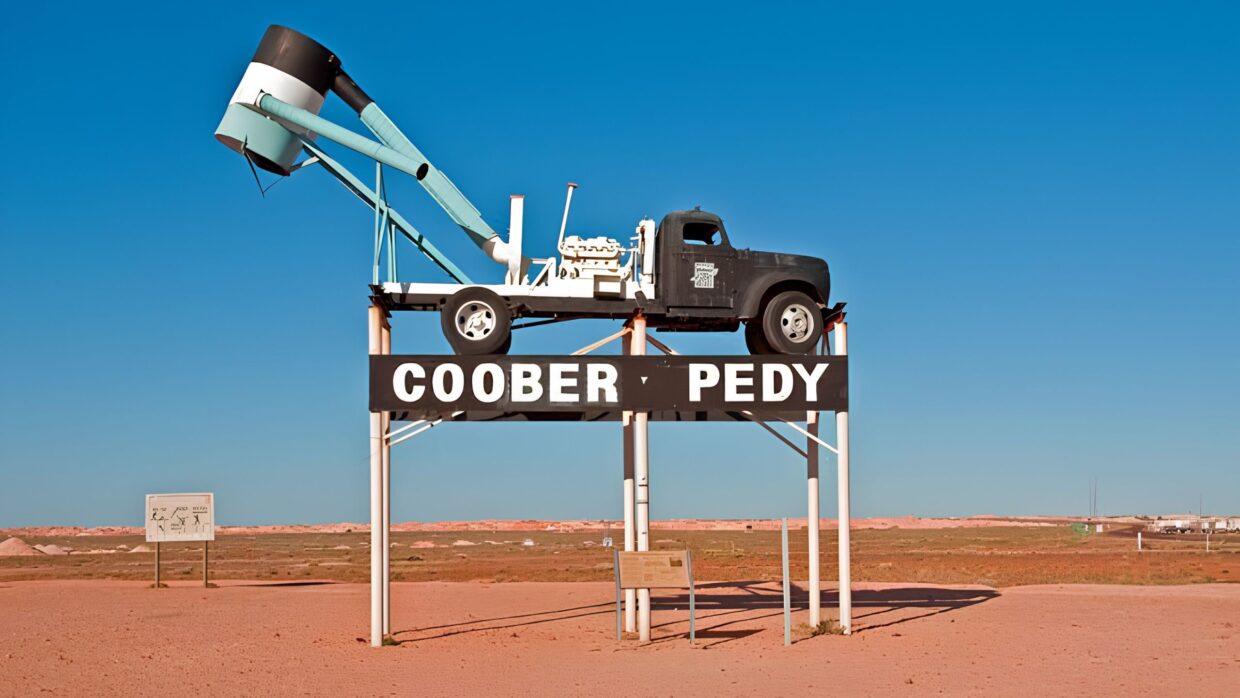
There is a town in the middle of the Australian outback where roughly half the population lives underground. Not in bunkers. Not in an emergency. Just in houses, proper houses with kitchens and living rooms and sometimes swimming pools, carved directly into the rock, because the alternative is living on the surface where summer temperatures regularly hit 45°C and the nearest shade is someone else’s car.
The town is called Coober Pedy. The name comes from the Aboriginal phrase kupa-piti, which translates loosely as “white man in a hole.” The hole reference is well-earned: the landscape above ground is a lunar nightmare of red dirt, low scrub, and thousands upon thousands of mounds of excavated earth from over a century of opal mining. It looks like Mars, which is exactly why NASA uses photos of the place for rover training, and why Hollywood keeps returning to film its post-apocalyptic futures here.
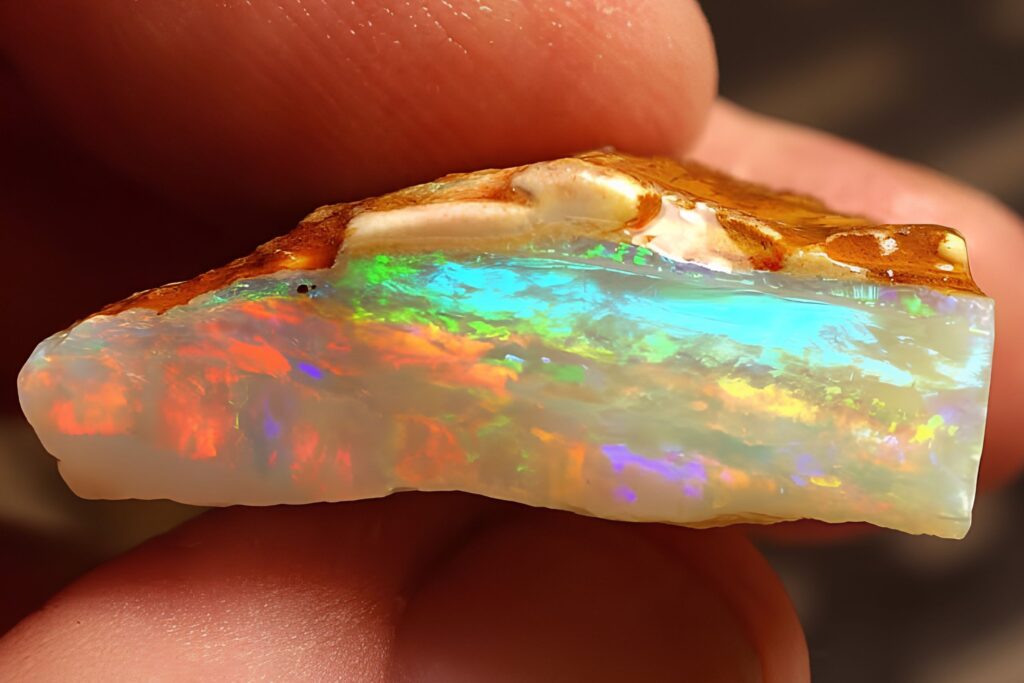
It also produces the majority of the world’s opals, somewhere between 50 and 70 percent of global supply, depending on who you ask, which means that on any given day, there are buyers from Hong Kong, Tokyo, and New York landing on the tiny airstrip with briefcases of cash, making deals in back rooms, and flying out again before nightfall.
Coober Pedy is one of the strangest places on Earth. Here is how to do it properly.
How to get there
Coober Pedy sits roughly 850km north of Adelaide along the Stuart Highway, halfway between Adelaide and Alice Springs, stranded in the middle of nowhere with nothing resembling a neighbour for hours in any direction.
By air: Rex (Regional Express) operates direct flights from Adelaide. The flight takes about two hours and is the most practical option if you’re not doing a full outback road trip.
By road: The Stuart Highway drive from Adelaide takes around nine hours. It is long, flat, and often hypnotic, which sounds boring but is actually the best kind of introduction to what outback Australia really feels like. Fuel up at every opportunity; petrol stations thin out considerably once you leave Port Augusta.
By train: The Ghan passes through nearby Manguri station, not in town itself, but transfers are available. Some itineraries include a day excursion into Coober Pedy as part of the journey, which is a great way to see it as part of a larger Australian trip.
When to go
May to September is the window. Temperatures in this period sit between 15°C and 25°C during the day — genuinely pleasant — with cold, clear nights that make for extraordinary stargazing. The underground church tours and mine visits are all running, accommodation is easier to book, and the light on the Breakaways at sunset is at its best.
October to April should be approached with clear eyes. Summer temperatures regularly exceed 40°C and can push past 45°C. That’s not “it’s a bit warm” territory — that’s “the air itself feels aggressive” territory. The underground lifestyle suddenly makes complete sense, but some outdoor tours operate reduced schedules, and the drive in and out of town becomes a genuinely serious undertaking requiring careful planning around fuel, water, and timing.
Where to sleep
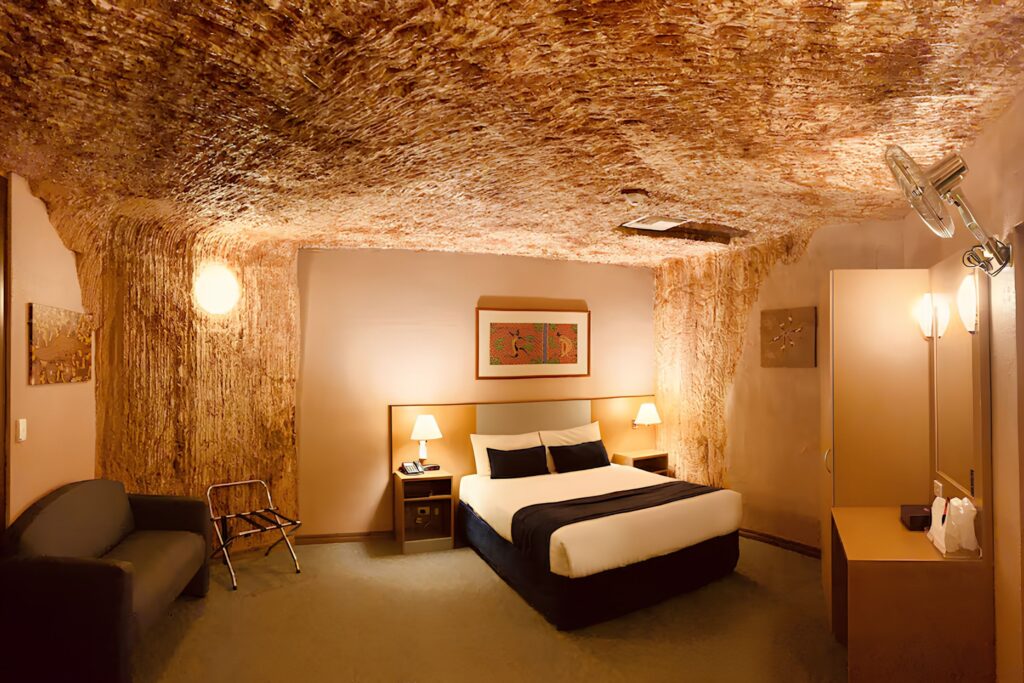
The question everyone asks is whether to stay underground or above ground, and the answer, almost universally, is underground.
Desert Cave Hotel is the flagship: the only internationally classified underground hotel in the world, right on the main street. Rooms are carved into the sandstone, naturally maintained at around 23°C without air conditioning, and genuinely dark and quiet in a way that no blackout curtain has ever replicated. The hotel also contains the world’s only underground bar and gaming room, which is either a selling point or a warning, depending on your temperament. Prices run from around AUD $169–$210/night.
The Underground Motel is a simpler, more local option, fewer amenities, same principle, often preferred by travellers who want the genuine dugout experience without the full hotel infrastructure.
Airbnb dugouts are abundant and often the most interesting option. Several are private homes that have been opened up for guests, hand-dug by their owners, decorated with individual character, and far more immersive than a hotel corridor. The best ones are booked months ahead in peak season.
For those travelling overland with a caravan or campervan, there’s even an underground campground, which is exactly what it sounds like.
What to do
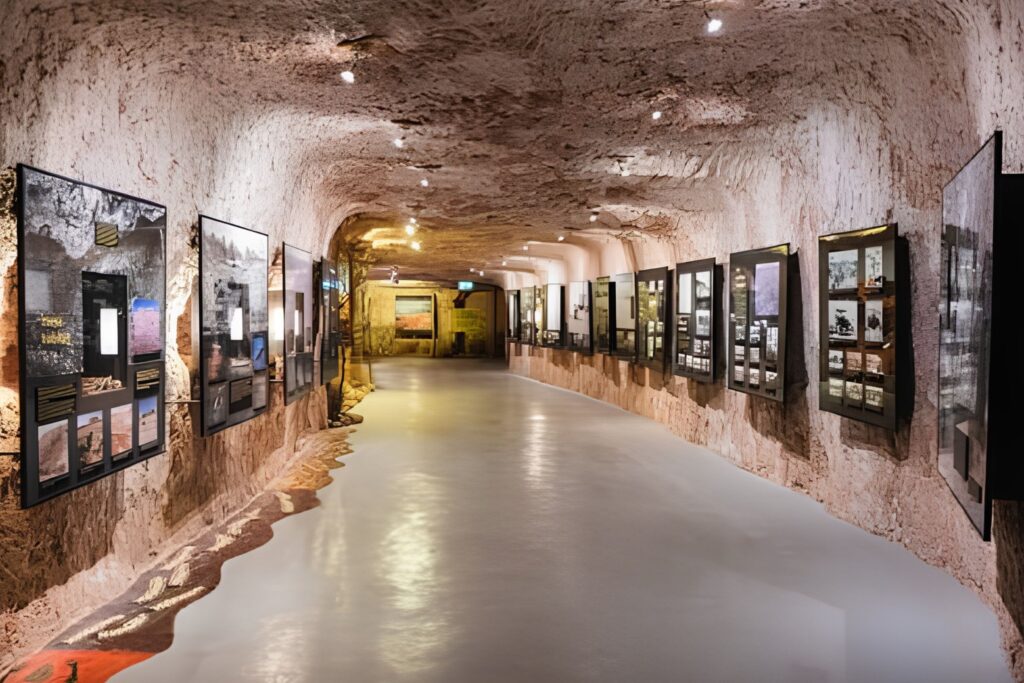
Go underground, properly
The town’s underground life is not a gimmick for tourists, it’s a functioning community. Most of what’s worth seeing here is also underground.
Faye’s Underground Home is the single best stop in town. Faye Nayler was the first woman to own and operate a mine in Coober Pedy, and she built this house over eight years with two friends, using picks and shovels. The result is a home with a 1970s party-house vibe, complete with a billiard room, a bar, and, in a room no description can prepare you for, an indoor underground swimming pool. Tours cost around AUD $20 per person and are absolutely worth it.
Old Timers Mine and Museum dates from 1916, one year after opals were first discovered in the area. It was sealed up and forgotten, then rediscovered in 1968 by a family who were expanding their own dugout home and broke through into the old tunnels. The museum includes a preserved 1960s underground home, a self-guided tour through the original mine workings, and a small noodling pit where kids (and adults) can sift through mining rubble for overlooked opals.
Umoona Opal Mine and Museum is right on the main street and includes a free award-winning documentary about the town, plus guided tours through a working mine at 10am, 2pm, and 4pm daily except Tuesdays.
Tom’s Working Opal Mine offers guided tours of a currently active operation, big machinery, modern methods, and genuinely entertaining guides who know where the good stories are. Scones, jam, and cream afterwards.
Pray underground
Coober Pedy has several underground churches, which sounds like a detail from a Gabriel García Márquez novel but is simply what you do when you live underground.
The Serbian Orthodox Church of St. Elijah is the largest, built by the Serbian community who came to mine in large numbers in the mid-20th century. The interior is decorated with murals painted directly onto the sandstone walls, they’re beautiful in the way that things become when they exist in genuinely unexpected contexts. Entry by donation, unmissable.
The Catacomb Church is slightly more rustic, carved without much decoration but with a quiet atmosphere that rewards a few minutes of sitting still. Door is usually left open; no admission charge.
Play golf, but differently
The Coober Pedy golf course has no grass. It is 18 holes across bare desert, played at night under lights, where the “greens” are called “browns” and are oiled sand raked smooth. Players carry a small piece of turf called a “scraper” to create a flat surface for each shot. It is the strangest golf experience available in the southern hemisphere and possibly on Earth. Visitors can join local games; ask at your accommodation.
Go noodling
Noodling is the local word for fossicking through the mounds of discarded mining rubble that dot the landscape around town, looking for opals that the big operations missed. Under the Mines and Energy Act of South Australia, if it’s not a declared private mine, anything you find is yours to keep. A small permit is required for underground fossicking; surface noodling is more relaxed. Old Timers Mine has a small area specifically set up for this.
People do find opals this way. Not often. But sometimes, and that’s enough.
See the Breakaways
Kanku-Breakaways Conservation Park sits about 30km north of town, a series of flat-topped mesa formations rising from the desert floor in terracotta and cream and ochre, looking like a landscape from another planet. They’re best in early morning light or the hour before sunset, when the colours shift through orange and red and purple in a way that makes you understand why this region keeps appearing in films.
The road is unsealed but passable in a standard vehicle in dry conditions. Check conditions locally before heading out, and take water.
The Dog Fence passes through this area, at over 5,300km, it’s the longest fence in the world, originally built to keep dingoes out of agricultural land in the south. It is longer than the Great Wall of China, a fact that strikes most visitors as implausible until they stand in front of a fence post at the edge of the outback with nothing in either direction but red earth.
Find the film sets
Coober Pedy’s post-apocalyptic moonscape has served as the backdrop for multiple films: the original Mad Max productions, Priscilla Queen of the Desert, Red Planet, and others. Scattered around town and in the surrounding desert are remnants of these shoots, props, set pieces, the occasional spacecraft, sitting in the landscape as if left behind after actual civilisation collapsed. The Spaceship from Pitch Black is a particularly surreal find. It’s just there, in the dirt, fading slowly.
Where to eat and drink
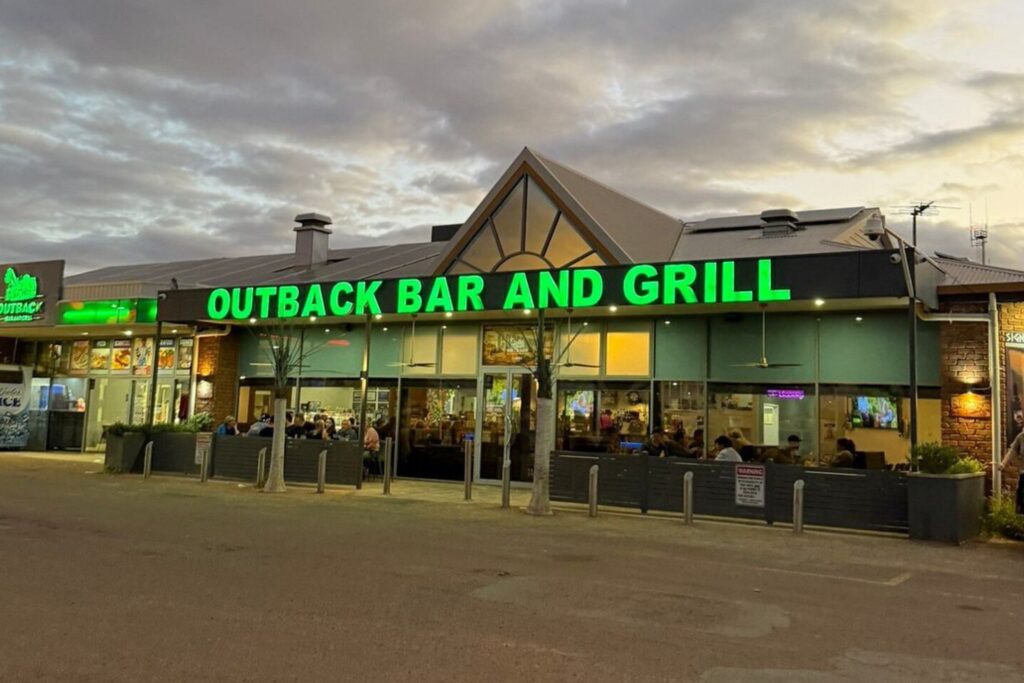
The food scene in Coober Pedy is practical rather than destination-worthy, this is a mining town at the edge of the Australian outback, not a culinary capital. But there are reliable spots.
Outback Bar and Grill is the go-to for pub food, good schnitzel, solid pizzas, cold beer.
John’s Pizza Bar and Restaurant has been feeding travellers and miners for decades, with a menu that extends to pasta alongside the expected pizzas.
Big Winch 360 is where you want to be at sunset. It sits on an elevated position above town with panoramic views of the opal fields, the mounds, and the surrounding desert changing colour as the light drops. It’s a bar and restaurant with a souvenir shop attached, go for the sunset, stay for a drink.
Most underground hotels have their own restaurants or bars. Desert Cave’s Opal Bistro is the most polished dining option in town.
Practical things worth knowing
Bring cash. Coober Pedy’s banking infrastructure is limited. Some mines and tours are cash-only, and the ATM situation is not always reliable.
Watch where you walk. The landscape around town is dotted with mine shafts, some fenced, some not. Most have warnings. Pay attention to them. Falling down an unmarked mine shaft is a genuinely documented hazard of Coober Pedy.
The heat is not negotiable. In summer, plan everything around the middle of the day being unavailable for outdoor activity. Underground tours, underground meals, underground bars, the infrastructure exists precisely for this reason.
Internet and phone coverage is functional but limited by outback standards. Don’t expect city speeds.
Petrol. Before leaving Coober Pedy in any direction, fill the tank entirely. The next reliable fuel stop is a long drive away regardless of which way you’re heading.
How long to stay
Two full days covers the main attractions comfortably, mine tours, underground churches, Faye’s home, the Breakaways, sunset at the Big Winch, and some time to simply walk the main street and absorb how strange and earnest and fascinating the whole thing is.
Three days gives you room for a noodling session, the golf course at night, and some time to talk to actual residents, which is, quietly, one of the best parts of the whole experience. Coober Pedy attracts people who chose to be here, which makes for a particular kind of community: eccentrics, dedicated miners, people who tried city life and found it wanting, and people who came on a whim in 1978 and simply never left.
The one thing to understand before you arrive
Coober Pedy looks, from the surface, like a town that barely made it. The above-ground landscape is raw and repetitive and not conventionally pretty. There are no beaches, no dramatic skylines, no obvious reasons for the place to exist beyond the opals in the ground.
But that’s the whole point. Coober Pedy is a town built on pure stubbornness, a community that decided to exist in one of the most inhospitable places on Earth and then, when the heat became unmanageable, simply moved the town underground rather than admit defeat. The result is something you can’t plan for and can’t properly describe: a place where life happens below your feet, where churches have no natural light, where houses have no windows, and where none of this feels remotely strange after about half a day.
You either love it or you don’t. Most people who go love it.
Some links in this post are affiliate links. If you book through them, flight.now earns a small commission at no extra cost to you. Learn more here