Most restaurant reviews tell you what to order. These ones start with how to survive the journey.
The restaurants on this list were not chosen for their Michelin stars or their tasting menus, though some have those. They were chosen because getting to them requires a boat, a helicopter, an aerial tram, a ten-mile hike into the bottom of a canyon, or in one case a four-wheel-drive across the largest salt flat on Earth. The meal is excellent. The access is the point.
All 12 are currently operating in 2026. Reservations are essential for most. In some cases, the reservation is the easier part.
1. The Rock, Zanzibar, Tanzania
How to get there: Walk at low tide. Take a wooden boat at high tide.
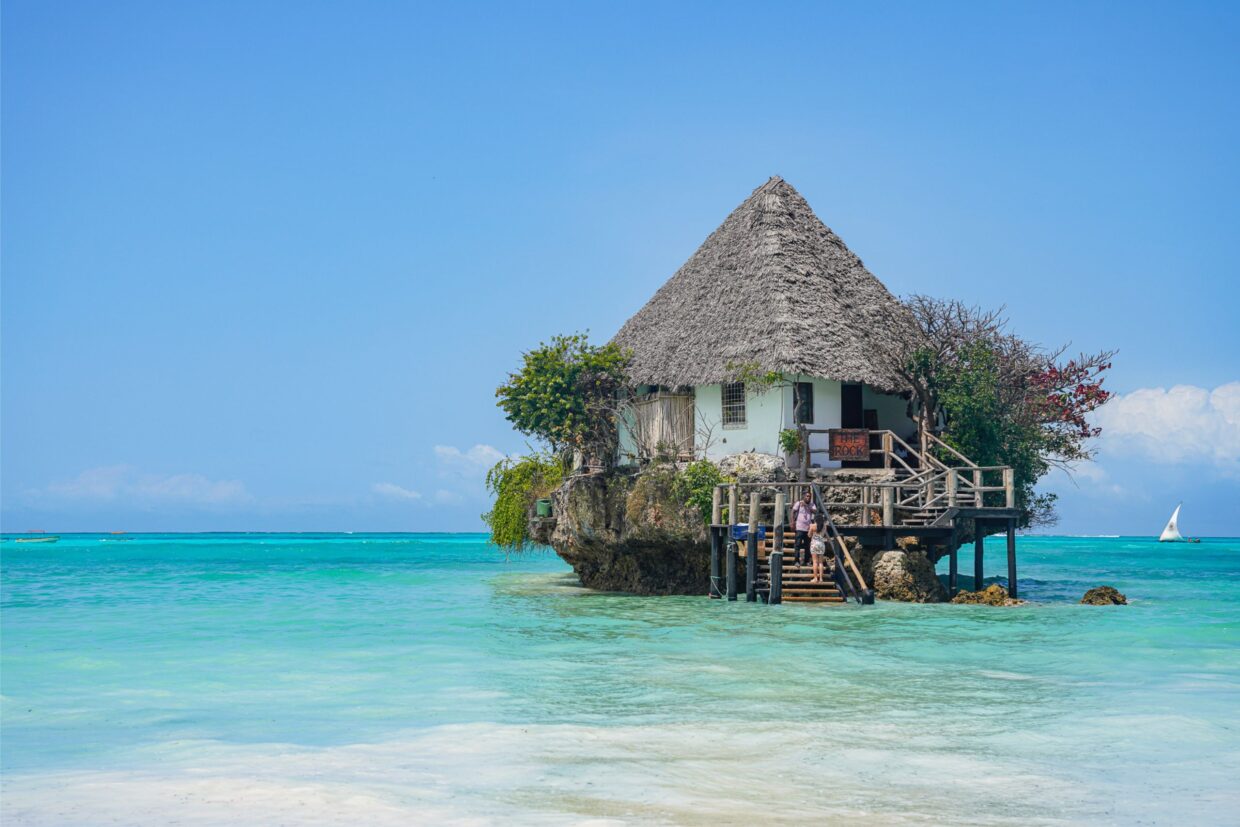
Built on a solitary coral outcrop a few metres off the eastern coast of Zanzibar near Michamvi Pingwe Beach, The Rock looks from the shore like something a child drew when asked to design a restaurant: a small building on a rock, surrounded by turquoise Indian Ocean, accessible in two completely different ways depending on what the tide decides to do that day.
At low tide, a sandy path appears and guests walk out to it. At high tide, the path disappears and a small wooden boat ferries guests the short distance across. The restaurant times its four daily sittings (two for lunch, two for dinner) around the tides, and the booking platform tells you what the water will be doing at your specific time slot, which is a level of operational detail most Michelin-starred restaurants don’t bother with.
The menu blends Zanzibari ingredients with Italian technique: lobster with homemade pasta, octopus curry in coconut milk, grilled catch of the day with coconut rice. The food is consistently good, occasionally excellent, and always secondary to the fact that you are eating in a restaurant on a rock in the Indian Ocean. Mains run $25 to $40 and a full meal for two with wine typically lands around $130 to $180.
“A birthday celebration in a very special location. Fantastic food, wine and service with a smile.”
The sunset sitting is the one to book. The golden light over the Indian Ocean from a table on the open terrace is the postcard image that has made The Rock one of the most photographed restaurants on Earth.
- Vibe: Indian Ocean postcard, tide-dependent access, genuinely iconic
- Price: Mains $25 to $40; full meal for two around $130 to $180
- Don’t skip: Timing your booking for the 4pm or 6pm sitting for sunset views
- Heads up: Book through the official website at therockrestaurantzanzibar.com. The $10 per person non-refundable deposit is standard. Remove shoes for both the boat and the walk.
Check Availability Here: The Rock, Zanzibar
2. Subsix, Niyama Private Islands, Maldives
How to get there: Speedboat from the resort, then down a three-tier staircase beneath the Indian Ocean.
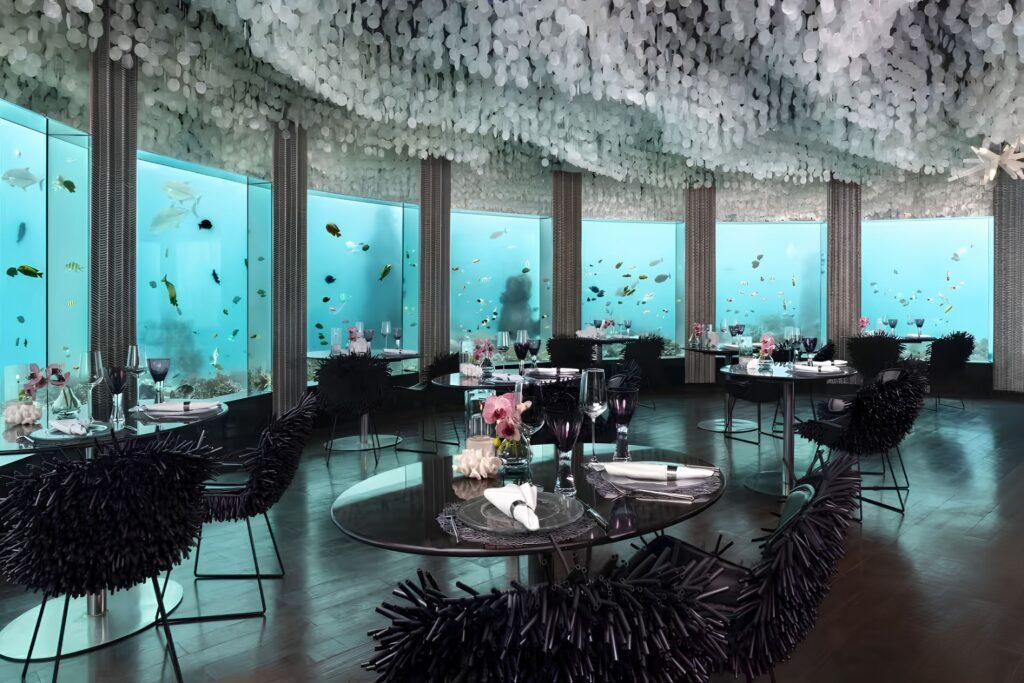
Six metres below the surface of the Indian Ocean, approximately 500 metres from the shore of Niyama Private Islands, Subsix is reached exclusively by speedboat and then descended into via a dramatic three-tier staircase that takes guests from sea level to the ocean floor. Through floor-to-ceiling windows, the illuminated marine world moves past: reef fish, coral formations, and whatever else the Maldivian Indian Ocean sends past the glass during service.
The interior is built around the ocean as backdrop: clam-shaped bar, anemone-inspired chairs, and a sea-themed design that avoids the kitsch of lesser underwater venues by taking the aesthetic seriously. Breakfast, lunch, sunset cocktails, and dinner are all served here. The dinner experience includes a six-course tasting menu with Maldivian and international ingredients. Sunset cocktail sessions are the most popular: the light changes through the windows as the sun drops, producing an effect no overwater bar can replicate.
- Vibe: Underwater fine dining, marine world as backdrop, the most dramatic table in the Maldives
- Price: High-end; accessible only to Niyama Private Islands guests and day-visit packages
- Don’t skip: The sunset cocktail hour, when the light through the windows changes colour as the sun descends
- Heads up: Accessible only through Niyama Private Islands; confirm availability when booking the resort
Check Availability Here: Subsix, Niyama Private Islands
Search flights to the Maldives
3. Seven Glaciers, Alyeska Resort, Alaska, USA
How to get there: The Seward Highway from Anchorage (40 miles of named America’s Most Outstanding Scenic Byway), then an aerial tram above seven hanging glaciers.
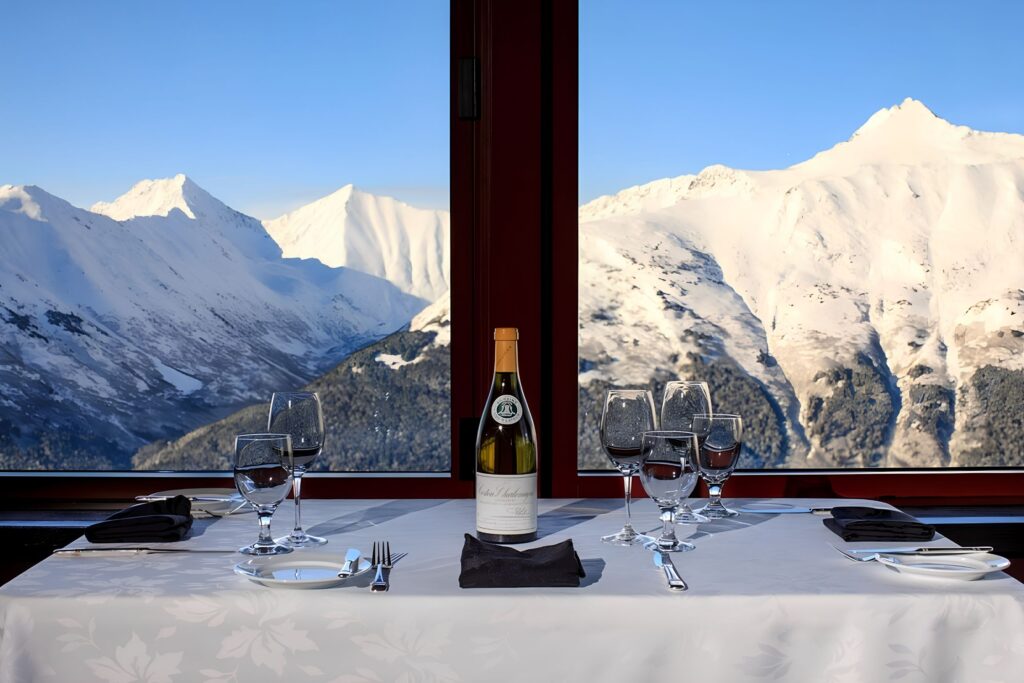
The journey to Seven Glaciers requires two things: the Seward Highway drive from Anchorage through the Chugach National Forest (one of the most scenic roads in North America), and then an aerial tram that glides above the tree canopies to a restaurant sitting 2,300 feet above sea level with views of seven hanging glaciers and Turnagain Arm, part of the remote Cook Inlet.
Once at the top, guests are guided along a golden carpet to the dining room, where signature dishes like scallop bisque are served by huge picture windows looking out at the glacier field. The restaurant holds a consistent AAA Four Diamond Award and has been named one of America’s 100 Best Wine Restaurants, so the effort of getting there is rewarded with a kitchen that takes itself seriously.
The tram itself is part of the experience: looking down at the forest canopy with the glacier views ahead, the improbability of a restaurant at this altitude becomes a sustained feature of the meal rather than just an arrival sensation.
- Vibe: Glacier views at altitude, aerial tram access, proper fine dining at the end of it
- Price: High-end; three or four-course dinner menus; confirm current pricing with Alyeska Resort
- Don’t skip: The tram ride at dusk on the return journey, when the glaciers change colour in the low light
- Heads up: Seasonal operation; confirm dates directly with Alyeska Resort before planning around it
Check Availability Here: Seven Glaciers, Alyeska Resort
Search flights to the United States
4. Arctic Bath Restaurant, Swedish Lapland, Sweden
How to get there: To the middle of the Lule River in the middle of Swedish Lapland.
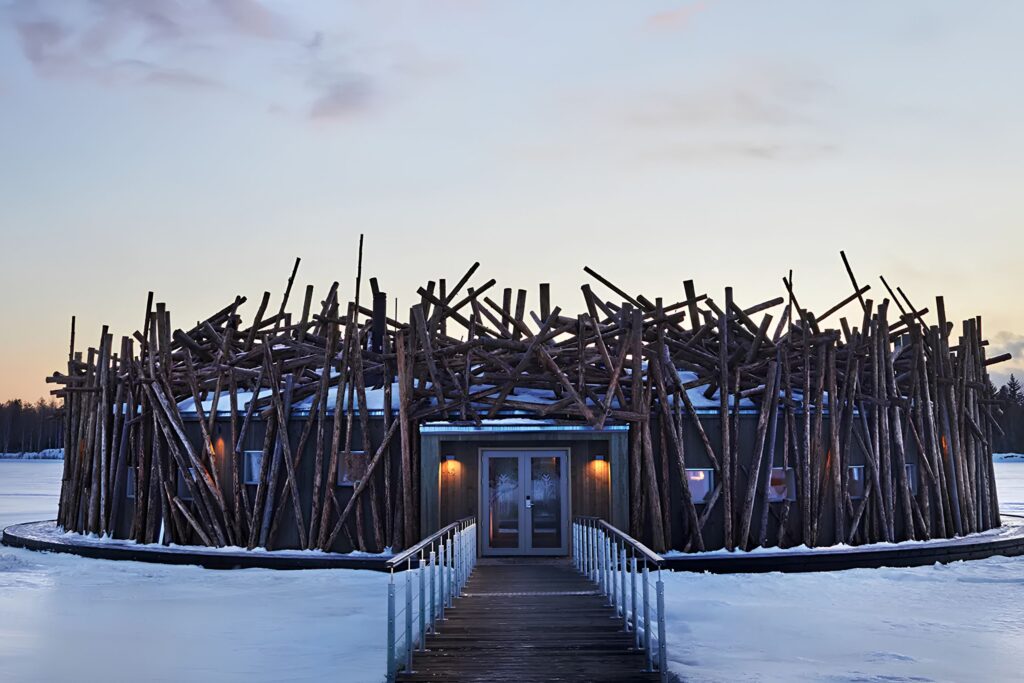
The Arctic Bath is a floating hotel on the Lule River in Swedish Lapland: in summer it glides on the water; in winter it freezes in place as the river ices over and is accessed via a pontoon across the ice. The restaurant inside the main nest-like building serves a constantly changing set menu built entirely from ingredients sourced within the region: wild herbs, berries, honey, reindeer, and river fish, reflecting whatever the Lapland landscape is producing at that specific time of year.
It is, by any definition, in the middle of nowhere. The nearest town requires a drive through subarctic forest. The hotel is designed around the premise that the remoteness is not an obstacle but the entire architecture of the experience.
Winter visits include the possibility of Northern Lights visible from the restaurant’s windows. Summer visits feature the midnight sun. Neither season is wrong.
“The floating hotel whose unique nest-like building houses the restaurant, in the middle of a river in the middle of nowhere.”
- Vibe: Subarctic floating restaurant, hyperlocal ingredients, Northern Lights or midnight sun depending on season
- Price: High-end; accessible primarily through an Arctic Bath stay; confirm current rates at arcticbath.se
- Don’t skip: Asking specifically about the current set menu composition when booking, the seasonal variation is significant and worth timing around
- Heads up: Winter access across the pontoon ice requires appropriate footwear and comfort with cold; summer access by boat is more straightforward
Check Availability Here: Arctic Bath Restaurant, Swedish Lapland
5. Phantom Ranch Canteen, Grand Canyon, USA
How to get there: A 10-mile hike down Bright Angel Trail or a 7.8-mile descent via the Kaibab Trail to the bottom of the Grand Canyon.
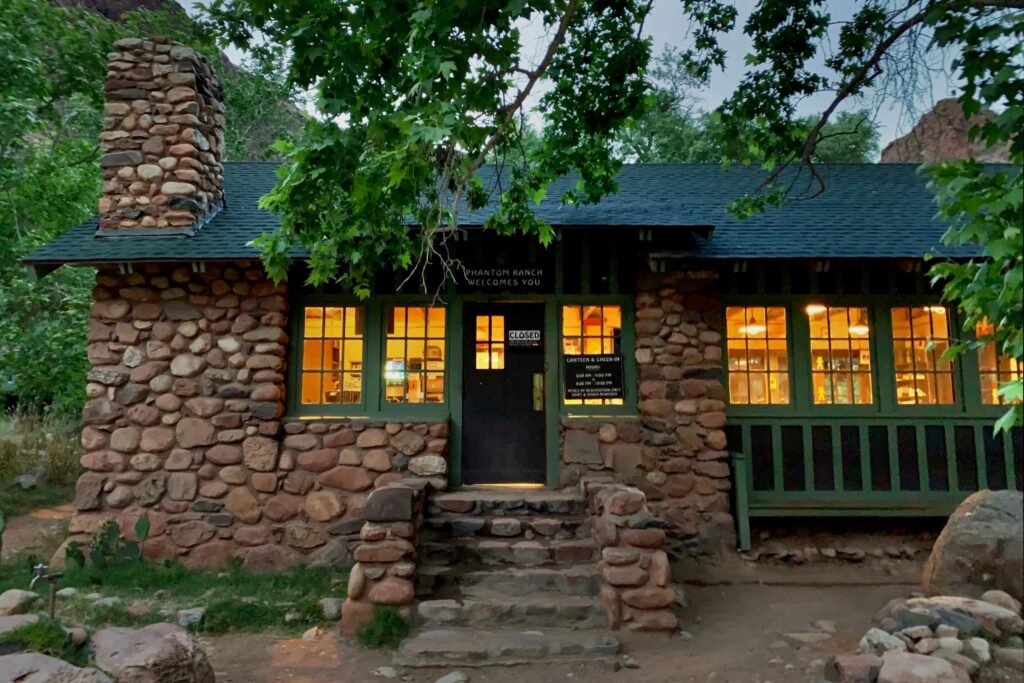
Most Grand Canyon visitors stand at the rim and look down. Phantom Ranch is at the bottom, which means getting there requires descending approximately 1,400 metres on foot, usually over the course of a full day, through some of the most visually extraordinary geology on Earth.
The Canteen at the bottom serves breakfast and dinner to hikers, mule riders, and the small number of people who plan far enough in advance to secure a table. Reservations open 13 months ahead and are gone almost immediately, making the booking harder to obtain than a table at many of the world’s most celebrated fine dining restaurants.
The menu is not elaborate: hearty stew, lemonade, beer, and breakfast foods designed for bodies that have been hiking for hours and will be hiking again in the morning. But eating a hot meal at the bottom of the Grand Canyon, surrounded by 1.7 billion-year-old rock walls, is a meal that has nothing to do with what’s on the plate.
- Vibe: Bottom of the Grand Canyon, earned every calorie, impossible to book
- Price: Budget-friendly; the hike is the investment
- Don’t skip: Booking the return hike as a separate day from the descent, the canyon rewards being slept in rather than rushed through
- Heads up: Reservations open 13 months in advance and sell out almost immediately; the National Park Service’s lottery system is the realistic route in
Check Availability Here: Phantom Ranch Canteen, Grand Canyon
Search flights to the United States
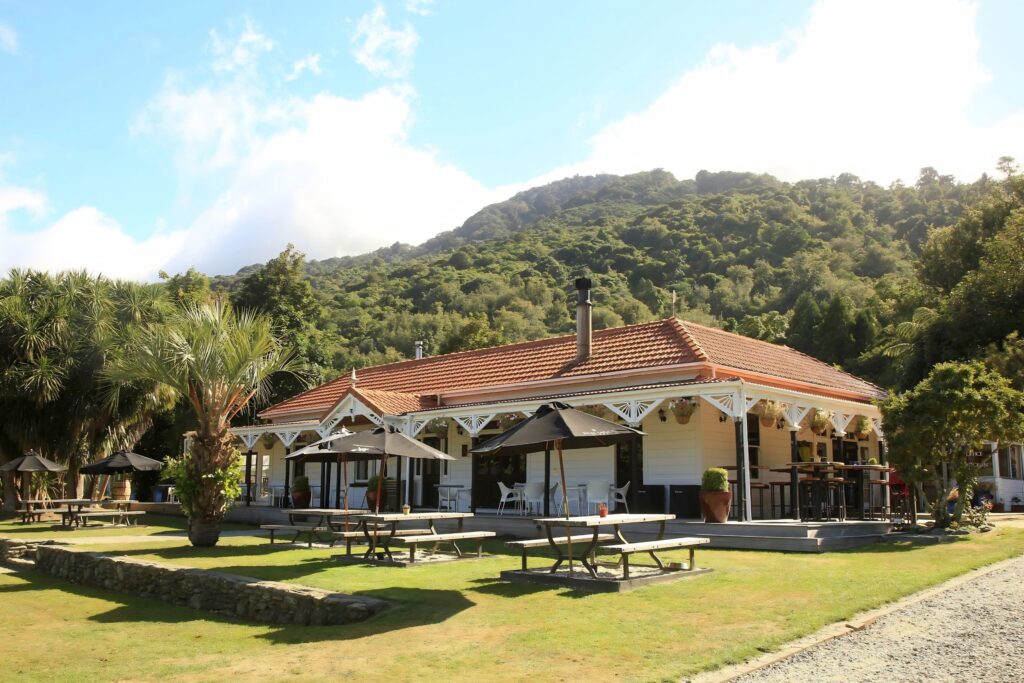
6. Furneaux Lodge, Marlborough Sounds, New Zealand
How to get there: Helicopter or boat. There are no roads.
Tucked into the Endeavour Inlet in the Marlborough Sounds, a network of mountain inlets and islands at the top of New Zealand’s South Island, Furneaux Lodge cannot be reached by car. There are no roads in. Access is exclusively by boat or helicopter, either of which produces a journey that is itself worth the trip: the Sounds’ water-and-forest landscape from the air or from sea level is among the most distinctive scenery in New Zealand.
The lodge’s Howden Room Restaurant specialises in fresh New Zealand fare built around Marlborough produce: king salmon, green-lipped mussels, game, and local wine from the Marlborough region that produces some of New Zealand’s finest sauvignon blanc. The combination of the boat journey, the setting, and the wine of the region is greater than the sum of its parts.
- Vibe: No-road New Zealand inlet, helicopter or boat access, Marlborough wine and seafood
- Price: Mid-to-high range; confirm current rates at furneauxlodge.co.nz
- Don’t skip: Arriving by helicopter for the aerial view of the Sounds, and returning by boat for the sea-level perspective
- Heads up: Weather in the Sounds can affect both boat and helicopter access; build flexibility into any trip that includes Furneaux
Check Availability Here: Furneaux Lodge, Marlborough Sounds
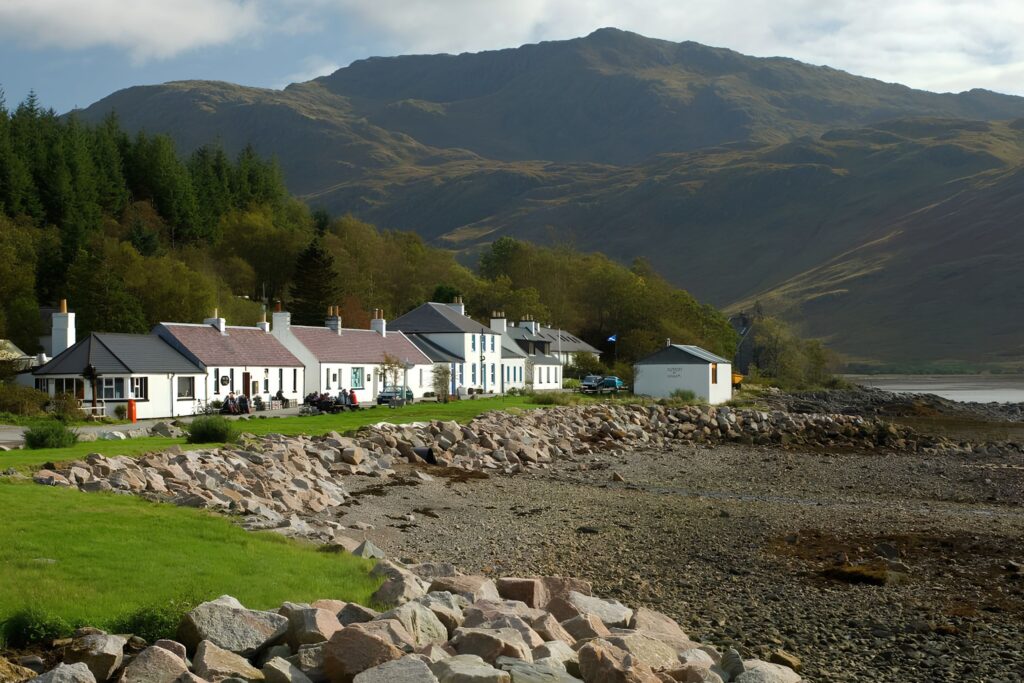
7. Old Forge Pub, Knoydart Peninsula, Scotland
How to get there: An 18-mile hike through the Scottish Highlands or a sea crossing to the village of Inverie.
Named the most remote pub on mainland Britain by the Guinness World Records, the Old Forge in the village of Inverie on the Knoydart Peninsula is reachable only two ways: an 18-mile hike through some of the most dramatic Highland landscape in Scotland, or a boat crossing from Mallaig across Loch Nevis. There is no road to Inverie from the rest of Scotland. The peninsula has no road connection to the national network at all.
The reward for getting there is sustainable locally caught seafood, a pub full of fiddles, guitars, whistles, and spoons available for anyone who wants to play, and the specific satisfaction of having genuinely earned a pint. The pub opens seasonally, so checking before either starting the hike or booking the boat is strongly recommended.
“The pub’s remoteness is what helped it earn the Guinness Book of World Records title. On the walls are fiddles, guitars, whistles, and spoons for patrons to pick up and play into the wee hours.”
- Vibe: World’s most remote mainland British pub, locally caught seafood, musicians encouraged
- Price: Pub prices; reasonable
- Don’t skip: The boat from Mallaig as the access route, which deposits you directly into one of Scotland’s most beautiful coastal villages
- Heads up: Seasonal opening; check current dates at theoldforge.co.uk before planning
Check Availability Here: Old Forge Pub, Knoydart Peninsula
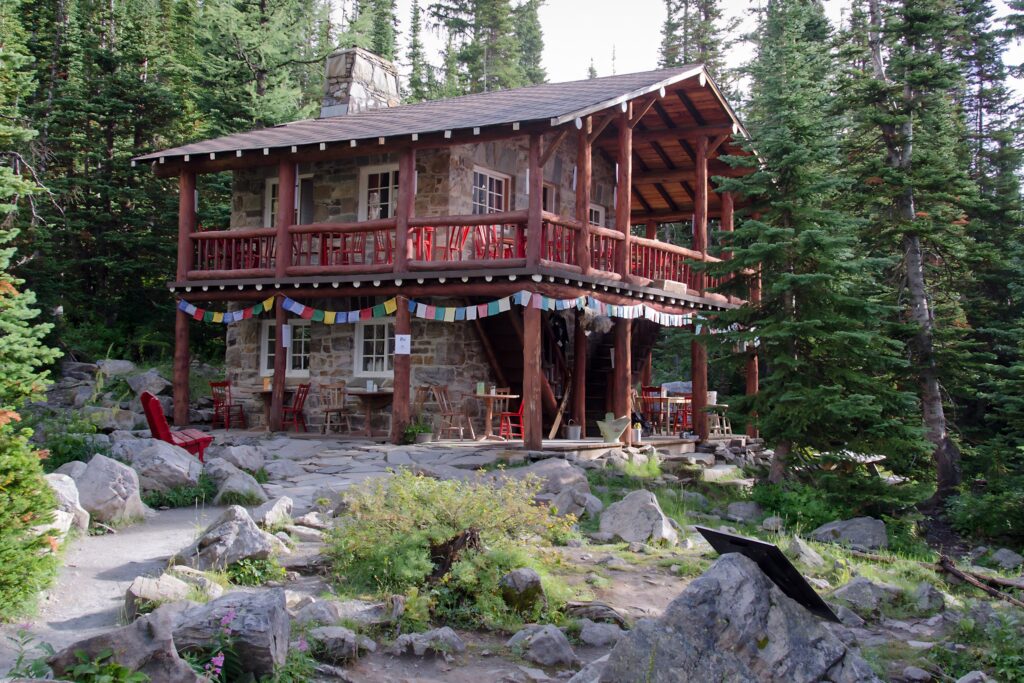
8. Plain of Six Glaciers Teahouse, Alberta, Canada
How to get there: A 3.4-mile hike through a glacial valley from Lake Louise, with no road access and no electricity at the destination.
The teahouse sits at 2,135 metres in the Canadian Rockies, reached by hiking from Chateau Lake Louise through a glacial valley that opens progressively to reveal Victoria Glacier and the peaks of the Continental Divide. The hike takes two to three hours each way. The teahouse has no electricity and prepares everything on propane stoves, with ingredients either flown in by helicopter twice a year or carried up daily in staff backpacks.
The menu is precisely what hikers in the Canadian Rockies need after climbing 365 metres: scones, soup, sandwiches, lemonade, and tea. It is not a sophisticated offering. But the combination of the two-hour hike, the glacier above, and a pot of tea in a century-old teahouse with no electricity and views over one of the most beautiful valleys in the Canadian Rockies makes it a meal that sticks.
- Vibe: Rocky Mountain glacial teahouse, earned every scone, no electricity
- Price: Budget-friendly; cash only (no ATM for several miles in any direction)
- Don’t skip: Starting early to avoid afternoon cloud and to have the valley to yourself on the way up
- Heads up: Open June to October only, weather dependent; the teahouse does not take reservations
Check Availability Here: Plain of Six Glaciers Teahouse, Alberta
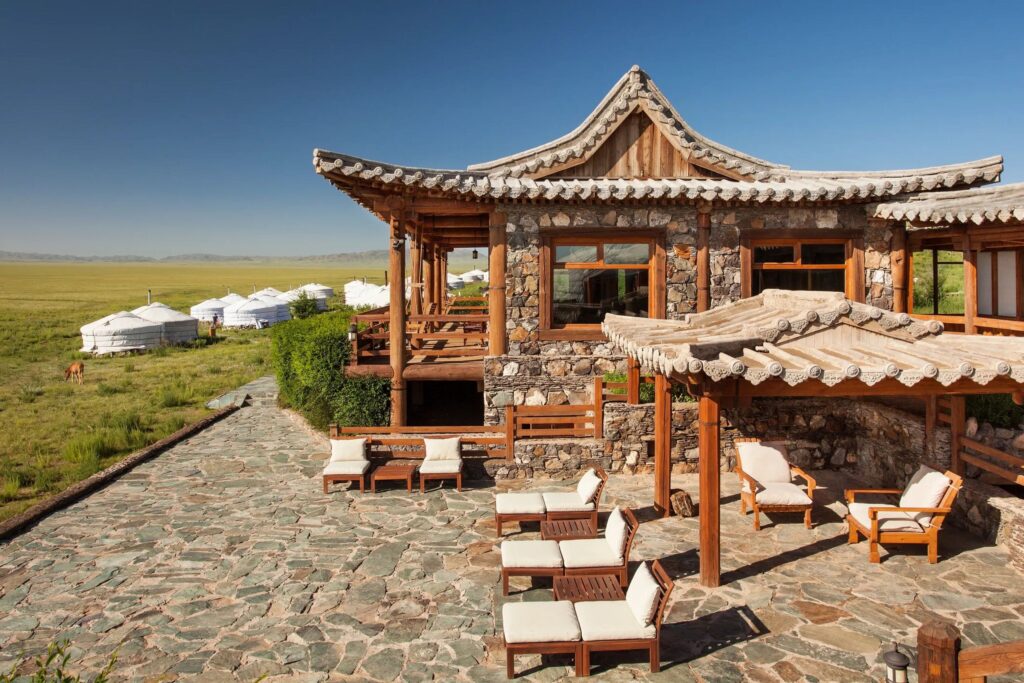
9. Bulagtai Restaurant, Three Camel Lodge, Gobi Desert, Mongolia
How to get there: A flight to Dalanzadgad, then a drive into the Gobi Desert.
The Gobi is one of the largest deserts on Earth, spanning southern Mongolia and northern China, with a population density of approximately two people per square kilometre. Three Camel Lodge sits within it in the South Gobi, reached by flying from Ulaanbaatar to Dalanzadgad and then driving into the desert on tracks that are as much suggestion as road.
The Bulagtai Restaurant serves authentic Mongolian cuisine with a contemporary approach: dishes built around the ingredients of the region, including camel, lamb, and foraged desert plants, presented in a dining room that looks out over a landscape of sand dunes and ancient rock formations with no human infrastructure visible in any direction.
The remoteness is not incidental. The lodge and restaurant exist specifically to place guests in the experience of the Gobi as it actually is: vast, silent, and extraordinary.
- Vibe: Gobi Desert dining, authentic Mongolian cuisine, genuinely nothing else nearby
- Price: High-end (accessible primarily through a Three Camel Lodge stay); confirm rates at threecamellodge.com
- Don’t skip: A sunrise camel ride before breakfast, followed by the full Bulagtai breakfast spread
- Heads up: The Gobi is extreme in both summer and winter; May to June and September to October are the most comfortable visiting months
Check Availability Here: Bulagtai Restaurant, Three Camel Lodge
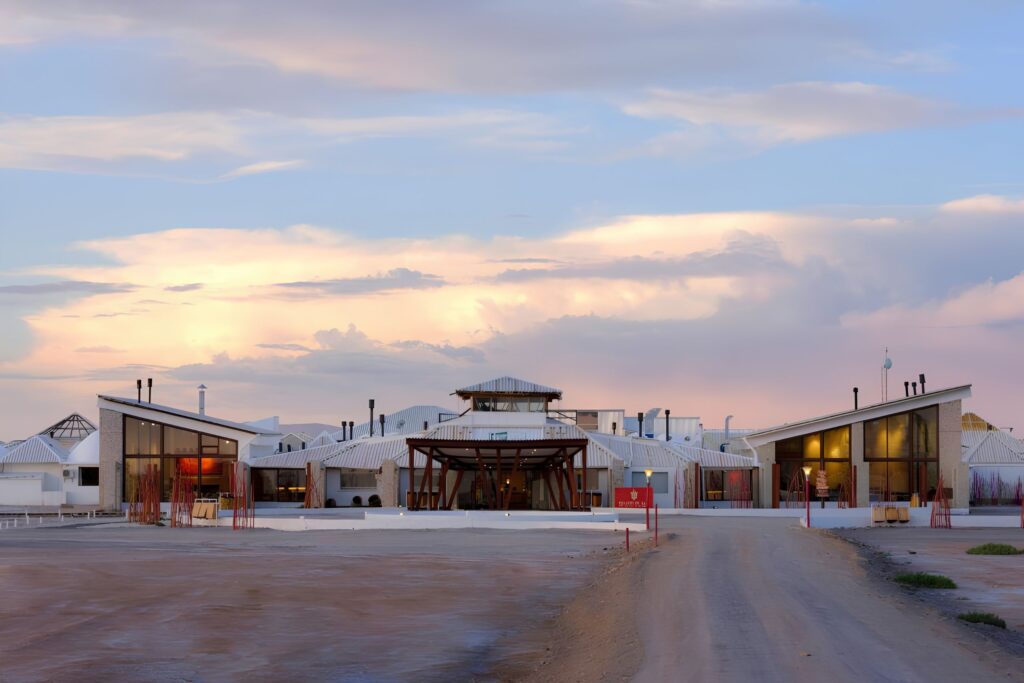
10. Tika Palace, Salar de Uyuni, Bolivia
How to get there: A flight to La Paz or Sucre, then a further connection or multi-day overland journey to the world’s largest salt flat.
The Palacio de Sal is a hotel built on the shores of the Salar de Uyuni, the world’s largest salt flat at 10,500 square kilometres, using local salt as the primary construction material. Tika Palace, its restaurant, operates a zero-kilometre food concept where ingredients come directly from nearby farms and fields to the plate.
Getting to the Salar requires genuine planning: a flight to La Paz or Sucre, then either a further connection to Uyuni or an overland journey that crosses altiplano landscape at 3,600 metres above sea level. A 4×4 is essential once you’re on the salt. The flat itself stretches to every horizon in every direction, white and perfectly level, creating a mirror effect after rain that makes the sky and the ground indistinguishable.
Eating Bolivian food in a salt hotel, surrounded by the largest mirror on Earth, is one of those experiences where the setting so completely overwhelms normal frames of reference that the meal becomes almost incidental to the location.
- Vibe: World’s largest salt flat, zero-kilometre Bolivian cuisine, otherworldly landscape
- Price: Mid-range for the restaurant; confirm accommodation and dining rates at palaciodesalhotel.com
- Don’t skip: Timing a visit after recent rain for the mirror effect on the salt flat
- Heads up: Altitude at 3,600 metres is significant; spend at least one night in La Paz acclimatising before heading to the Salar
Check Availability Here: Tika Palace, Salar de Uyuni
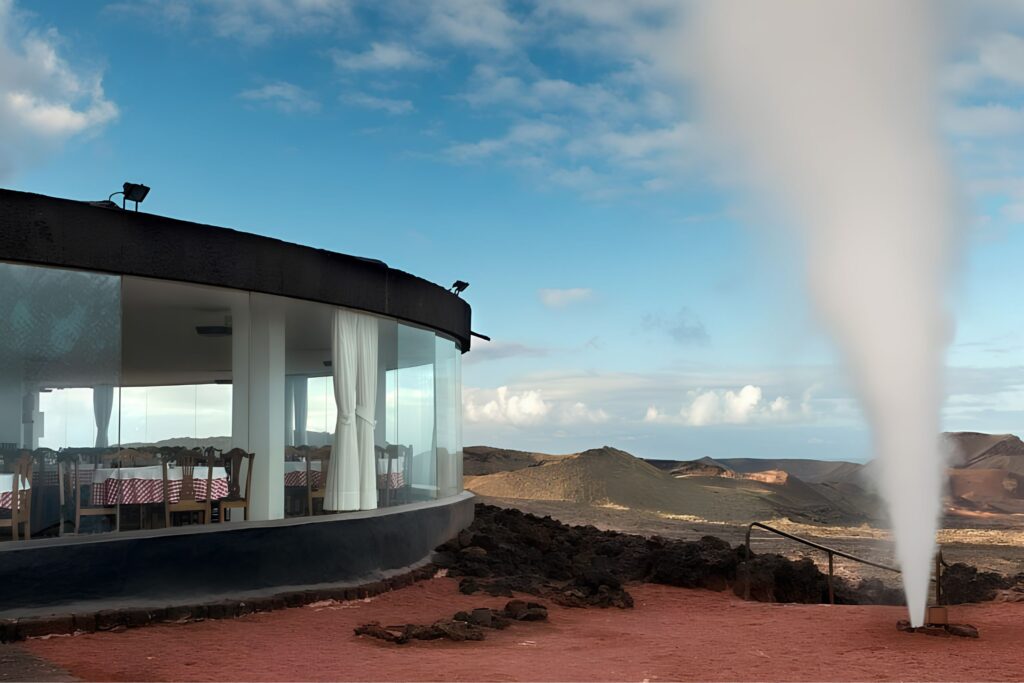
11. El Diablo Restaurant, Timanfaya National Park, Lanzarote
How to get there: Into the centre of a national park built on a volcanic landscape so extreme it is used as a Mars analogue site.
El Diablo does not use gas or electricity to cook its food. It uses the residual heat of a volcanic landscape: a custom-designed grill positioned over a natural vent in the Timanfaya volcano, where the ground temperature reaches 400 to 600 degrees Celsius at a depth of just a few metres. Chickens, meat, and fish are cooked directly over this geothermal heat, with no other energy source involved.
The restaurant was designed by the celebrated Lanzarote artist and architect Cesar Manrique, and sits within a landscape of solidified lava fields so stark and alien that Timanfaya is one of the locations NASA has used for Mars rover testing. The building itself is integrated into the volcanic rock as if grown from it.
Reaching it requires entering the national park, where private vehicles are not permitted in the central zone. Access to the restaurant is via the park’s own bus service or organised tour.
“The food is cooked with the heat of the Montana del Fuego volcano, which can reach up to 750 degrees Fahrenheit.”
- Vibe: Volcano-powered cooking, Cesar Manrique architecture, Mars landscape
- Price: Mid-range; park entry required in addition to the meal
- Don’t skip: The park’s camel rides and geothermal demonstrations before lunch, which frame the restaurant’s cooking method in context
- Heads up: The restaurant is popular with tour groups; arriving early or booking the last lunch sitting gives a calmer experience
Check Availability Here: El Diablo Restaurant, Timanfaya National Park
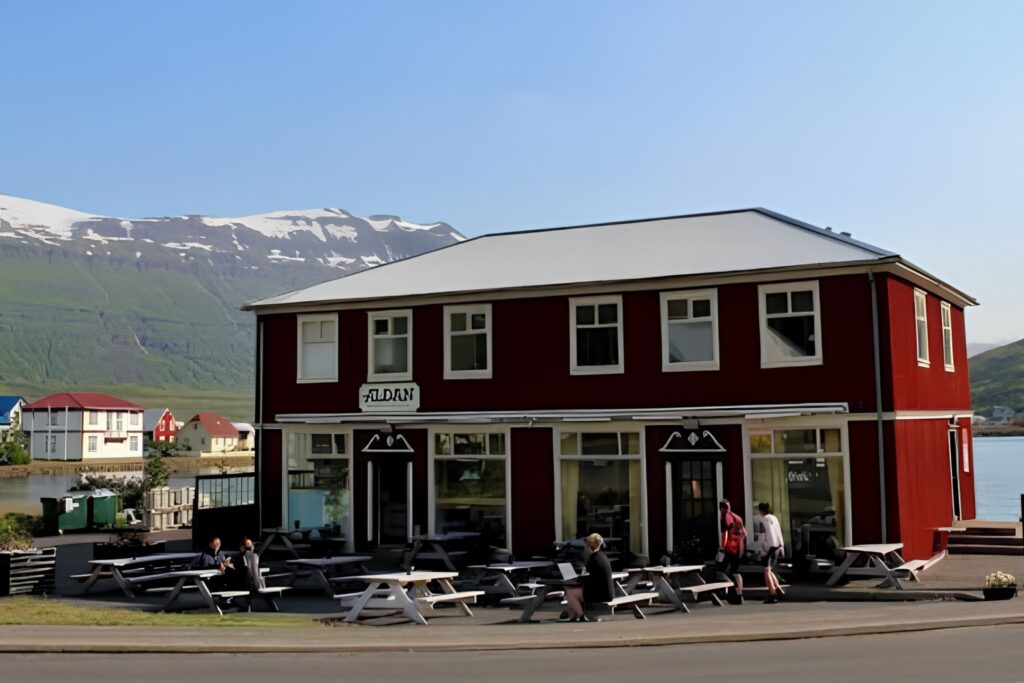
12. Nord Austur, Seydisfjordur, Iceland
How to get there: An 8-hour drive from Reykjavik along Iceland’s Ring Road to the country’s most remote eastern fjord.
Seydisfjordur is a small town of around 700 people at the end of a single-road fjord on Iceland’s far eastern coast, eight hours from Reykjavik along the Ring Road. The journey itself is one of the finest drives in Iceland: across the vast lava fields of the interior, along the Lagarfljot lake, and finally down into the fjord via a series of hairpin switchbacks above the water.
Nord Austur at the bottom of that journey serves sushi that most visitors describe as among the freshest they have encountered anywhere: the fish comes directly from the fjord and surrounding waters that same day, prepared with Japanese technique in a tiny dining room that holds perhaps twenty covers. The combination of remoteness, freshness, and precision makes it genuinely worthy of the eight-hour drive.
The town itself is worth the journey independently: coloured wooden houses, a famous rainbow road, and one of the most atmospheric small harbours in Iceland.
- Vibe: Eastern Iceland fjord sushi, freshness as the entire proposition, 8-hour drive justified
- Price: Mid-to-high range; confirm current rates and opening hours directly
- Don’t skip: The drive down into the fjord at dusk, and staying overnight in Seydisfjordur rather than driving back the same day
- Heads up: Nord Austur has limited opening hours and seasonal closures; confirm availability well before making the drive
Check Availability Here: Nord Austur, Seydisfjordur
Quick comparison
| Restaurant | Country | How to get there | Best for |
|---|---|---|---|
| The Rock | Tanzania | Walk or boat (tide-dependent) | Indian Ocean postcard, sunset dining |
| Subsix | Maldives | Speedboat, then underwater staircase | Underwater fine dining |
| Seven Glaciers | USA (Alaska) | Scenic highway, then aerial tram | Glacier views, fine dining |
| Arctic Bath | Sweden | River in the middle of Lapland | Northern Lights dining, hyperlocal |
| Phantom Ranch | USA (Arizona) | 10-mile hike into Grand Canyon | Most earned meal on this list |
| Furneaux Lodge | New Zealand | Helicopter or boat only | Marlborough Sounds, no roads |
| Old Forge Pub | Scotland | 18-mile hike or sea crossing | Most remote pub in Britain |
| Six Glaciers Teahouse | Canada | 3.4-mile glacier valley hike | Rocky Mountain scones, no electricity |
| Bulagtai Restaurant | Mongolia | Flight then Gobi Desert drive | Authentic Mongolian, most remote |
| Tika Palace | Bolivia | Flight then 4×4 across salt flat | World’s largest salt flat dining |
| El Diablo | Spain (Lanzarote) | National park bus, volcano access | Volcano-cooked food, Manrique design |
| Nord Austur | Iceland | 8-hour drive to remote fjord | Freshest sushi on Earth |
A note on getting there
Several entries on this list require planning that most restaurants don’t. Reservations at Phantom Ranch open 13 months ahead. Arctic Bath and Subsix are accessible only through their respective resorts. The Old Forge checks current seasonal opening before committing to an 18-mile hike. Nord Austur confirms hours before making an eight-hour drive.
The restaurants that are hardest to reach tend to be the hardest to forget. The planning is part of the point.
If you only go to one
- For the most accessible genuinely extraordinary journey to a table: The Rock, Zanzibar
- For the meal with the most dramatic access on the list: Phantom Ranch, Grand Canyon
- For the experience that combines landscape, architecture, and cooking method unlike anything else: El Diablo, Lanzarote