Planes take you somewhere. Trains let you feel the distance.
There’s a reason train travel is having its biggest cultural moment in decades, particularly among younger travellers who are choosing sleeper carriages over departure gates in record numbers. It’s not nostalgia. It’s the realisation that the journey itself can be the destination, that crossing a continent at ground level changes how you understand the world in ways that 35,000 feet never will.
These 13 are not ranked by comfort or speed. They are ranked by drama, by the sheer audacity of the engineering, the scale of the landscape, the history embedded in the tracks, and the kind of views that make grown adults press their faces against the glass like children.
Some are an afternoon. Some are a week. All of them are worth it.
1. Devil’s Nose, Ecuador
Route: Alausi to Sibambe | Duration: ~2.5 hours return | From: ~$30
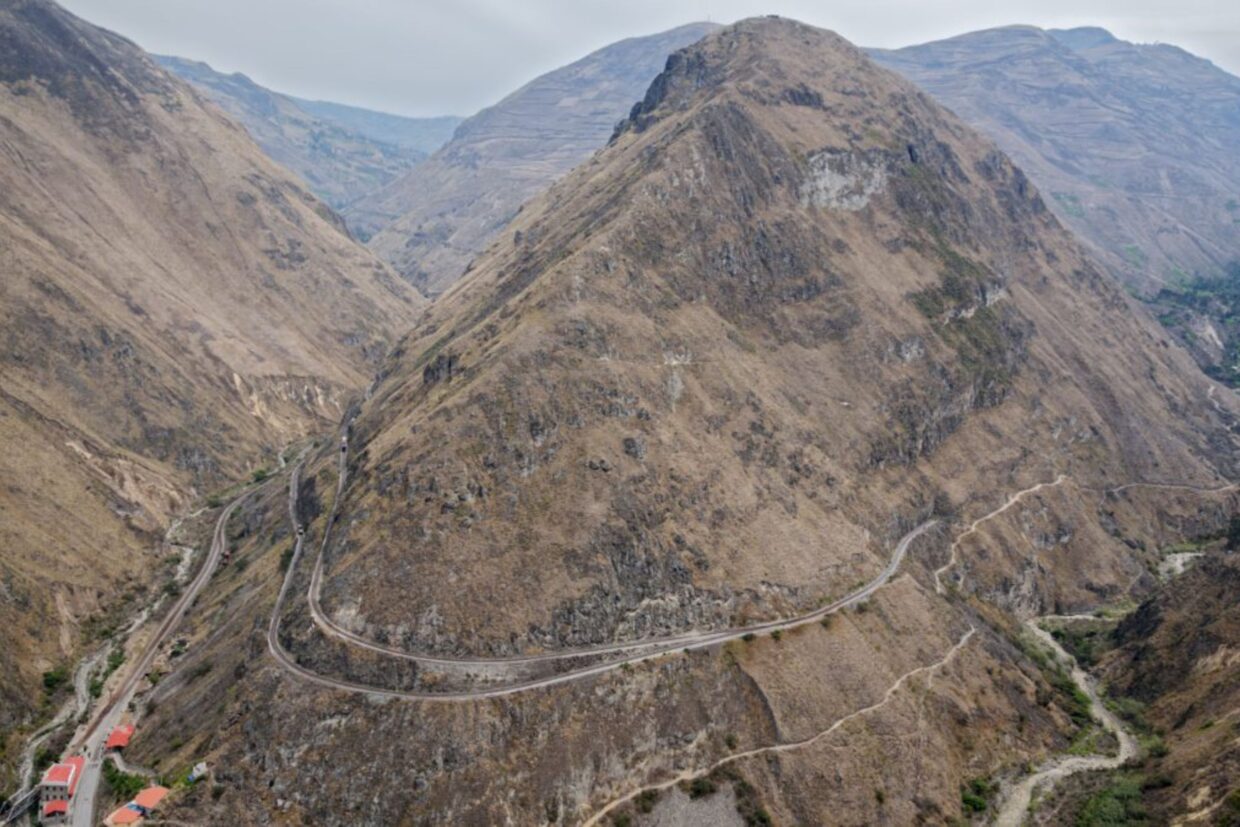
The name tells you everything: Nariz del Diablo. The Devil’s Nose. A near-vertical rock face deep in the Ecuadorian Andes that defeated every railway engineer who looked at it, until 1901, when a team decided the only solution was to cut a series of switchbacks directly into the cliff face, reversing the train up and down in zigzags to descend 500 metres in under 12 kilometres.
Over 4,000 workers built this section. An estimated 2,000 of them died doing it, from landslides, disease, and accidents. The cliff earned its name long before anyone thought of running tourists along it.
Today, the short journey from the charming colonial town of Alausi down to the tiny village of Sibambe is one of the most viscerally exciting train rides in the world. The train hugs sheer cliff faces, doubles back on itself, and delivers views of deep Andean valleys and cloud forest that require no filter and no commentary. At the bottom, passengers are met with a traditional indigenous dance performance before the train reverses back up.
“If the altitude doesn’t give you goosebumps, the route will.”
- Vibe: Historic engineering marvel, white-knuckle Andes, short and completely unforgettable
- Price: From around $30 per person
- Don’t skip: The view from the observation platform at the top of the descent before the first switchback, the drop becomes very real, very fast
- Heads up: Schedules can change and the route has had periods of suspension, verify current operational status before booking
2. The Qinghai-Tibet Railway, China
Route: Xining to Lhasa | Duration: ~22 hours | From: ~$50 hard sleeper
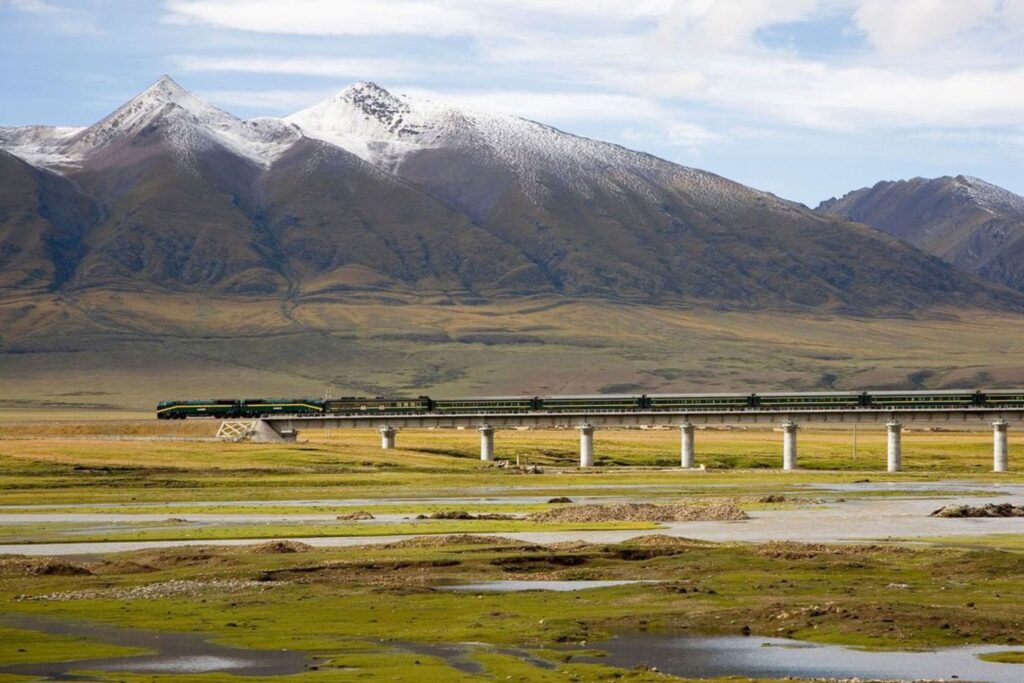
The highest railway on Earth. The tracks reach a maximum altitude of 5,072 metres at Tangula Pass, higher than any point in the Alps, higher than the summit of Mont Blanc, high enough that every single carriage is pressurised and every seat is fitted with its own individual oxygen outlet.
The line took five years and $4.2 billion to build, crossing 550 kilometres of permafrost so unstable that engineers had to develop entirely new construction methods to stop the tracks sinking into it. It opened in 2006 and remains one of the most extraordinary feats of railway engineering ever completed.
The 22-hour journey from Xining crosses the Tibetan Plateau, a vast, high, treeless expanse the colour of old gold, dotted with grazing yaks and bisected by frozen rivers. Above 4,500 metres, altitude sickness is a genuine risk; the oxygen supply is not decorative. The train passes within sight of some of the highest peaks on the planet, arriving in Lhasa with most passengers slightly dazed, both from the altitude and from the scale of what they’ve just crossed.
- Vibe: Engineering impossibility, roof of the world, genuinely other-planetary landscape
- Price: From ~$50 hard sleeper to ~$100+ soft sleeper
- Don’t skip: Booking a bed, not a seat, the journey is 22 hours and the window views at dawn over the plateau are worth being horizontal for
- Heads up: Tibet requires a special permit for foreign visitors in addition to a Chinese visa, arrange both well in advance through an authorised agency
3. The Ghan, Australia
Route: Adelaide to Darwin | Duration: 54 hours | From: AUD $1,599 Gold class
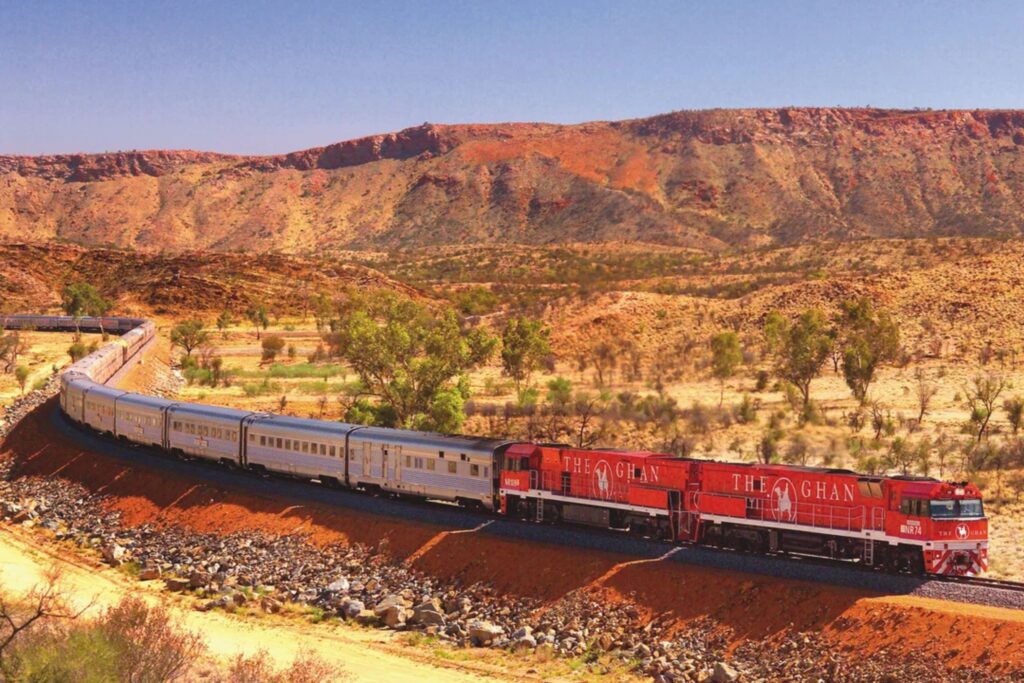
Named after the Afghan cameleers who first pioneered overland routes through Australia’s interior in the 19th century, The Ghan covers 2,979 kilometres from Adelaide in the south to Darwin in the north, crossing the entire continent from bottom to top through some of the most remote, ancient, and visually extreme landscape on Earth.
Red desert plains stretch for hours in every direction. Dry riverbeds appear and disappear. Ancient rock formations emerge from the flat like monuments. The train moves slowly enough that passengers can genuinely absorb the scale and silence of the Australian outback, a landscape that looks, and feels, like somewhere no train should reasonably go.
Gold class includes a private en-suite sleeper cabin and all meals served in the dining car. Off-train excursions at Alice Springs and Katherine Gorge are included in Platinum class, meaning you can step off in the middle of the Red Centre, visit Uluru, and reboard the next day.
“The scale of the outback from a train window is something that photographs simply cannot capture.”
- Vibe: Epic Australian crossing, private cabin, one of the world’s great rail adventures
- Price: From AUD $1,599 per person one-way in Gold class
- Don’t skip: The off-train excursion at Katherine Gorge, ancient red sandstone canyons accessible by boat, one of the most beautiful places in Australia
- Heads up: The Ghan runs year-round but books out months ahead for peak season (April–October), plan accordingly
4. The Jacobite, Scottish Highlands, UK
Route: Fort William to Mallaig | Duration: ~2 hours each way | From: ~£43 return
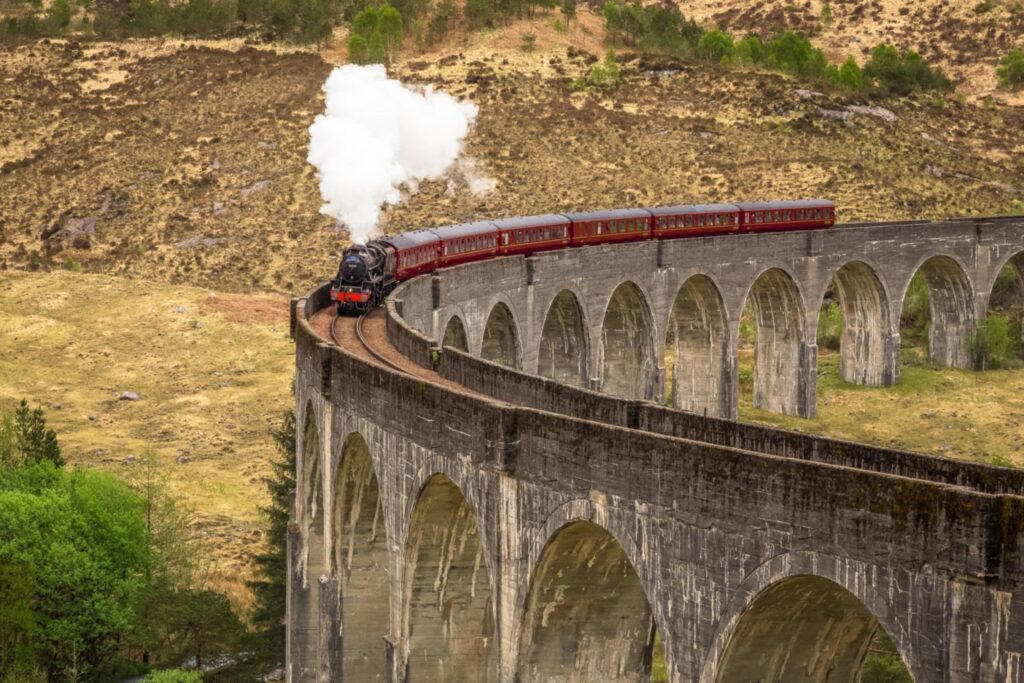
The most cinematic train journey in Britain, and one of the most recognisable rail journeys on Earth, largely because the Glenfinnan Viaduct it crosses is the one a certain steam train uses to reach a certain wizarding school. But the Jacobite earns its place on this list independent of any film franchise.
The West Highland Line winds through some of the most dramatic landscape in Europe: dark lochs, ancient stone viaducts, Rannoch Moor (one of the most hauntingly isolated places in Britain), and the rugged western coast with its views to the Isle of Skye. The steam locomotive adds a particular texture, the smell of coal, the punctuation of the whistle, the way the carriages feel like they belong to a different century.
In autumn, the hillsides turn gold and amber in a way that makes the whole journey feel deliberately composed.
- Vibe: Classic British steam, cinematic Highland scenery, short enough for a day trip
- Price: From ~£43 return
- Don’t skip: The moment the train crosses the Glenfinnan Viaduct, the curve of the structure means you can see the locomotive ahead of you as it crosses, which is exactly as good as it sounds
- Heads up: Booking weeks ahead is essential in summer; the train is enormously popular and seats sell out consistently
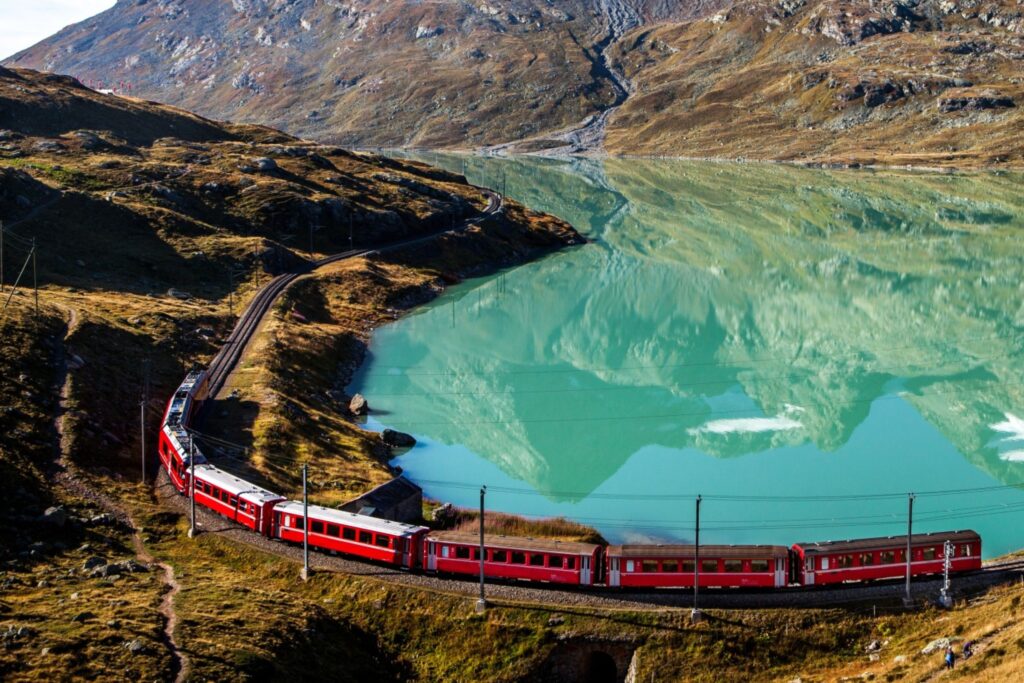
5. Bernina Express, Switzerland to Italy
Route: Chur to Tirano | Duration: ~4 hours | From: ~CHF 65
A UNESCO World Heritage railway that crosses the Alps between Switzerland and northern Italy at over 2,000 metres above sea level, through glaciers, stone viaducts, frozen lakes, and mountain passes that should not, by any logical measure, have a railway running through them.
The Bernina Pass is the crown jewel, the train crosses it on a series of spiral loops and viaducts that required engineers to gain altitude in very small horizontal distances, resulting in some of the most dramatic railway geometry ever built. Panoramic windows stretch nearly floor to ceiling, giving unobstructed front-row views of some of the finest alpine scenery in Europe.
The descent into Italy feels like arriving in a completely different world: the architecture changes, the colours warm, and the mountains give way to Lombardy plains.
“Seeing is believing, no photograph does the Bernina Pass justice.”
- Vibe: Alpine engineering masterpiece, UNESCO listed, Switzerland-to-Italy in one sitting
- Price: From ~CHF 65; rail passes valid with compulsory seat reservation
- Don’t skip: Booking a window seat on the correct side, research which side faces the best views for your direction of travel before booking
- Heads up: Compulsory seat reservations required and sell out in July and August, book months ahead in peak season
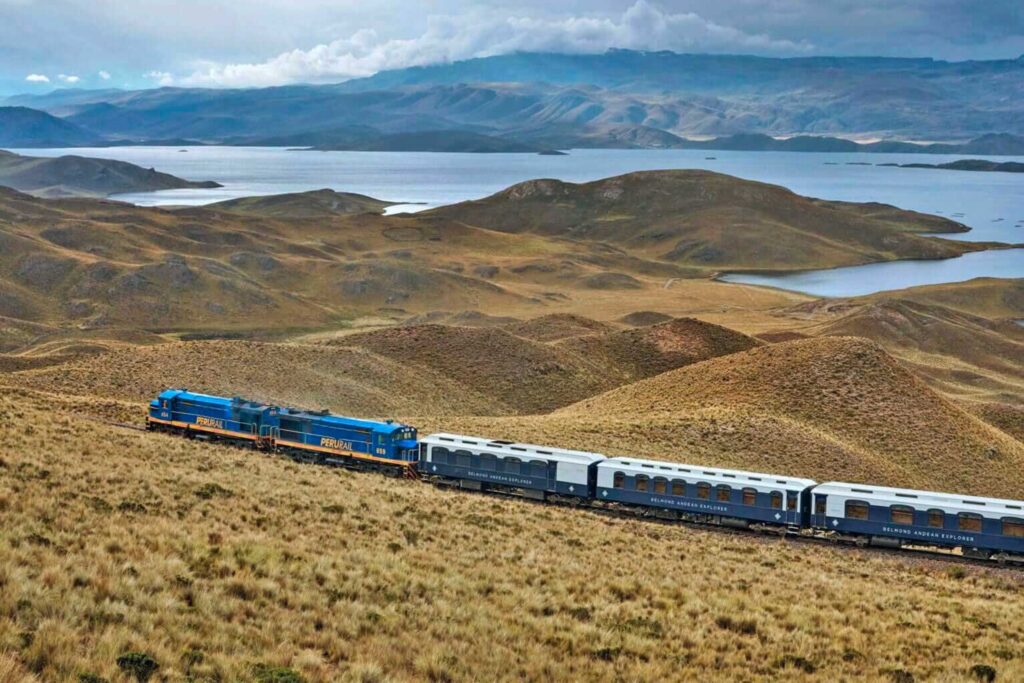
6. Hiram Bingham, Peru
Route: Cusco to Machu Picchu (via Ollantaytambo) | Duration: ~3.5 hours | From: ~$500+
The luxury approach to one of the world’s most famous destinations. Belmond’s Hiram Bingham train runs from Cusco through the Sacred Valley toward Machu Picchu, passing terraced Andean hillsides, cloud forest, and the rushing Urubamba River gorge as it climbs toward Aguas Calientes, the gateway town to the ruins.
The journey includes a four-course lunch, cocktails, and live music aboard the 1920s-style Pullman carriages. It feels like a ceremony, as if the train understands the magnitude of where it’s going and is taking its time accordingly.
For travellers who want the same dramatic Sacred Valley views without the luxury price, PeruRail’s Vistadome service runs the same route with large panoramic windows from around $75 each way.
- Vibe: Andean ceremony, luxury service, one of the world’s most anticipated arrivals
- Price: Hiram Bingham from ~$500+; Vistadome from ~$75 each way
- Don’t skip: The return journey at dusk, the valley changes colour completely in the late afternoon light
- Heads up: This is among the highest-demand rail routes in the world, advance booking is essential year-round, particularly for the Hiram Bingham
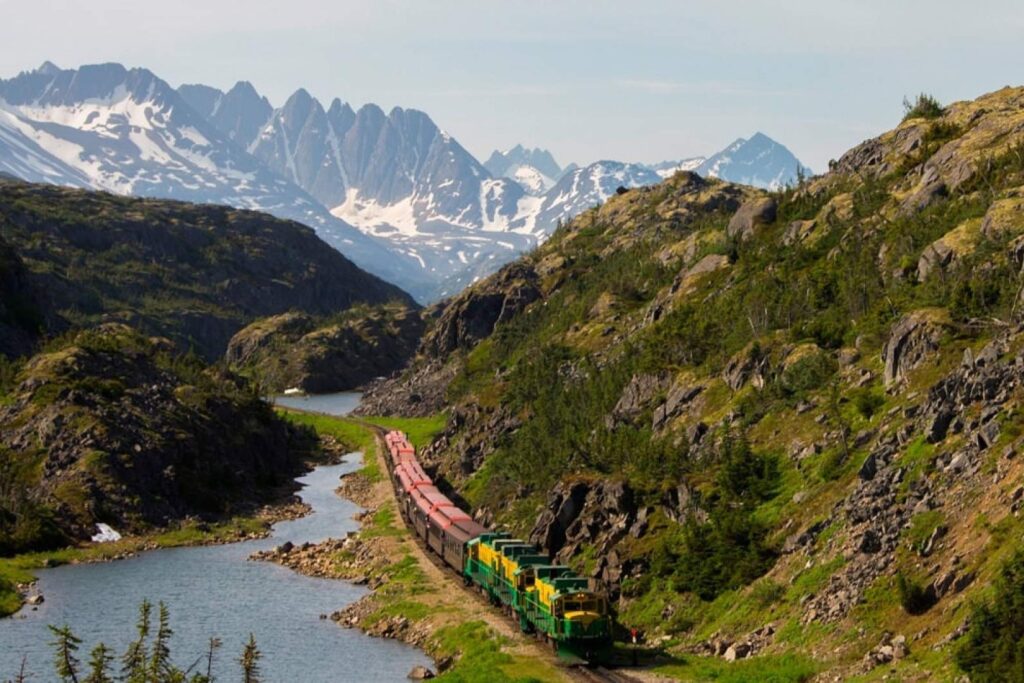
7. White Pass & Yukon Route, Alaska/Canada
Route: Skagway, Alaska to Fraser, British Columbia | Duration: ~3 hours | From: ~$145
Built in 1898 during the Klondike Gold Rush to carry prospectors and their supplies over the Coast Mountains into the Yukon, the White Pass & Yukon Route was constructed at a speed that was almost certainly not safe, 35,000 workers in two years, over terrain so extreme that the routes were nicknamed “Dead Horse Trail” for the pack animals that died on the approach. The railway essentially solved a crisis and saved the Gold Rush.
Today it operates as a heritage railway, running narrow-gauge trains up to 2,900 feet through cliff-hugging tracks, wooden trestle bridges, and dramatic mountain scenery above Skagway’s fjord. The track practically clings to the rock face for much of the climb, at several points there is nothing between the carriage and a very long drop except the rail itself.
- Vibe: Gold Rush history, dramatic cliff-hugging engineering, genuine edge-of-the-world feeling
- Price: From ~$145 per person for the summit excursion
- Don’t skip: Looking back down toward Skagway as the train climbs, the fjord view from altitude is one of the best in Alaska
- Heads up: Seasonal operation, runs May through September only; check the current timetable before planning
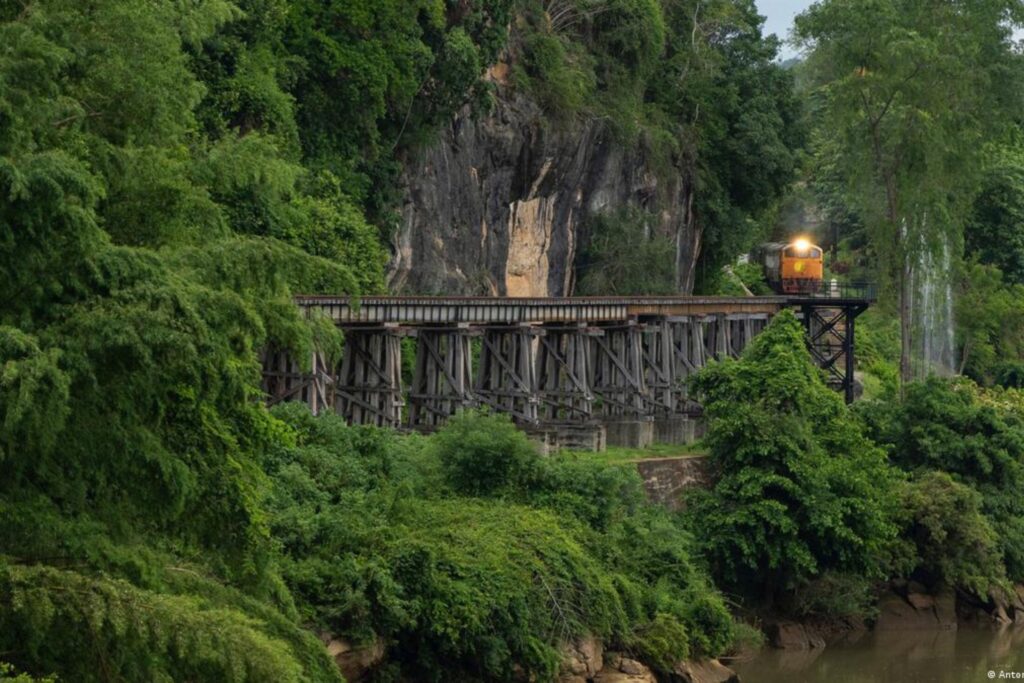
8. Death Railway, Thailand
Route: Bangkok to Nam Tok (via Kanchanaburi) | Duration: ~3.5 hours | From: ~$3
The name is not a marketing choice. The Death Railway was built between 1942 and 1943 by the Imperial Japanese Army using Allied prisoners of war and Asian labourers under conditions of such extreme brutality that an estimated 100,000 workers, including 16,000 Allied POWs, died during its construction. The Bridge on the River Kwai, made famous by the 1957 film, is part of this line.
The train now runs as a regular service from Bangkok through Kanchanaburi, past the famous bridge, through dense jungle, along cliff edges above the River Kwai, and over the dramatic Wampo Viaduct, a wooden trestle structure built on the side of a cliff using hand tools by prisoners under armed guard. The history is woven into every kilometre of track.
This is not a luxury experience. It is a regular Thai train, often crowded and always unhurried, that happens to pass through some of the most historically significant and visually arresting railway scenery in Asia.
“The landscape is beautiful and the history is devastating. Both feel very present at the same time.”
- Vibe: WWII history, jungle, river, three things that should not produce beauty but somehow do
- Price: From around $3 on regular services; organised tour packages available from Kanchanaburi
- Don’t skip: The Wampo Viaduct, the section where the train runs along the cliff face above the river is the most dramatic part of the route
- Heads up: The most scenic sections are beyond the famous bridge; going all the way to Nam Tok rather than stopping in Kanchanaburi is worth the extra time
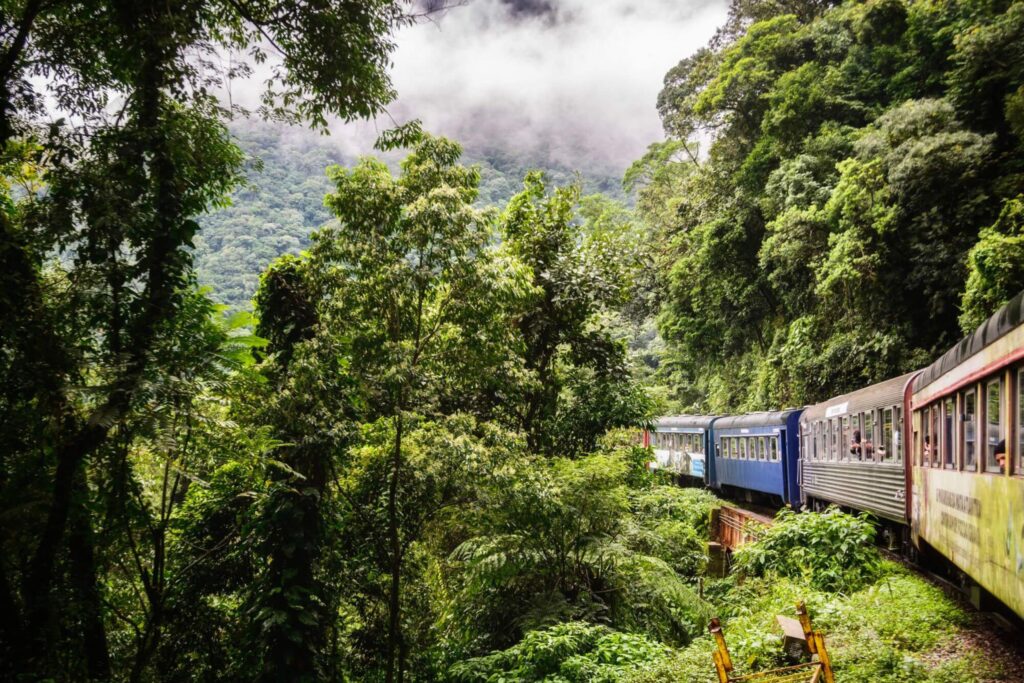
9. Serra Verde Express, Brazil
Route: Curitiba to Morretes | Duration: ~3.5 hours | From: ~$25 economy
A half-day journey from the architecturally bold city of Curitiba down through the Serra do Mar mountains to Morretes on Brazil’s Paraná coast, dropping 900 metres in altitude through some of the most lush, dense, and dramatic tropical rainforest in South America.
Thirty bridges. Fourteen tunnels. Deep canyons, jagged peaks, and waterfalls close enough to the track that the spray reaches the windows. The train moves slowly enough that the scenery never blurs, it unfolds in the specific unhurried way that only rail can deliver.
At the bottom, Morretes is famous for barreado, a slow-cooked meat stew that has been the town’s signature dish for centuries, served in every restaurant along the main street after the train arrives.
- Vibe: Brazilian jungle drama, genuinely tropical, great food at the other end
- Price: From ~$25 economy; panoramic class higher
- Don’t skip: The barreado lunch in Morretes before the return journey or bus back
- Heads up: The train is one-way downhill only; the return to Curitiba is by road, factor this into the day’s logistics
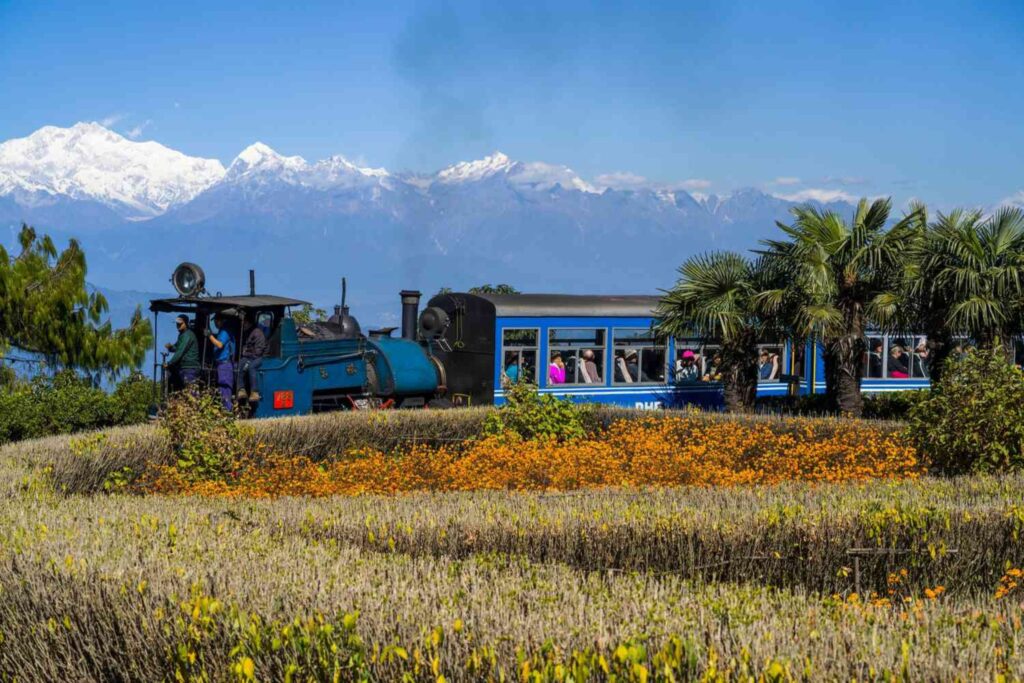
10. Darjeeling Himalayan Railway, India
Route: New Jalpaiguri to Darjeeling | Duration: ~7 hours | From: ~INR 1,500 for the steam joyride
A UNESCO World Heritage railway that has been running since 1881, climbing 2,000 metres through tea plantations, Himalayan foothills, and small Bengali towns to the hill station of Darjeeling, with, on a clear morning, views of Kangchenjunga, the world’s third highest mountain, from the carriage window.
The famous “toy train” is a narrow-gauge steam locomotive that moves slowly enough for locals to use as a commute, stepping on and off as it passes through town. The full 7-hour journey from New Jalpaiguri is an experience in patience and reward; the 2-hour steam joyride from Darjeeling itself runs twice daily and is the accessible version for most visitors.
- Vibe: Colonial-era steam, Himalayan foothills, tea country, one of India’s great slow journeys
- Price: Steam joyride from ~INR 1,500; full route from ~INR 400 in non-AC
- Don’t skip: Departing Darjeeling at dawn for the best chance of clear Himalayan views
- Heads up: The full journey from New Jalpaiguri takes 7 hours, the steam joyride from Darjeeling is the more practical option for most visitors
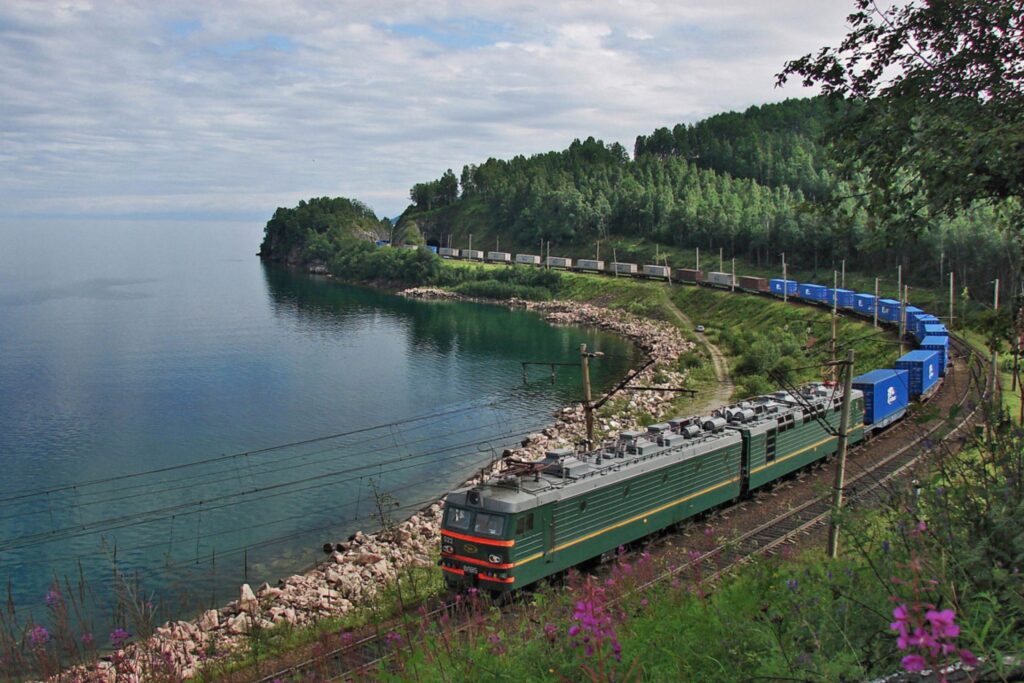
11. Trans-Siberian Railway, Russia
Route: Moscow to Vladivostok | Duration: ~6 days non-stop | From: ~$150 Platzkart
⚠️ 2026 Travel Advisory: As of 2026, Western governments, including the UK, US, EU, and Australia, advise against all travel to Russia due to the ongoing war in Ukraine and the risk of arbitrary detention. Western bank cards do not function in Russia. Check your government’s current travel advisory before making any plans. This entry is included because the journey itself is one of the great rail adventures of human history, but it requires honest acknowledgment of the current reality.
9,289 kilometres. Eight time zones. Six days of unbroken birch forest, Siberian steppe, and the southern shore of Lake Baikal, the deepest lake on Earth, rolling past your window at a steady 80 kilometres per hour.
The Trans-Siberian is not dramatic in the way that the Devil’s Nose or the Qinghai-Tibet Railway are dramatic. Its drama is cumulative and vast, the slowly dawning comprehension of how large Siberia actually is, how long a birch forest can continue before it shows any sign of ending, how many time zones a single country can contain. By day three, the scale of Russia becomes a physical feeling rather than an intellectual concept.
Platzkart (open-plan third class) is the most social and authentic way to travel, shared bunks, shared food, shared life for six days. The journey becomes, for most people who do it, one of the most unexpectedly human experiences of their lives.
- Vibe: The longest train journey on Earth, vast, cumulative, life-changing
- Price: From ~$150 Platzkart (open berth); ~$300+ for private Kupé compartment
- Don’t skip: Lake Baikal, the train runs along its southern shore for hours; the lake is so large it looks like an ocean
- Heads up: Check your government’s current travel advisory before making any plans in 2026
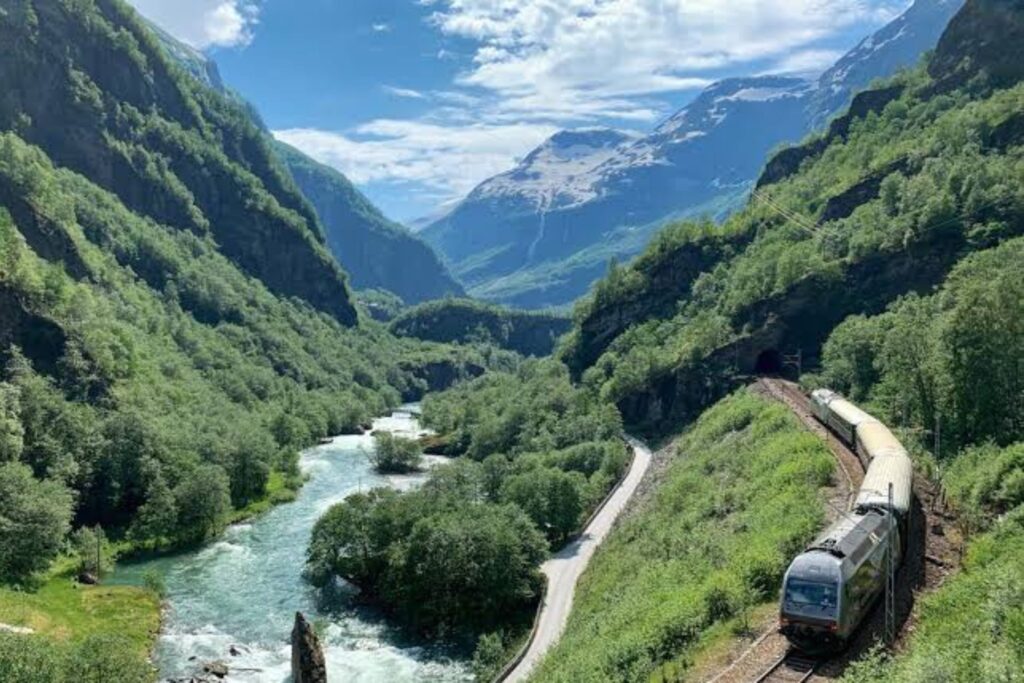
12. Flåm Railway, Norway
Route: Myrdal to Flåm | Duration: ~1 hour | From: ~€38
One of the steepest standard-gauge railway lines in the world, descending 863 metres in 20 kilometres through Flåmsdalen valley, past waterfalls, snow-capped peaks, and the kind of Norwegian fjord scenery that seems specifically designed to make everyone on board stop talking simultaneously.
The train descends so steeply that 80% of the braking system is dedicated solely to preventing it from going too fast, a detail the guides share with visible pride. The journey stops briefly at Kjosfossen waterfall, where passengers disembark to stand beside the water before reboarding for the final descent into Flåm.
The Flåm Railway connects naturally with a fjord cruise on the Nærøyfjord, a UNESCO World Heritage site, making it an easy and spectacular day circuit from Bergen.
“The gradient of the descent is something you feel in your body, not just see through the window.”
- Vibe: Dramatic Norwegian descent, short and spectacular, easy to combine with Bergen
- Price: From ~€38; Norway in a Nutshell packages available
- Don’t skip: The Nærøyfjord cruise from Flåm, the fjord is even more dramatic from the water
- Heads up: One of Norway’s most popular tourist experiences, book ahead in summer
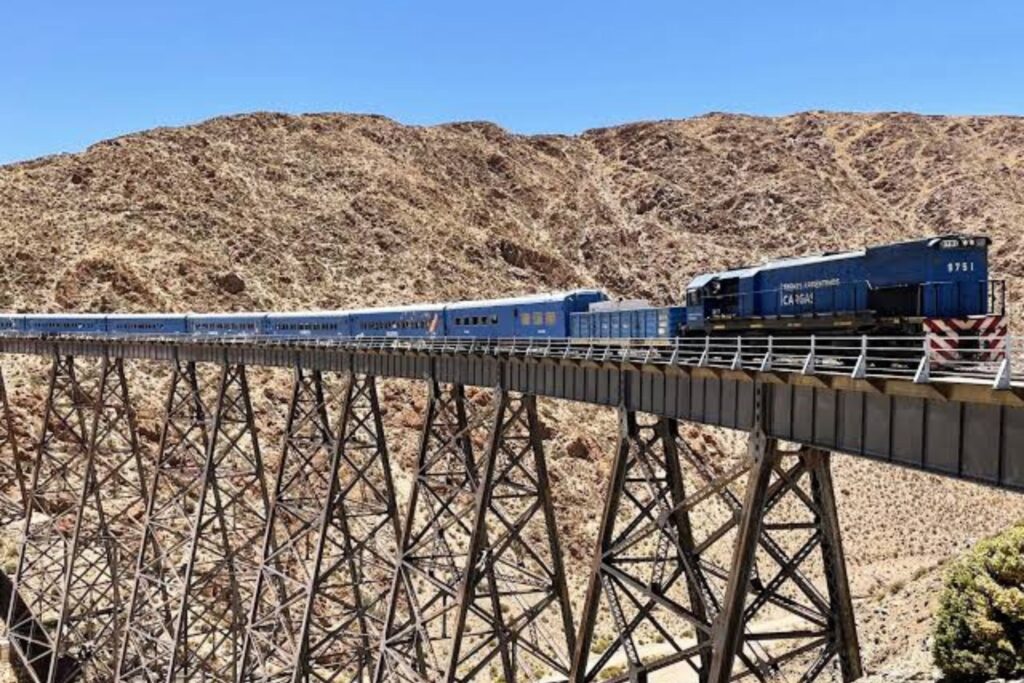
13. Tren a las Nubes, Argentina
Route: Salta to Polvorillo viaduct | Duration: ~Full day | From: ~$60
The Train to the Clouds. Built over 27 years and completed in 1948, the Tren a las Nubes climbs from the city of Salta at 1,187 metres to the La Polvorilla viaduct at 4,220 metres, crossing 21 tunnels, 13 major bridges, 2 zigzags, and 2 spirals through the Andes, in a route so complex that the train has to physically reverse direction multiple times to keep gaining altitude.
The La Polvorilla viaduct is the destination: a steel bridge 224 metres long and 63 metres high, spanning a desert canyon at over 4,000 metres altitude, where the air is thin enough that altitude sickness is a genuine consideration and the sky is an unnerving shade of deep blue.
Passengers regularly describe the arrival at the viaduct as one of the most disorienting and beautiful moments of their lives: standing on a narrow bridge in the Andes at the height of a European mountain summit, surrounded by nothing but sky and rock.
- Vibe: Argentine high-altitude engineering, genuinely breathtaking, demands physical acclimatisation
- Price: From ~$60 per person
- Don’t skip: Spending at least two nights in Salta before the journey, acclimatising to the altitude before the ascent makes a significant difference to how you feel at the viaduct
- Heads up: The extreme altitude means altitude sickness is a real risk; carry medication and go slowly
Quick comparison
| Journey | Country | Duration | From | Best for |
|---|---|---|---|---|
| Devil’s Nose | Ecuador | 2.5 hrs | ~$30 | Short, terrifying, historic engineering |
| Qinghai-Tibet Railway | China | 22 hrs | ~$50 | Highest railway on Earth |
| The Ghan | Australia | 54 hrs | ~AUD $1,599 | Epic outback crossing |
| The Jacobite | Scotland | 2 hrs | ~£43 | Cinematic Highlands, steam locomotive |
| Bernina Express | Switzerland/Italy | 4 hrs | ~CHF 65 | UNESCO Alpine scenery |
| Hiram Bingham | Peru | 3.5 hrs | ~$500+ | Luxury approach to Machu Picchu |
| White Pass & Yukon | Alaska/Canada | 3 hrs | ~$145 | Gold Rush history, cliff-edge tracks |
| Death Railway | Thailand | 3.5 hrs | ~$3 | WWII history, jungle, river |
| Serra Verde Express | Brazil | 3.5 hrs | ~$25 | Tropical rainforest descent |
| Darjeeling Toy Train | India | 7 hrs / 2 hrs | ~INR 1,500 | UNESCO steam railway, tea country |
| Trans-Siberian | Russia | 6 days | ~$150 | The world’s longest train journey* |
| Flåm Railway | Norway | 1 hr | ~€38 | Steepest descent, fjord connection |
| Tren a las Nubes | Argentina | Full day | ~$60 | 4,000m altitude viaduct in the Andes |
*Check government travel advisories before planning Russia travel in 2026.
Can’t do the full journey? Try these instead
- Devil’s Nose not running? The Ecuadorian rail network has had intermittent closures, the Urbina section offers a high-altitude alternative with Andean scenery and occasionally visible snow.
- Hiram Bingham out of budget? PeruRail’s Vistadome runs the same Sacred Valley route with panoramic windows from ~$75 each way, the scenery is identical.
- The Ghan fully booked? The Indian Pacific, also operated by Journey Beyond, crosses Australia from Sydney to Perth in 65 hours, a different direction, equally vast, equally Australian.
If you only take one
- For the purest shot of drama in the shortest time: Devil’s Nose, Ecuador
- For the journey that changes how you understand a country: The Ghan, Australia
- For the train journey that changes how you understand the world: The Qinghai-Tibet Railway, China