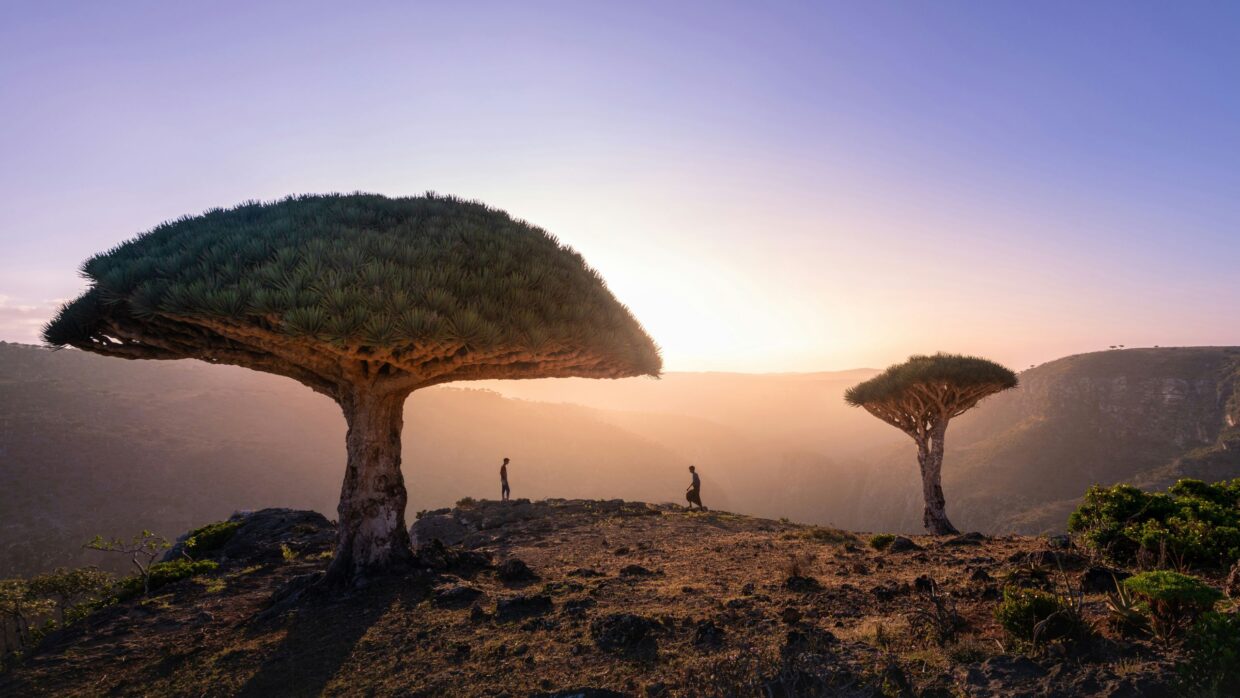
There is an island in the Arabian Sea where trees look like giant inside-out umbrellas, their canopies perfectly flat and spread wide, growing from trunks the colour of old bone. When you cut them, they bleed red. The island has been isolated from the African and Arabian landmasses for approximately 18 million years, during which time evolution operated entirely on its own terms. The result is a place where 37 percent of plant species, 90 percent of reptile species, and 95 percent of snail species exist nowhere else on Earth.
The island is called Socotra. It belongs to Yemen. It looks like nowhere else on the planet.
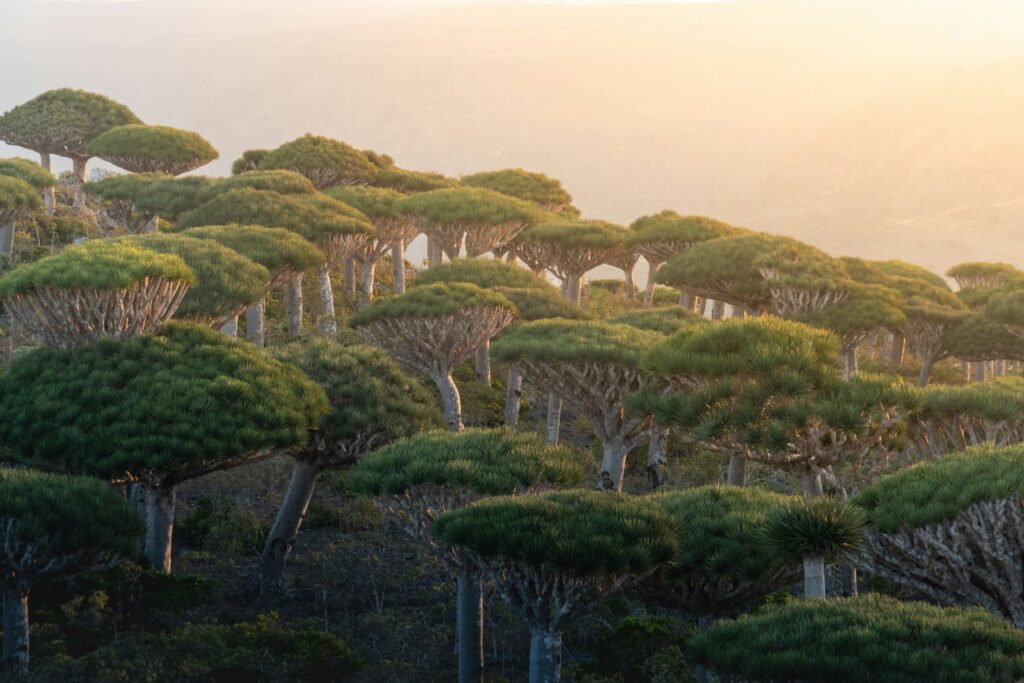
The dragon blood trees (Dracaena cinnabari) are the image most people have seen: flat-topped, umbrella-shaped, growing in dense groves across the limestone plateaus of the interior, red sap oozing from any wound in the bark. They have been used for centuries as dye, medicine, and varnish, mentioned in ancient Greek, Roman, and Arab texts. Standing among them on the Dixam Plateau, surrounded by hundreds of these impossible shapes against a sky that seems too blue for the context, is one of those rare experiences where the reality significantly exceeds the photographs.
This guide explains what Socotra actually is, what you would find there, and the honest, current situation regarding travel there in 2026.
The honest travel advisory situation
This section comes first because it would be irresponsible to bury it.
Socotra is part of Yemen. Yemen is currently subject to “do not travel” advisories from the UK Foreign, Commonwealth and Development Office, the US State Department, the Australian Department of Foreign Affairs (Smartraveller), and most other Western governments. The US State Department specifically names Socotra in its advisory and warns that some tour operators offer unofficial or invalid visas.
These advisories exist because of the ongoing civil war on mainland Yemen, which has been running since 2015 and remains active in 2026. They are not performative. The situation on the mainland is genuinely dangerous.
Socotra is, however, geographically separate from the mainland: the island sits approximately 380 kilometres south of mainland Yemen and approximately 240 kilometres east of Somalia, in the Arabian Sea. It has no land connection to the mainland. The conflict on the mainland has not extended to Socotra, which has received tourists continuously throughout the conflict period without incidents of violence against foreign visitors. The island’s security is currently overseen by UAE and Saudi Arabian coalition forces, who maintain a stabilising presence.
In January 2026, all flights to and from Socotra were temporarily suspended for several days following intensified clashes on the Yemeni mainland. The island itself was entirely unaffected; stranded guests were cared for by local operators. Flights resumed. This episode is the closest the mainland conflict has come to disrupting tourism on Socotra in recent years, and it disrupted logistics, not safety.
Approximately 6,000 visitors travel to Socotra annually. The overwhelming majority report no safety incidents.
The position of this post is neither to minimise the official advisories nor to dismiss the experience of the thousands of people who visit safely each year. The advisories are real and must be respected. The gap between the advisory and the on-the-ground reality is also real and is widely documented. Every reader must make their own decision, check their own government’s current advisory, and ensure they have appropriate travel insurance before making any plans.
Travel insurance for Socotra requires specialist providers. Most standard policies do not cover Yemen. IATI and SafetyWing’s Nomad Insurance are currently cited by experienced Socotra visitors as policies that cover the island. Verify current coverage directly with any provider before booking.
What the island actually is
Socotra is the largest island in the Socotra Archipelago, which also includes the smaller islands of Abd al Kuri, Samhah, and Darsa. The main island is approximately 3,600 square kilometres, roughly the size of Corsica. The capital is Hadibo, a small city on the northern coast where the airport is located.
The island received UNESCO World Heritage status in 2008 for its extraordinary biodiversity, often described as the “Galapagos of the Indian Ocean.” The comparison is instructive but incomplete: Socotra’s endemism is more extreme than the Galapagos in several categories. Over 700 endemic species exist here and nowhere else. The island has been evolving in isolation since before the Himalayas reached their current height.
The Socotri people have their own language (Socotri, an unwritten South Semitic language with no standard written form), their own traditions, and a culture that developed largely separately from both Yemeni and African influences. They are described universally by visitors as exceptionally hospitable. The local economy is built around fishing, livestock herding, and increasingly tourism.
There are no luxury hotels in Socotra. There is no nightlife, no tourist strip, no airport duty-free. The island has limited electricity, intermittent internet connectivity, and roads that range from adequate to optimistic. All of this is the context in which its extraordinary landscape exists, and the context is part of the experience.
The landscape
Dragon Blood Trees (Dixam Plateau)
The most famous and most otherworldly feature of the island. The Dixam Plateau in the interior of Socotra, at around 800 metres above sea level, is where the densest groves grow. Getting there involves a drive along mountain roads that reward the journey: the plateau opens progressively to reveal the trees emerging from the limestone in increasing density, their flat canopies creating a cathedral-like quality in the afternoon light.
The trees grow slowly and live for hundreds of years. Their umbrella shape is not coincidental: it is an evolutionary adaptation to collect moisture from sea mist, channelling water down the branches and trunk to the roots in an environment where rainfall is scarce and seasonal. The red resin that gives them their name has been traded internationally since antiquity, appearing in ancient Greek medical texts and Roman records of the spice trade. It is still used locally today.
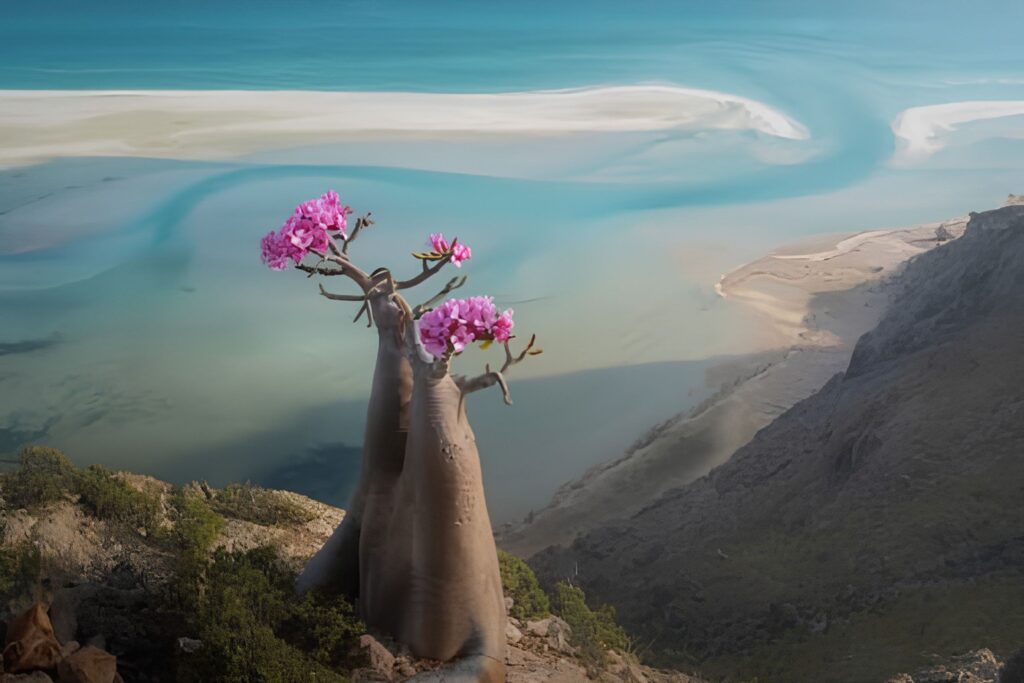
Desert Rose Trees (Adenium obesum socotranum)
The second most visually extraordinary plant on the island, found growing directly from bare rock across the drier parts of the interior. The Desert Rose stores water in a swollen, bottle-shaped trunk, often growing from a crack in a boulder with no apparent soil. In flowering season (primarily spring) the canopy produces deep pink flowers against the grey limestone, creating a contrast that looks deliberately staged.
Detwah Lagoon and Qalansiyah Beach
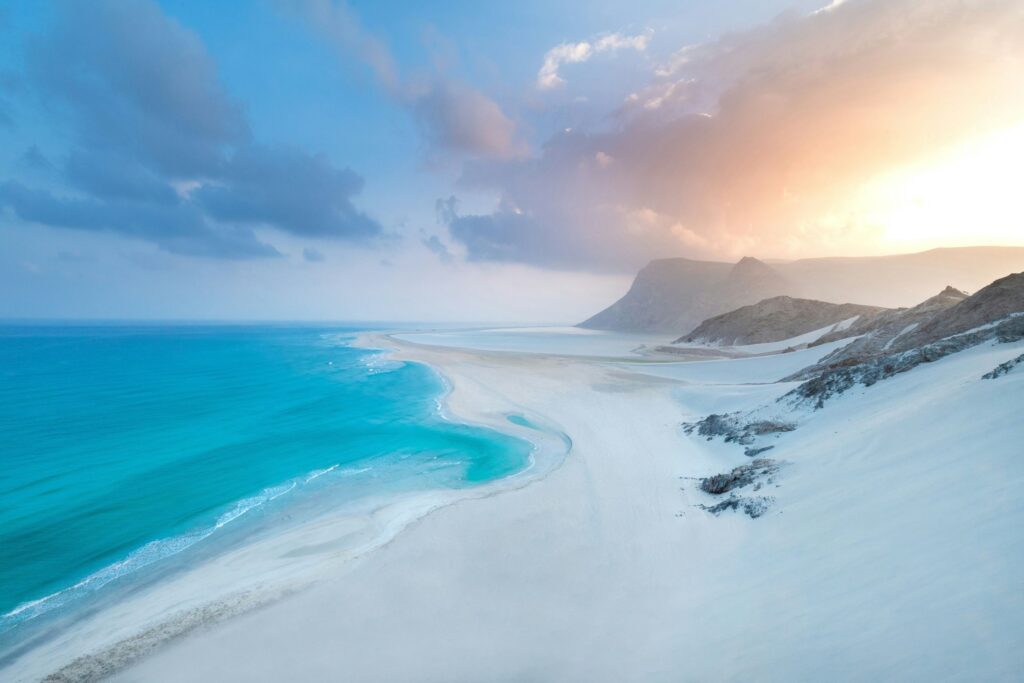
On the western coast, Detwah Lagoon is a sheltered body of turquoise water separated from the Arabian Sea by a narrow sand spit. The beach at Qalansiyah, adjacent to the lagoon, is consistently described as one of the most beautiful beaches in the world by visitors who have also been to the Maldives, Bali, and the Philippines. It is entirely undeveloped. No resorts. No infrastructure. White sand, turquoise water, and the occasional fishing boat.
Arher Beach and Dunes
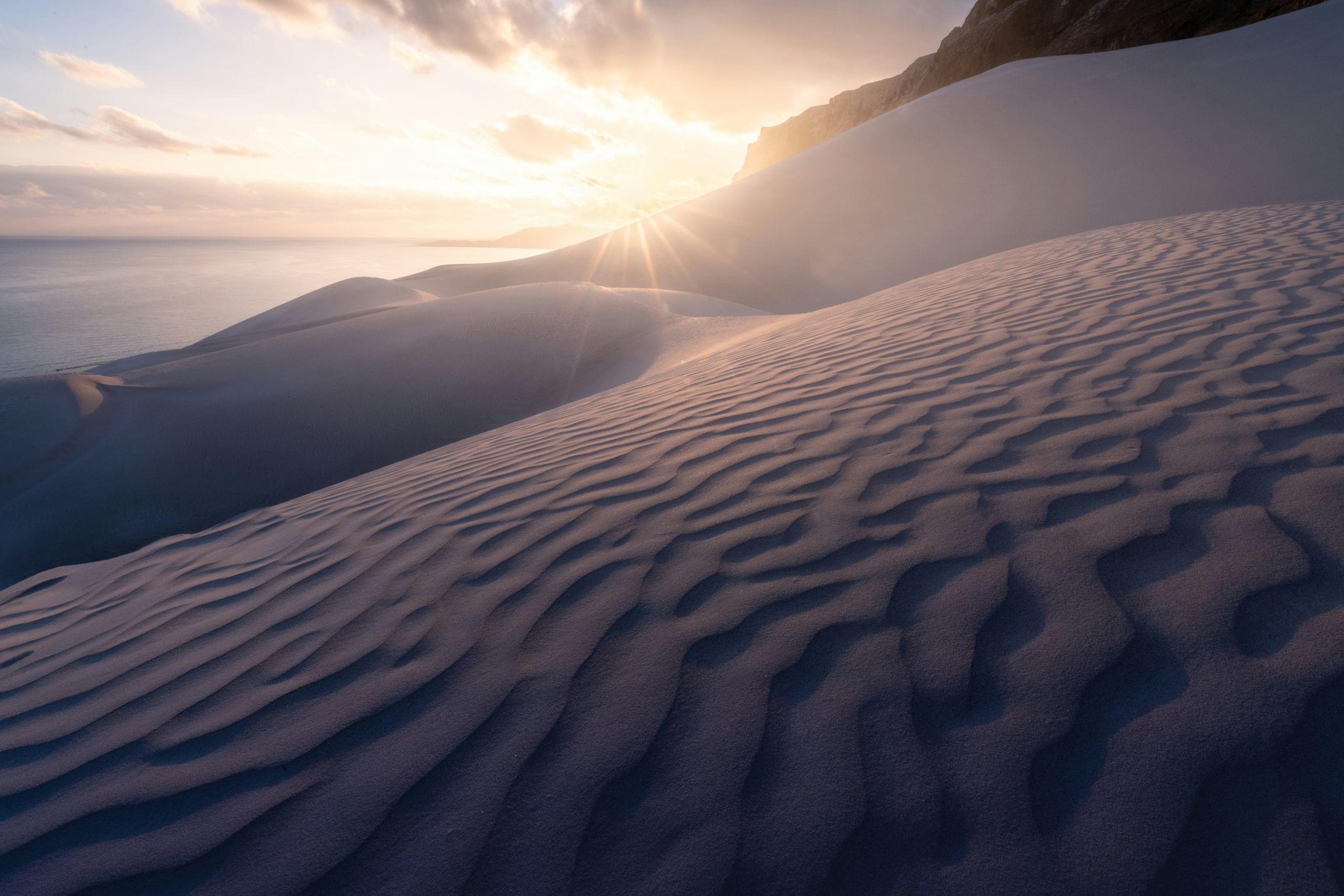
On the northeastern coast, Arher combines a significant sand dune system (rare on an island this size) with a beach where freshwater springs emerge directly from the base of the dunes into the sea, creating an unusual mix of temperatures in the water. It is the most visited single site on the island and is considered by experienced guides to be getting somewhat busy by Socotra standards, which means you might see a dozen other groups rather than none.
Hoq Cave
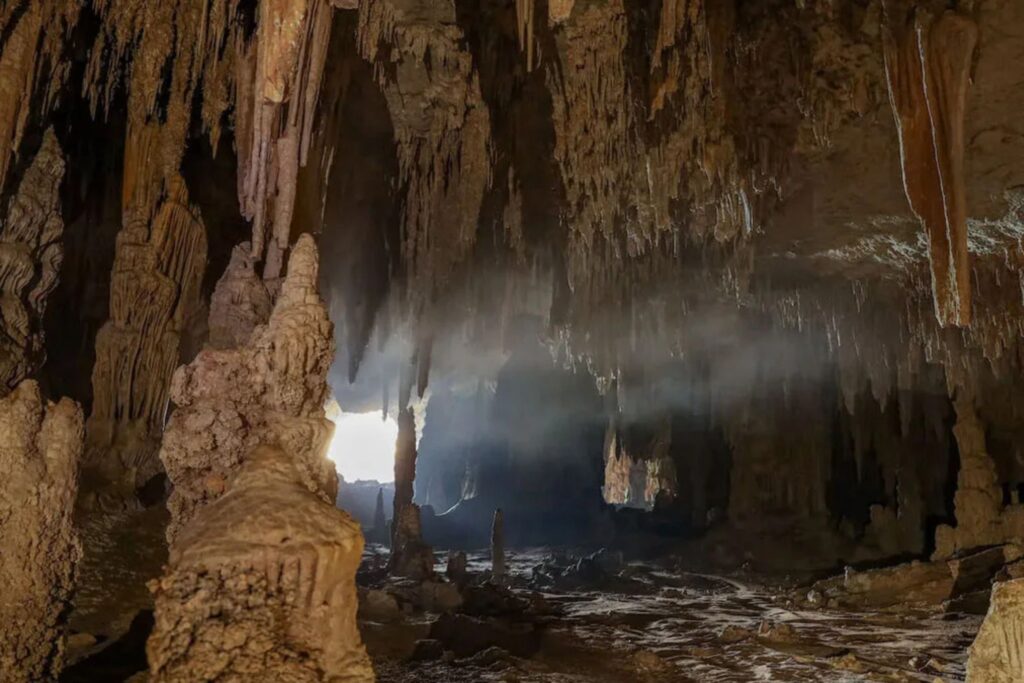
A cave system in the northeast of the island, reached by a three to four-hour round-trip hike up a mountain trail. The cave interior contains stalactites and stalagmites of significant size, ancient inscriptions in multiple scripts (including South Arabian, Indian, and Ethiopian writing from traders who sheltered here over centuries), and a ceiling so high in the main chamber that the top disappears in the darkness. It has been described as one of the most extraordinary cave systems accessible to tourists anywhere in the world. Bring a torch and proper footwear.
Haghier Mountains
The island’s interior mountains rise to nearly 1,500 metres and create a microclimate that sustains a completely different ecosystem from the coastal plains. Dense cloud forest in the higher elevations supports species found nowhere else, including multiple endemic bird species. Hiking in the Haghier Mountains is for experienced trekkers, involves rough terrain and no marked trails, and should be done with a local guide.
Stero Beach and the Frankincense Trees
Socotra is also home to the Boswellia tree, the source of frankincense. The Boswellia socotrana is an endemic species found only on the island, growing from rocky terrain in the interior. The combination of dragon blood trees, frankincense trees, and desert roses in the same landscape is found nowhere else in the world.
How to get there
Independent travel to Socotra is extremely difficult and is not recommended. All visitors must be sponsored by a licensed Socotri tour operator, who arranges the visa, accommodation, transport, guides, and all logistics on the island. This is not bureaucratic obstruction; it is the practical reality of a destination with no tourist infrastructure.
The main flight route in 2026:
The most reliable current route is via Jeddah, Saudi Arabia. Yemenia Airways operates one weekly flight between Jeddah and Socotra Airport (SCT) in Hadibo, departing Jeddah on Tuesdays and arriving the same day. A Saudi transit e-visa is required for this route and is straightforward to obtain online.
A second route via Abu Dhabi with Air Arabia operates approximately twice weekly, though availability varies with regional conditions.
A third route via Cairo with a stopover in Aden (mainland Yemen) exists but requires a separate Yemen mainland visa and involves transit through an active conflict zone, and is not recommended.
Private dhow charter from Salalah in southern Oman is available through certain operators as an alternative to flying.
Booking a tour:
Reputable operators currently running legal, licensed tours to Socotra include:
- Traveling Socotra (travelingsocotra.com)
- Against the Compass (againstthecompass.com), known for small group expeditions
- CultureRoad Travel (cultureroadtravel.com)
- Socotra Island Expeditions (socotraislandexpeditions.com)
- Socotra Exclusive Tours
All handle visa arrangements, flights from the gateway city, accommodation, meals, local transport, and guides as part of a package. Tours typically run 7 to 10 days aligned with flight schedules. Prices generally run $1,500 to $3,000+ per person depending on the operator, group size, and duration.
The visa:
A Socotra-specific visa (valid only for the island, not mainland Yemen) is arranged by the tour operator and issued on arrival. The official fee is $200 USD. It is not possible to self-arrange a Socotra visa without operator sponsorship. The US State Department’s warning about unofficial visas is directed at operators who claim to offer Socotra visas without proper authorisation from the Republic of Yemen government.
When to go
October to April is the optimal window. The summer monsoon (June to September) brings extremely strong winds from the southwest that make boat travel around the island impossible and ground transport difficult in exposed areas. The monsoon is what has kept Socotra isolated for millennia, and it still effectively closes the island to visitors for several months each year.
October to December and February to April are the most popular months, with October to December generally offering calmer conditions and slightly lower visitor numbers. January can bring occasional flight disruptions linked to mainland weather patterns.
December has historically been considered wetter, though experienced guides note that December tours run without significant issues in most years.
What to expect on the ground
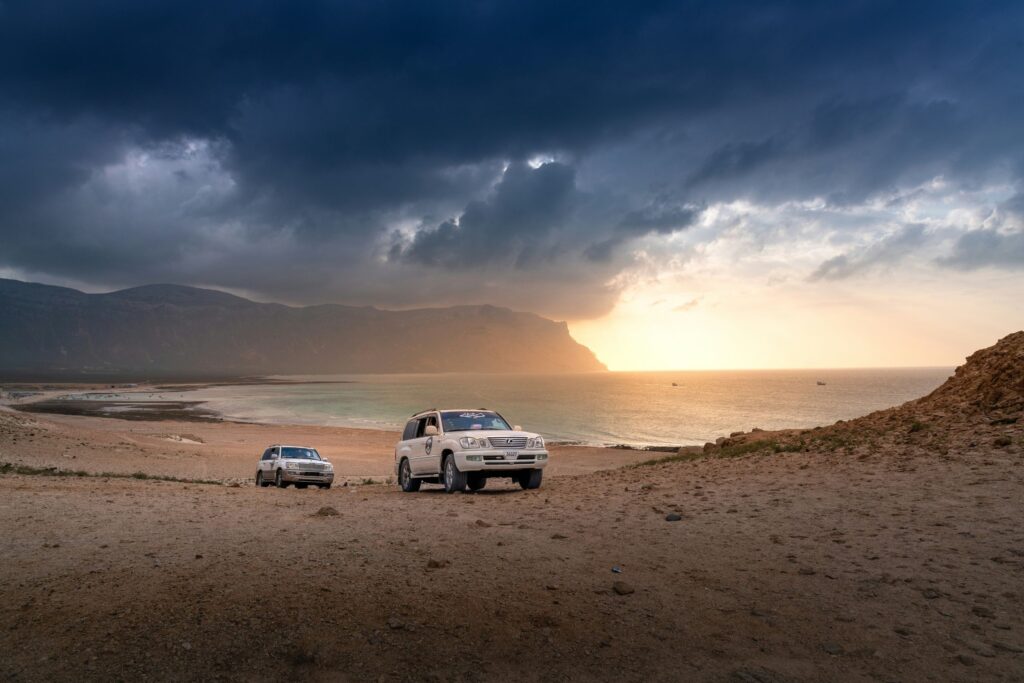
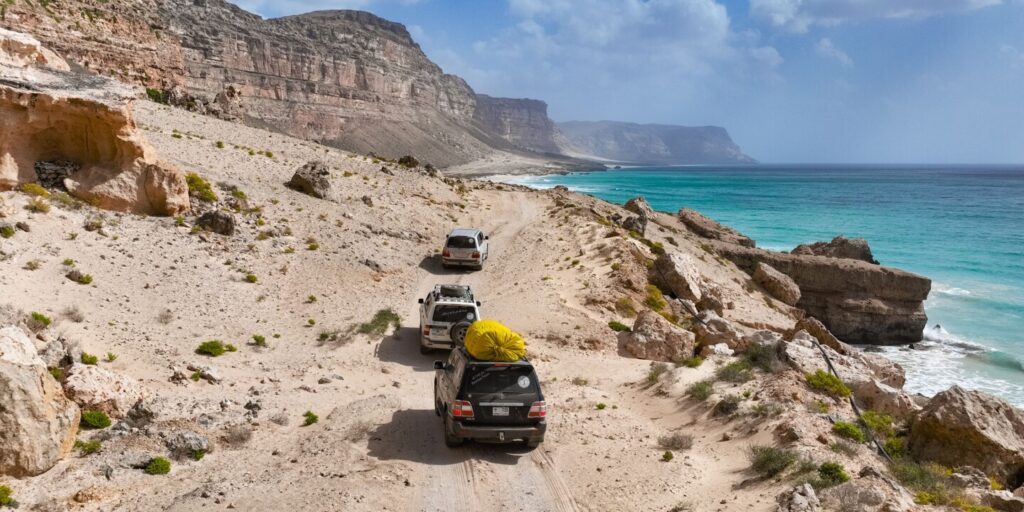
Tours are structured around 4×4 vehicle transport between sites, camping or simple guesthouses at night, and meals prepared by a local cook who travels with the group. The food is simple: grilled fish, rice, flatbreads, fresh fruit. It is consistently described as delicious, particularly the fish, which comes directly from the waters the road runs alongside.
Accommodation ranges from tents on beaches to basic concrete guesthouses with beds and fans. No air conditioning. Limited electricity, though solar is increasingly common in guesthouses. Mobile internet exists in Hadibo but is patchy elsewhere.
The pacing is unhurried. Socotra is not a destination that rewards rushing. The best experiences come from slow mornings on empty beaches, long drives through the interior, and evenings around fires with guides who know the island’s history and ecology in detail.
The guides are the underappreciated element. Socotri guides speak Socotri, Arabic, and often some English, and carry knowledge of the landscape, flora, and fauna that no guidebook replicates. Several are also accomplished naturalists with deep expertise in the island’s endemic species. Tipping generously is standard practice and makes a direct economic difference.
Practical notes
Cash only. There are no ATMs on Socotra. US Dollars are the standard currency and are widely accepted. Euros are generally not accepted. Bring enough cash for tips, handicrafts, and any additional personal expenses. Guides and drivers typically receive $10 to $20 USD per day in tips; cooks similarly.
Travel insurance requires specialist providers for Yemen. IATI and SafetyWing’s Nomad Insurance are the two most consistently recommended. Verify current coverage directly before booking and ensure medical evacuation is included. The nearest adequate medical facilities are in Aden or Abu Dhabi.
Drone rules are informal rather than formally regulated, but asking your guide before flying anything is essential. Several operators specifically mention drones as useful for photography given the landscape.
Reef-safe sunscreen is recommended for any snorkelling. The coral around Socotra is largely pristine and worth protecting.
Connectivity is limited to basic WhatsApp-level messaging in most areas. Build your itinerary around the assumption of being largely offline.
Physical fitness is not a requirement for most of the standard tour itinerary, but the Hoq Cave hike and Haghier Mountain treks are serious undertakings requiring reasonable fitness and proper footwear.
The thing about being there
Every account of Socotra, from every kind of traveller, contains the same element: the moment of genuine disorientation when the landscape stops making sense by the standards of anywhere else on Earth.
It is not the individual elements. Dragon blood trees are extraordinary on their own, and the beaches are extraordinary on their own. It is the combination of all of it in one place: the trees on the plateau, the desert roses growing from bare rock, the frankincense in the valleys, the empty white beach at the bottom of the dunes, the freshwater springs emerging from the sea, the cave with inscriptions from traders who passed through two thousand years ago. Each element belongs to a different place. Together they belong only to Socotra.
The 18 million years of isolation produced something that has no category. You are not in the Middle East. You are not in Africa. You are in a place that has been quietly doing its own thing since before the Alps existed, and the result is a living museum of what the world looked like before humans reorganised most of it.
Around 6,000 people see it each year. For now, that number is low enough that Socotra still feels like a discovery.
The essentials
- Location: Arabian Sea, 380km south of mainland Yemen, 240km from Somalia
- UNESCO status: World Heritage Site since 2008
- Annual visitors: Approximately 6,000
- How to visit: Licensed tour operator required for visa and logistics
- Main flight route: Jeddah (Saudi Arabia) to Socotra, weekly via Yemenia Airways
- Tour duration: 7 to 10 days (aligned with flight schedules)
- Tour cost: $1,500 to $3,000+ per person all-inclusive
- Best season: October to April
- Travel advisory: Do not travel advisories in place from UK, US, Australian, and most Western governments. Check your own government’s current advisory before making any plans.
- Travel insurance: Specialist coverage required; standard policies do not cover Yemen
- Currency: US Dollars cash only; no ATMs on the island
Some links in this post are affiliate links. If you book through them, flight.now earns a small commission at no extra cost to you. Learn more here