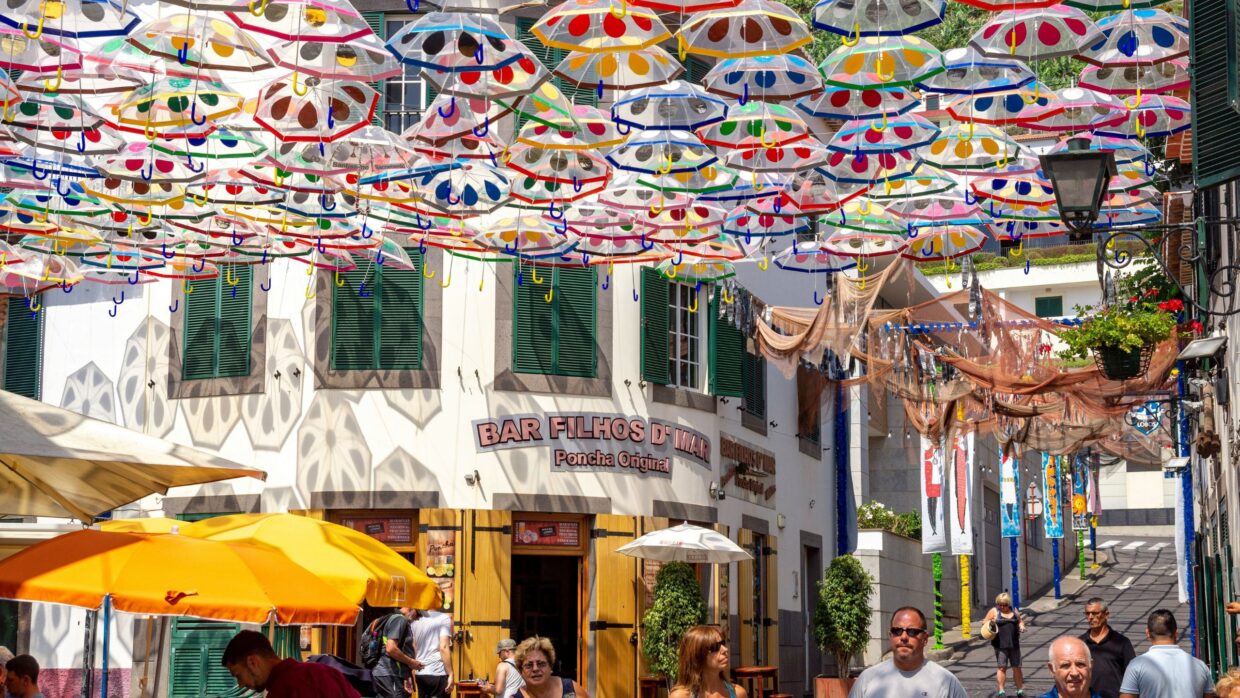
Here is something that will happen to you if you go to Madeira. You will come home. You will tell people where you went. And at least one person, possibly more, will say: “Oh, isn’t that where old people go?” or “Is that the one near the Canaries?” or simply give you the polite, vacant smile of someone processing a destination they have no frame of reference for.
This is the central problem with Madeira. Not the island itself, which is extraordinary in ways that most European destinations can only gesture toward. The problem is perception, a gap between what Madeira actually is and what a significant portion of Western European travellers believe it to be that has persisted, stubbornly, for decades. And that gap is now closing. Rapidly. And the window to see Madeira before it closes entirely is shorter than most people realise.
This is the argument for going now.
The numbers first
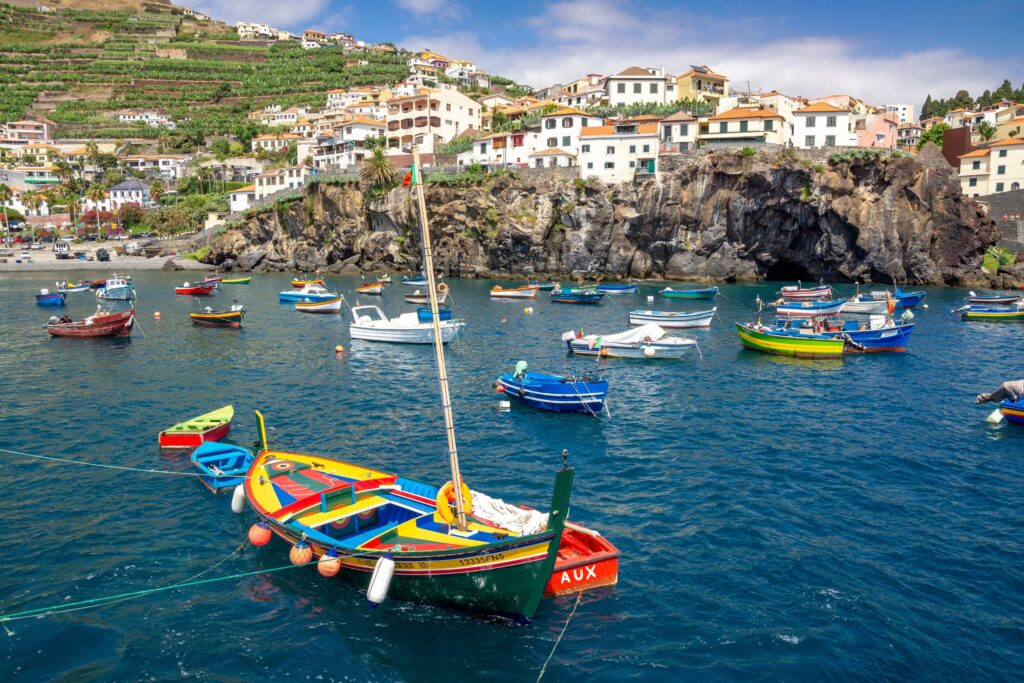
Madeira recorded 12.7 million overnight stays in 2025, according to the Regional Directorate of Statistics announced in July 2026, the highest figure in the island’s history, representing an 8.3% increase on 2024. Total tourism revenues hit a record 887.1 million euros, up 16.6% year on year. In April 2025 alone, more than 221,300 visitors arrived on the island. New direct flights from Newark have opened the American market for the first time in a practical sense, eliminating the European stopover that previously deterred transatlantic visitors.
These are not the numbers of an undiscovered island. They are the numbers of an island that has already been discovered and is now in the process of being absorbed into the mainstream travel circuit. The Fanal Forest, one of the most extraordinary ancient laurel groves in Europe, a place that five years ago you could walk through in near-total solitude, is now fenced, ticketed, and managed for visitor flow. The hiking trails, formerly free and unregulated, require advance booking and carry fees of up to 10.50 euros per person. Cruise passenger numbers exceeded one million for the first time in 2025.
The window is not closed. But it is narrowing. And what exists on the other side of it, a Madeira of uncrowded trails, quiet mountain restaurants, empty viewpoints, and a genuinely unhurried pace, is still accessible now in a way it will not be in five years if current growth trajectories continue.
The perception problem
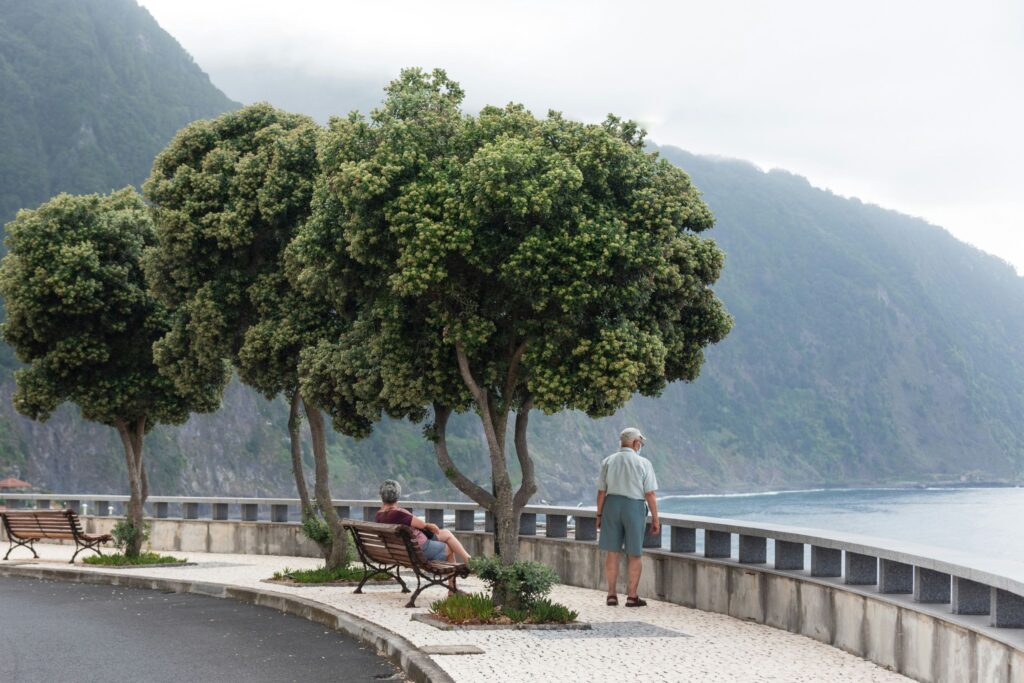
The British package holiday industry, with the best possible intentions, spent several decades successfully marketing Madeira as a destination for older travellers seeking a warm, mild, gentle escape from northern European winters. This was accurate. Madeira is warm and mild and gentle. It is also, depending on what you choose to do with those qualities, a place where you can walk along cliff edges above the Atlantic, dive to 30 metres in visibility that rivals the Red Sea, watch sperm whales surface fifty metres from a boat in the open ocean, stand on a volcanic peak at 1,862 metres above the cloud layer at dawn, eat in a two-Michelin-starred restaurant, and drink a wine produced from grapes grown on terraces that have been tended continuously since the 15th century.
The marketing caught the destination at one particular angle. The other angles are extraordinary.
What Madeira shares with Santorini or the Amalfi Coast, the dramatic scenery, the cliffside drama, the photogenic coastline, it delivers at a fraction of the price and without a fraction of the crowds. What it shares with Iceland, the volcanic geology, the hiking, the sense of a landscape still actively forming itself, it delivers at half the distance from most European capitals and with considerably better food. What it shares with the Azores, the wild Atlantic character, the authentic Portuguese culture, the sense of genuine island life rather than island tourism infrastructure, it delivers with better flight connectivity and a more established accommodation offer.
It does not share anything meaningful with the Canaries, which is the comparison most frequently offered by people who have not been to either in a serious way. The Canaries are largely flat, largely dry, largely built for beach tourism. Madeira is mountainous, extraordinarily green, and almost entirely without beaches in the conventional sense. They are entirely different islands that happen to be in the same ocean.
What Madeira actually is
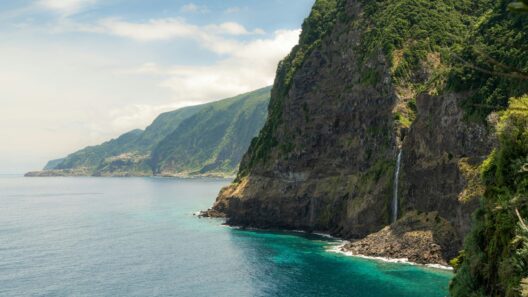
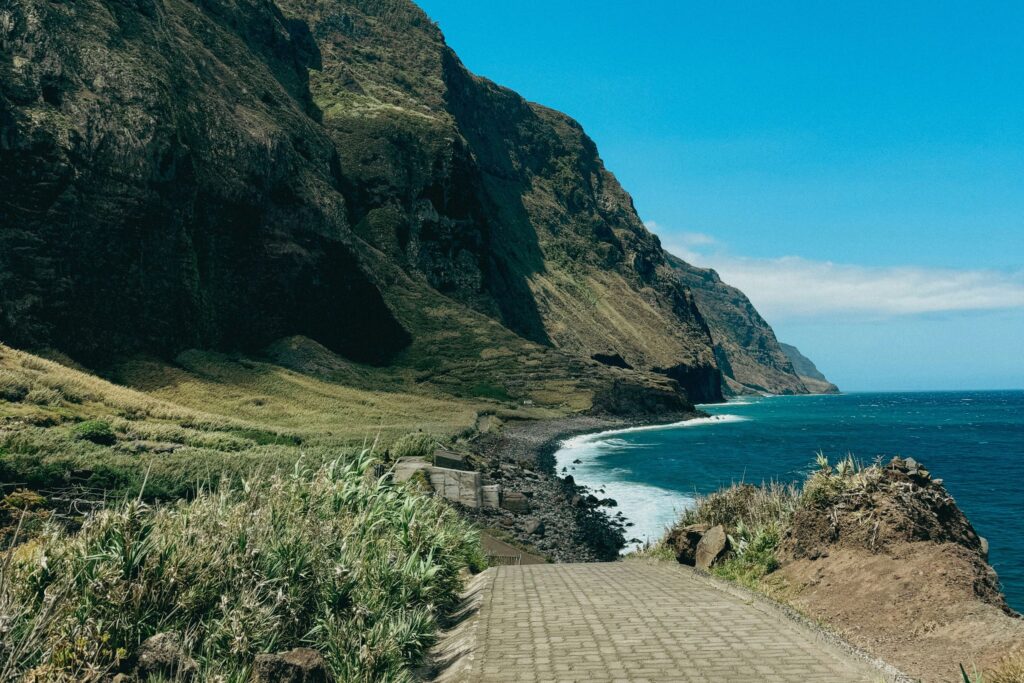
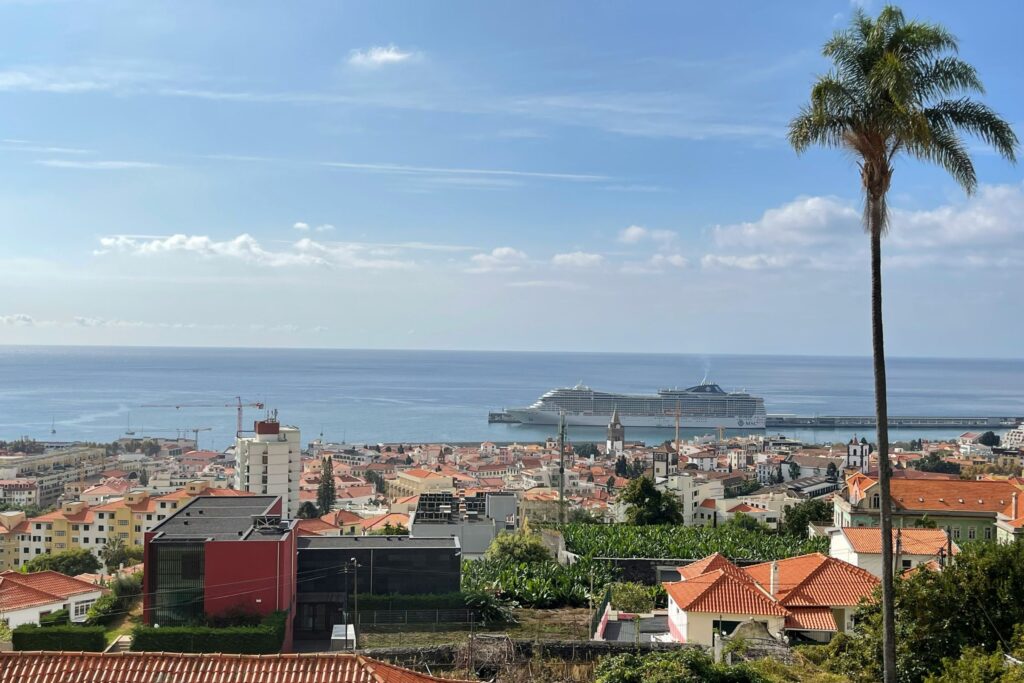
An island 57 kilometres long and 22 kilometres wide where the terrain rises from sea level to 1,862 metres within a horizontal distance of roughly 10 kilometres, creating microclimates so distinct that the north coast receives triple the rainfall of the south coast, the mountain interior generates its own weather systems independent of the coast below, and the vegetation changes from subtropical to alpine within the space of a single mountain road.
An island where a 15th-century irrigation engineering project created 2,500 kilometres of hiking trails that have no equivalent anywhere else in Europe, paths that follow contour lines through ancient forest and along cliff edges that generations of maintenance workers walked before the idea of recreational hiking existed.
An island where the deep-water trench surrounding the volcanic seamount on which it sits creates one of the richest marine environments in the North Atlantic, where pilot whales are year-round residents, sperm whales feed in the depths directly below the whale-watching boats, and the underwater topography drops so sharply from the coastline that dive sites of extraordinary quality exist within ten minutes of Funchal harbour.
An island that produces one of the world’s great wines in a style so unique it required an entirely new production method, the deliberate heating of the wine during ageing, that was developed here and exists nowhere else.
An island whose capital city has more Michelin-starred restaurants per capita than most mainland Portuguese cities, a weekly farmers’ market that is among the finest in the Atlantic islands, and a historic old town that is as architecturally and atmospherically rich as anything in the Azores or the Canaries.
An island reachable from Dublin, London, Manchester, Amsterdam, Frankfurt, and most major European cities in under four hours.
All of this is true simultaneously.
The sustainability argument
There is a version of the “go now before it changes” argument that is purely selfish, get there before the crowds, before the prices rise, before the trails require booking. That version is honest but incomplete.
The more interesting version is this: Madeira is currently navigating one of the most genuine attempts at sustainable tourism management available anywhere in European island travel, and the outcome of that experiment matters beyond the island itself.
Madeira received EarthCheck Silver certification for sustainable tourism management and is targeting Gold, which would make it, alongside the Azores, one of the first archipelagos in the world to hold that certification. The trail booking and fee system introduced in 2026, controversial among some visitors who preferred the previous free-access model, was implemented explicitly to protect trail environments from the volume of foot traffic that was beginning to damage them, the same damage that has rendered several trails in the Canaries and on the mainland permanently degraded.
At a European Parliament conference in December 2025, Madeira was recognised as Europe’s laboratory for sustainable tourism innovation. The framing was accurate: an island with finite natural resources navigating the tension between economic dependence on tourism and the need to protect the very things that make it worth visiting is not a problem unique to Madeira. How it solves it, or fails to, will be instructive for island destinations globally.
Visiting Madeira now, through operators and hotels committed to local employment and environmental standards, through the official trail booking system that funds conservation rather than circumventing it, is not just the best way to experience the island. It is the right way to participate in what it is trying to become.
The honest caveats
No argument for any destination is honest without its caveats. Here are Madeira’s.
It is not a beach destination. If your primary requirement for an island holiday is extended time on a sand beach in warm water, Madeira will disappoint you. Porto Moniz has natural lava pools, Praia da Laje has a dark volcanic beach, Porto Santo has nine kilometres of golden sand, but Porto Santo is a 40-minute flight or a two-hour ferry from Madeira itself and is, in effect, a separate destination.
The roads require confidence. The mountain and north coast roads are narrow, steep, and occasionally alarming. A rental car is essential for seeing beyond Funchal, but it requires a driver who is comfortable with tight roads, blind corners, and the occasional need to reverse for a significant distance when two vehicles meet on a track designed for one. The scenery from those roads is extraordinary. The stress of negotiating them unprepared is real.
It is not cheap by the standards of mainland Portugal, though it remains good value by the standards of comparable island destinations in Europe. Hotel prices in Funchal have risen significantly over the past three years, and peak season in July and August now commands rates that were unthinkable five years ago.
And it is not undiscovered. The perception gap between what Madeira is and what people think it is has been closing for several years, and the travellers arriving now are not pioneers. They are early adopters who are getting there before the crowd, not before the destination existed.
The case, simply stated
Madeira is an island where you can walk through a forest that predates the last ice age in the morning, eat grilled limpets and black scabbardfish for lunch at a clifftop restaurant above the Atlantic, watch sperm whales surface in the open ocean in the afternoon, and drink wine from a bottle that is older than most European countries in a 17th-century lodge in the evening.
It is reachable from most of Europe in under four hours. It costs less than Greece. It is more beautiful than Tenerife. It is more accessible than the Azores. It is more interesting than Mallorca. It has better food than anywhere in the Canaries.
It is also, in 2026, at a tipping point. The numbers are growing. The infrastructure is changing. The trails now cost money to walk, and some of the most extraordinary places are beginning to feel the pressure of the visitors who found them.
The window is not closed. But it is narrowing. Book the flight now
The rest of the Madeira series
Everything you need to go properly:
- Madeira: the complete guide – what it is, where it is, how to plan a week or two weeks from scratch
- Madeira’s levada walks – every trail worth doing, the 2026 SIMplifica booking system explained, what to pack
- Eating in Madeira – espada, lapas, bolo do caco, Michelin restaurants, where to drink poncha properly
- Where to stay in Madeira – from Reid’s Palace to a north coast wellness retreat
- Madeira’s secret landscapes – the eight places the standard itinerary never reaches
Some links in this post are affiliate links. If you book through them, flight.now earns a small commission at no extra cost to you. Learn more here